The air in a hospital room has a specific weight. It is heavy with the scent of sterile wipes, the rhythmic mechanical sigh of a ventilator, and the silent, crushing pressure of things left unsaid. Arthur sat in the plastic chair by the window, watching his wife, Elena, vanish. Not all at once. She was disappearing in increments—a lost memory here, a failed motor function there, a grimace of pain that no amount of morphine seemed to touch.
Elena had spent her life as a high-court judge. She lived for the law, for the cold, hard logic of a well-constructed argument. Now, she was trapped in a body that had abandoned all reason. She wanted out. Not because she hated life, but because she loved the dignity she had spent sixty years building. For a different view, see: this related article.
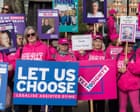
Outside the glass of that room, a storm is brewing in the halls of government. It is a clash of philosophies, a war of words over an assisted dying bill that has split the country down the middle. To the lawmakers, it is a matter of "democratic process" and "safeguards." To Arthur and Elena, it is much simpler. It is about who owns the rights to the final chapter of a human life.
The Friction of Choice
When we talk about assisted dying, we often hide behind the safety of statistics. We cite that 75 percent of the public supports a change in the law, or we point to the handful of countries where the practice is already legal. But the debate isn't actually about numbers. It’s about the fundamental tension between the collective and the individual. Similar reporting on the subject has been published by World Health Organization.
Opponents of the bill argue that it is "undemocratic." They suggest that the speed at which the legislation is moving bypasses the rigorous scrutiny required for a change this profound. They fear a "slippery slope"—a term that has become a staple of the opposition. The worry is that a law designed for the terminally ill will eventually expand to include the disabled, the elderly, or those struggling with mental health.
Consider the perspective of a disability rights advocate. To them, the bill doesn't look like "mercy." It looks like a threat. If society makes it easier to die than to live with a complex condition, what does that say about the value we place on those lives? The fear is that the "right to die" will slowly, invisibly morph into a "duty to die" to avoid being a burden. It is a terrifying thought. It is also the reason the debate is so jagged.
But then, look back at Elena.
She isn't a slippery slope. She is a woman in a bed. For her, the democratic process feels like a slow-motion car crash. While politicians argue over the nuances of "parliamentary time" and "committee stages," her reality is measured in the milliliters of fluid she can no longer swallow.
The Myth of the Neutral State
We like to believe that the law is a neutral arbiter. We think of it as a set of rules that keeps the peace. But in the matter of life and death, the law is never neutral. By forbidding assisted dying, the state is making a choice. It is choosing to intervene. It is deciding that its interest in the "sanctity of life" outweighs an individual's interest in the "quality of death."
This is where the argument of "undemocratic" behavior gets complicated. Is it more democratic to follow the slow, grinding gears of a legislative body, or to honor the overwhelming will of a population that believes people should have an exit strategy?
Critics argue that the bill lacks "robust" protection. They want more doctors involved, more cooling-off periods, more judges signing off on the paperwork. They want a system so complex that it is impossible to abuse.
The problem is that complexity is the enemy of the dying.
Imagine a man named David. David has motor neurone disease. He has six months to live, maybe less. Under the proposed "safeguards," David would need to prove his mental capacity to two independent doctors and a High Court judge. He would need to be physically able to administer the life-ending medication himself.
Now, look at the clock.
By the time David clears the legal hurdles, his muscles may have withered to the point where he can no longer lift the cup to his lips. In trying to protect David from a "hasty" decision, the law may inadvertently trap him in the very suffering he is trying to escape. The safeguards become a cage.
The Invisible Stakes of the Status Quo
There is a common misconception that if we don't pass this bill, nothing changes. That staying the course is the "safe" option.
This is a fallacy.
The status quo is not a vacuum; it is a lived experience of trauma. Currently, people who are desperate enough turn to "Dignitas" in Switzerland. This requires them to travel while they are still well enough to sit on a plane, effectively shortening their lives by weeks or months just to ensure they can make the trip.
Others take matters into their own hands in much grimmer ways. They do it in secret, alone, so their loved ones aren't prosecuted for "assisting" a suicide. They die in garages, in bathrooms, or with plastic bags. This is the reality of the current law. It doesn't prevent death; it only prevents a peaceful one.
The division in the halls of power isn't just about theology or secularism. It’s about the fear of getting it wrong. No politician wants to be the one who signed a bill that led to a single wrongful death. That is a heavy burden. But we rarely talk about the burden of the "wrongful lives"—the thousands of people forced to endure a prolonged, agonizing end against their explicit will because the state was too afraid to act.
The Weight of the Gavel
Elena used to say that the law is a blunt instrument for a delicate world. It tries to draw straight lines through the messiness of human existence.
One afternoon, in a moment of rare clarity, she looked at Arthur. Her voice was a rasp, a shadow of the command it once held in a courtroom.
"I’ve spent thirty years judging people," she whispered. "Now, the people who have never met me are judging my ending."
That is the heart of the divide. On one side, you have the protectors of the social fabric. They see the bill as a tear in the cloak that covers us all. They see the potential for abuse, the risk to the vulnerable, and the erosion of the medical profession’s "do no harm" oath. They are not villains. They are motivated by a profound sense of duty to the community.
On the other side, you have the protectors of the person. They see a human being whose autonomy is being stripped away by a combination of biology and bureaucracy. They believe that if we have the technology to prolong life, we must also have the compassion to allow it to end.
The two sides are speaking different languages. One speaks the language of "We," the other the language of "I."
The Narrow Path Forward
If the bill passes, the world will not end. The sun will rise, and the vast majority of people will continue to live their lives as they always have. But for a small, specific group of people, the world will change fundamentally.
The air in those hospital rooms might feel a little lighter. Not because death is a happy outcome, but because the terror of the unknown—the fear of a "bad" end—will be replaced by a sense of agency.
There is no perfect law. There is no system of safeguards that can account for every possible variable of the human heart. To wait for a "perfect" bill is to wait forever, while people like Elena continue to vanish in the heavy air of sterile rooms.
We are forced to choose between two risks. We can risk the possibility that a law might be misused, or we can continue the certainty that the current law causes measurable, daily suffering.
The debate is often framed as a battle between those who value life and those who value choice. But that is a false dichotomy. You can value life so much that you refuse to watch it be degraded into nothing but a series of involuntary spasms. You can value democracy so much that you demand it listens to the quietest voices—the ones whispered from a deathbed.
Arthur held Elena’s hand. Her grip was weak, a fluttering thing like a bird with a broken wing. He realized then that the most democratic thing in the world isn't a vote in a grand hall with oak panels and velvet seats. It is the simple, private right to say "enough."
The politicians will keep talking. They will argue over clauses and amendments. They will use words like "unprecedented" and "constitutional." They will worry about their legacies and their polling numbers.
But in the last room on the left, the clock is ticking. The stakes aren't political. They are visceral. They are the difference between a goodbye and a scream.
The law can continue to look away, pretending that by doing nothing, it is doing no harm. Or it can finally muster the courage to look Elena in the eye and acknowledge that her life belongs to her, all the way to the very last page.