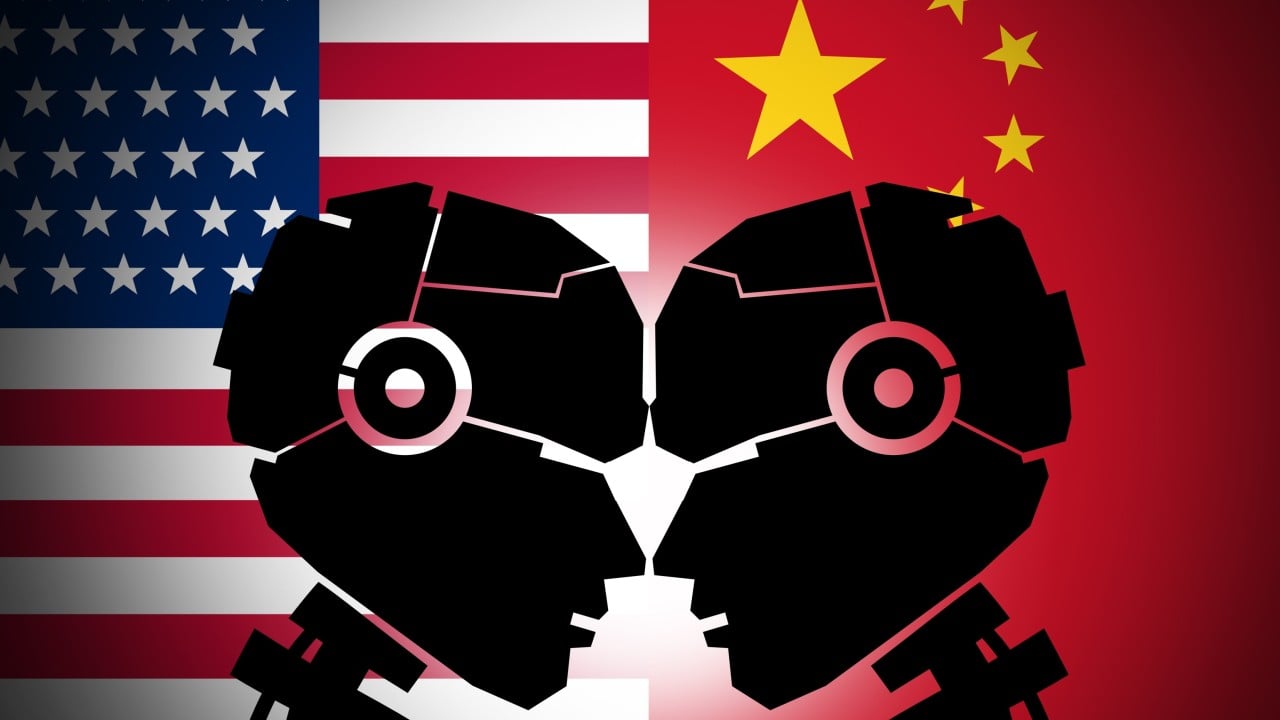
A Room Whispering In Codes
Two men sit across a polished mahogany table in a dimly lit hotel conference room in Geneva. Outside, rain streams down the glass, blurring the streetlights into smudges of yellow. Inside, the silence feels heavy, almost suffocating. On the table between them rest two encrypted tablets, both displaying real-time feeds of autonomous defense algorithms running stress tests half a world away. Neither man wants to be here. Neither trusts the other. Yet both know that if either walks away, the automated systems they oversee might eventually make a decision no human can undo.
This hypothetical scene isn't a scene from a cold-war thriller. It is the precise reality modern diplomacy faces as Washington and Beijing attempt to manage the most dangerous technology humanity has ever built. For a deeper dive into similar topics, we recommend: this related article.
When former intelligence officials and senior diplomats quietly argue that keeping open channels on artificial intelligence serves national defense, they are not pitching soft-power goodwill. They are talking about survival.
Silence in high-stakes strategy is not strength. It is blind luck masquerading as posture. For further information on this topic, extensive coverage can be read on The Next Web.
The Horror Of An Unread Signal
Consider a simple scenario. An autonomous tracking system patrolling international waters misinterprets a sudden radar reflect pattern as an incoming strike. The software operates in milliseconds. Human operators have less than ninety seconds to verify the threat before automated counter-measures deploy.
In that frantic minute and a half, what prevents catastrophic escalation?
It isn't weapon systems. It isn't posture.
It is a direct line.
Without established channels—without an agreed-upon language for technical risk—that single glitch metastasizes into war. Former defense chiefs understand this because history has repeatedly taught the same brutal lesson. During the Cuban Missile Crisis, messages took hours to translate and transmit via telegraph, leaving leaders guessing in the dark while nuclear forces sat on high alert. The direct hotline established afterward wasn't created out of affection; it was forged out of sheer, cold-blooded terror.
Artificial intelligence accelerates that danger exponentially. Machine-learning models do not think like human generals. They optimize for objectives based on statistical probability, occasionally hallucinating patterns that do not exist in physical reality. When both sides deploy these systems into intelligence gathering, cyber defense, and target tracking, the risk of a high-speed feedback loop increases dramatically.
Talks exist to build safety rails around systems that operate faster than human thought.
What Strategic Realism Actually Looks Like
Critics often view diplomatic discussions with strategic rivals as a sign of hesitation, a willingness to give ground while an adversary races ahead. That perspective misreads how security functions in a deeply interconnected digital era.
Communication is intelligence.
When top technical envoys sit down with foreign counterparts to discuss AI guardrails, they are not surrendering technical advantages. They are probing the other side's risk tolerance. They are discovering where an opponent's technology is brittle, where their doctrine is cautious, and where their command structure might inadvertently trigger a crisis.
Every exchange reveals critical data:
- How does the opposing military handle autonomous failure modes?
- What level of human oversight do their systems mandate before kinetic deployment?
- Are their engineers seeing the same dangerous edge-case behaviors that our scientists are struggling to patch?
Understanding an adversary's blind spots prevents miscalculation. If a competitor's strategic AI suffers a catastrophic internal failure or an unpredicted output drift, knowing how they handle that failure prevents our own defense networks from misinterpreting the anomaly as an aggressive posture.
Knowledge reduces panic. Panic starts wars.
The Human Core Inside The Silicon Shell
Strip away the complex jargon, the neural network architecture diagrams, and the dense policy whitepapers. Beneath the technical complexity, national security remains a deeply human endeavor run by people who carry the heavy weight of consequence.
Imagine a mid-level researcher at a government defense lab. She spends twelve hours a day running adversarial attacks against advanced alignment models, trying to force the software into catastrophic errors before a field deployment. She knows better than anyone that these models are brilliant, erratic, and deeply unpredictable when exposed to novel inputs.
Now imagine that same researcher knowing that no one is talking to the scientists running the exact same tests in Beijing.
The fear isn't just that the other side will build a superior system. The deeper, darker fear is that both sides will deploy systems they do not fully control, bound together in a high-speed digital arm race where a single unexpected bug acts as the spark in a dry forest.
Establishing formal dialogues gives engineers and policymakers a framework to define absolute red lines. It creates a shared understanding that certain thresholds—such as placing nuclear command-and-control entirely under autonomous control—must remain strictly off-limits.
The Quiet Strength Of The Table
True national defense requires immense military readiness, cutting-edge innovation, and relentless technical superiority. But the final, critical layer of that defense is the willingness to sit in a room with a rival and lay out the ground rules of mutual survival.
Dialogue is not a favor granted to an opponent. It is an active mechanism of control.
As machine intelligence weaves itself deeper into the fabric of global power, the margins for human error shrink to near zero. The quiet conversations happening behind closed doors are not compromises. They are the essential shock absorbers built to keep a volatile world from snapping under the weight of its own speed.
The storm outside the hotel window in Geneva continues to fall, but at the table, two people keep talking. That conversation is the only thing standing between a manageable technical glitch and an unthinkable disaster.