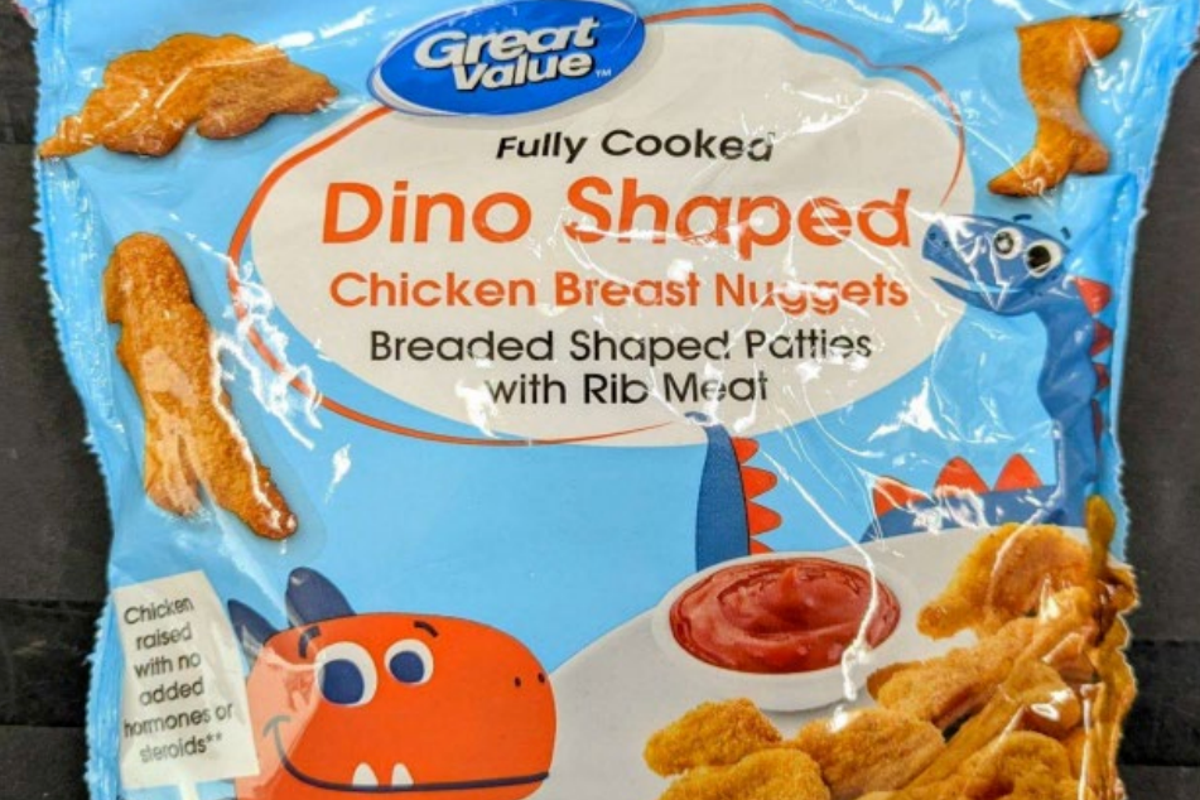
The headlines are predictable. They are designed to trigger the primal "protect the children" instinct that lives in every parent's amygdala. "Lead Found in Dino Nuggets." "Nationwide Recall Issued." The mainstream media treats these events like freak accidents—meteor strikes that occasionally hit a production line.
They are lying to you by omission.
The real story isn't that a batch of processed chicken shapes might have a trace amount of heavy metal. The story is that the regulatory framework we rely on is built on a foundation of "acceptable risks" that would make your skin crawl if you actually saw the raw data. We are hyper-focusing on a single recall while ignoring the systemic reality of how industrial food is manufactured, shipped, and tested.
If you think throwing away that one yellow bag in your freezer solves the problem, you’ve already lost the game.
The Myth of the Sterile Supply Chain
The competitor's coverage of this recall treats the contamination as an isolated failure. They want you to believe that if we just tighten the screws on one factory in the Midwest, the "dino" will be safe again.
This is a fundamental misunderstanding of global logistics.
Food grade standards are not absolute; they are probabilistic. In my years auditing supply chains, I’ve seen the "acceptable" margins for contaminants. Most people think "zero lead" is the goal. In reality, the goal is "below the level that triggers a mandatory legal headache."
Heavy metals like lead don't just "get into" food because a worker dropped a pipe. They enter the system through:
- Soil leaching: The grains fed to the poultry are grown in soil that has been accumulating industrial runoff for decades.
- Water quality: Large-scale processing plants use millions of gallons of water, and even "potable" water carries a baseline mineral load.
- Machinery wear: Grinders, extruders, and flash-freezers are all made of alloys. Friction is a constant. Molecules migrate.
When a recall happens, it’s often because the levels spiked high enough to cross a specific, somewhat arbitrary threshold. It’s not that the previous batch was "pure." It was just "quiet."
Why the Recall System is a Performance
We love recalls because they give us a sense of agency. You check the lot code, you see it doesn't match, you feel relieved. You check the lot code, it does match, you throw it out and feel like a hero who saved your family.
This is theater.
The FDA and USDA operate on a reactive model. They are underfunded, outmatched by the sheer volume of SKUs hitting shelves, and largely dependent on self-reporting from the corporations themselves. By the time a lead contamination reaches the "national news" stage, the product has likely been on shelves for weeks. Half of it is already digested.
The "National Health Risk" isn't the lead in the nugget. The risk is the delusion that the system is proactive.
The Trace Element Obsession vs. The Macronutrient Disaster
Here is the counter-intuitive truth that no one wants to hear: The trace amount of lead in a recalled batch of nuggets is likely less damaging to a child's long-term health than the standard nutritional profile of the "safe" nuggets they eat every other day of the week.
We are panicking over parts per billion of a heavy metal while ignoring the 400 milligrams of sodium, the inflammatory seed oils, and the glycemic load that spikes insulin and sets the stage for metabolic dysfunction before a kid hits puberty.
If you want to talk about "health risks," let’s talk about the biological cost of ultra-processed meat-slurry.
- Bioavailability: Even if lead levels are low, a body lacking essential minerals (like calcium and iron) will absorb lead more readily.
- The "Safe" Ingredients: Maltodextrin, dextrose, and isolated soy protein are legal, "safe," and arguably more destructive to the developing gut microbiome than a momentary exposure to a trace contaminant.
The media focuses on the lead because it’s a villain with a name. They don't focus on the formula because that would require criticizing the entire American diet.
The Cost of the "Cheap Protein" Lie
We have been conditioned to believe that a pound of breaded, pre-cooked, shaped chicken should cost less than a cup of high-quality coffee. To hit that price point, corners aren't just cut—they are obliterated.
When you buy the cheapest possible protein, you are opting into a system that prioritizes volume over integrity.
- Sourcing: Cheap meat comes from older birds or "mechanically separated" leftovers.
- Processing: More steps in the factory mean more opportunities for environmental contamination.
- Testing: Rigorous, third-party batch testing is expensive. If a company is fighting for pennies in margin, they aren't going to test every single pallet for lead, cadmium, and arsenic unless they are legally forced to.
The "outrage" over this recall is misplaced. The real outrage should be directed at the fact that we’ve built a food culture where dino-shaped slurry is a staple, and we’re shocked—shocked—when the industrial process leaves a fingerprint.
How to Actually Navigate the Risk
Stop looking for the "safe" brand of dino nuggets. There isn't one. There are only brands that haven't been caught yet or brands that have better lawyers.
If you want to mitigate the risk of heavy metals and industrial toxins, you have to move upstream.
- Dilution is the solution: Don't feed your children the same three processed items every day. Contaminants bioaccumulate. By rotating protein sources and brands, you prevent any single "low-level" toxin from reaching a critical mass in the body.
- The Mineral Shield: Ensure the diet is high in calcium, zinc, and iron. These minerals compete with lead for absorption sites in the GI tract. A well-nourished body is naturally more resistant to the "background noise" of industrial pollution.
- Accept the Cost: If you aren't paying for the food with money, you are paying for it with your long-term health. Real, single-ingredient food rarely gets recalled for lead contamination because it hasn't passed through ten different stainless steel machines before hitting your plate.
The Regulatory Gap No One Mentions
The competitor’s article will tell you that the FDA is "monitoring the situation."
In reality, the FDA’s "Closer to Zero" action plan for heavy metals in baby foods and toddler snacks is a series of non-binding recommendations. They are suggestions, not mandates. The industry fights these standards because implementing them would require a total overhaul of how ingredients are sourced.
We are currently living in a "voluntary compliance" era. When you see a recall, you aren't seeing the system working; you are seeing the system failing so spectacularly that it could no longer be ignored.
Stop Asking if it's Safe
The question "Is this product safe?" is a trap. It implies a binary state that doesn't exist in the modern world. Everything has a cost. Every industrial product carries a signature of the environment it was made in.
The real question is: "Is the convenience of this product worth the lack of transparency in its creation?"
If you are waiting for a government agency or a corporate press release to tell you when it's okay to eat, you are a passenger in your own life. The lead in the nuggets is a symptom. The disease is a food system that values shelf-life and "cuteness" over biological necessity.
Throw away the recalled bag. Then, throw away the replacement bag too.
Get back to the butcher. Get back to the farm. Get back to food that doesn't need a marketing department to tell you it’s safe.