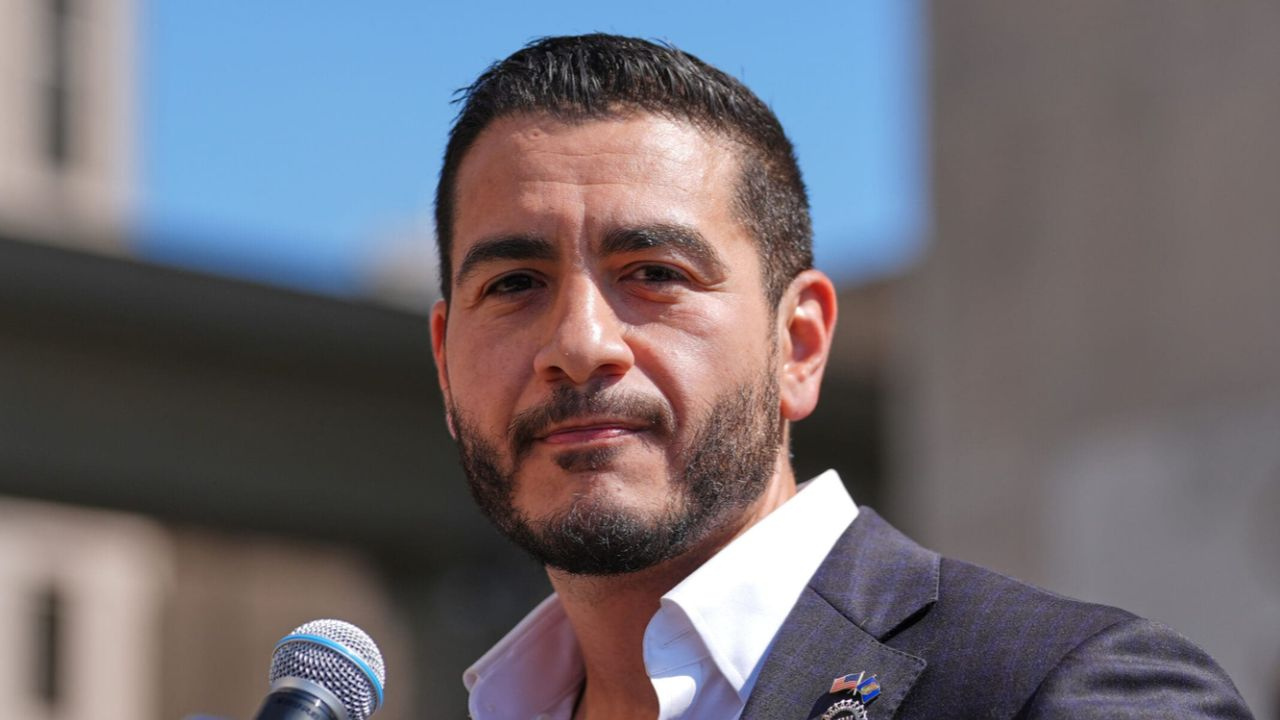
Candidates who campaign against big money in politics face a structural trap the moment they win: holding power in the U.S. Senate requires capital distribution, yet building a personal fundraising vehicle invites accusations of hypocrisy. Senator-elect Abdul El-Sayed of Michigan, the first Muslim elected to the U.S. Senate in November 2026, established Habibi PAC days after his election. Conventional coverage treats this move as a simple contradiction between populist rhetoric and insider ambition. That framing misses the mechanical reality of Senate power. Campaigns win seats through voter persuasion and mobilization, while legislative influence inside the chamber depends on financial reciprocity, caucus alignment, and network coordination.
Evaluating a move like Habibi PAC requires separating three distinct analytical layers: the structural mechanics of leadership political action committees (PACs), the incentive alignment of anti-establishment candidates entering institutional politics, and the strategic trade-offs of branding a committee around cultural identity. A rigorous examination distinguishes verified public facts from analytical hypotheses rather than treating political commentary as settled truth. Also making news recently: L’affaire Thomas Markle et les sept années d’ombre autour des signalements de pédocriminalité.
Deconstructing the Conventional Narrative
Standard political reporting on a newly elected senator launching a leadership PAC typically relies on a two-step narrative arc. First, the coverage highlights a candidate's past criticisms of campaign finance, lobbyists, or establishment fundraising. Second, it frames the new PAC as an immediate pivot toward the same system the candidate condemned.
This framing has three analytical weaknesses: Additional information on this are explored by Associated Press.
- Conflating campaign financing with caucus governance: Money raised to run a statewide general election serves a different function than money pooled to support fellow candidates or build internal party standing. Treating all political fundraising as identical obscures how influence operates after ballots are cast.
- Assuming rhetorical purity equals operational paralysis: Anti-money-in-politics messaging usually targets concentrated corporate or special-interest capture, whereas a leadership PAC can collect small-dollar or aligned contributions and redistribute them. Criticizing corrupting influence is not legally or functionally the same as refusing to pool resources for allies.
- Overlooking timing asymmetries: Launching a committee days after a general election—before taking the oath of office in January 2027—signals long-horizon positioning ahead of future election cycles, such as 2028, rather than immediate legislative deals.
Public reporting confirms that El-Sayed won Michigan's 2026 U.S. Senate race after a campaign marked by populist themes and sharp partisan attacks, and subsequently registered Habibi PAC, a leadership PAC. Federal Election Commission (FEC) filings for his Senate campaign show tens of millions of dollars in total receipts and disbursements through mid-October 2026. What remains unverified until subsequent FEC reporting periods is the exact donor composition of Habibi PAC, its contribution limits and fundraising sources, and how its disbursements will be allocated.
The Three Functions of a Leadership PAC
In federal campaign finance law, a leadership PAC is a political committee directly or indirectly established, financed, maintained, or controlled by a candidate or an individual holding federal office, distinct from the officeholder's principal campaign committee. Unlike a candidate committee focused on re-election, a leadership PAC operates as an outward-facing capital and network instrument.
Capital Redistribution and Reciprocity
A leadership PAC pools funds within federal contribution limits and transfers or contributes money to other candidates, party committees, or political organizations. In political science and legislative strategy, this functions as a form of social capital backed by cash. When a senator helps fund fellow Democrats or key state and federal races, those recipients incur relational goodwill.
The cause-and-effect chain is straightforward. A first-term senator enters a body structured by seniority and committee hierarchy. Without seniority, a newcomer has limited formal leverage. Financial support to peers—especially those in competitive districts or future cycles—creates informal obligations that can matter during caucus votes, coalition building, or policy debates.
Coalition Signaling and Talent Cultivation
Money in politics is also a signaling mechanism. Where a leader directs PAC resources tells activists, donors, and candidates which factions, policy priorities, or geographic regions are backed. A leadership PAC lets an officeholder reward aligned organizers, support down-ballot candidates, or build ties beyond a single home state.
Consider a conceptual example. Suppose a newly elected senator from a battleground state wants to champion healthcare reform or anti-monopoly enforcement. Supporting candidates who run on similar economic themes helps expand the ideological coalition inside the party over time. That expansion does not guarantee immediate votes, but it alters the medium-term balance of power.
Overhead and Institutional Infrastructure
Leadership PACs also maintain staff, compliance operations, and donor lists outside the principal campaign committee. Because federal rules restrict how candidate funds can be used and separate re-election accounts from leadership committees, maintaining a dedicated vehicle keeps post-election organizing active between major ballots.
A critical limitation applies here. Under federal law, leadership PAC funds cannot simply be converted to personal use, and contribution limits still constrain how much a single donor can give directly to a PAC. Moreover, financial contributions do not buy automatic compliance from fellow elected officials; voters and local party dynamics still govern how candidates behave.
The Anti-Money-in-Politics Incentive Problem
Why do politicians who run against money in politics so often end up using financial instruments once elected? The answer lies in principal-agent dynamics and collective action constraints.
During a campaign, the candidate's primary appeal to skeptical voters rests on independence from entrenched donors and PACs. Railing against money in politics lowers voter resistance and builds trust with anti-establishment constituencies. Once elected, however, the officeholder faces a collective action problem inside the legislature: passing bills, shaping party agendas, or defending priorities requires allies who themselves must raise money and win tough elections.
A senator who refuses all organizational fundraising tools faces a steep operational handicap:
- Reduced relational leverage: Colleagues who receive financial backing or network support from a peer are more likely to take meetings, co-sponsor initiatives, or back procedural moves than colleagues with no financial connection to that officeholder.
- Narrower national reach: A single senator's official office represents one state. A leadership PAC allows political outreach across other states and cycles without relying solely on official duties or media appearances.
- Vulnerability to faction capture: If reform-minded or populist lawmakers opt out of leadership PACs entirely, more established factions retain a monopoly on intra-party financial networking.
This creates a credibility tension, not a mathematical impossibility. A politician can draw a boundary between taking corporate or lobbying cash to buy personal favors and pooling small-dollar or values-aligned contributions to help allies run. Yet the boundary is fragile. Critics will test every donor list and disbursement against the candidate's campaign rhetoric, meaning even small inconsistencies carry outsized reputational cost.
Cultural Branding as a Strategic Variable
Naming a leadership PAC Habibi PAC—drawing on the Arabic word commonly translated as "my friend" or "my beloved"—introduces a branding variable that standard leadership PACs rarely use. Most leadership PACs rely on neutral geographic acronyms, policy slogans, or the officeholder's initials.
From a strategic communications standpoint, an unmistakable cultural name performs two distinct roles:
- In-group consolidation and pride: For Muslim, Arab, and younger progressive voters who experienced harsh rhetoric during the campaign, a familiar cultural term signals ownership rather than apology. It turns a potentially stigmatized identity marker into an organizational banner.
- Cross-cultural translation: Used publicly in political banter or campaigning, the term can be framed as warmth and solidarity across lines of difference, inviting allies outside the immediate community into the network.
At the same time, cultural branding carries real friction costs. In a polarized media environment, opponents can clip or quote the name to argue that the committee represents a narrow identity faction rather than a broad coalition. Whether the net effect is expansionary or polarizing is an open hypothesis that depends on execution: if Habibi PAC backs diverse candidates across multiple states and demographics, its reach broadens; if it funds only a narrow circle, the label reinforces perceptions of insularity.
Known Facts Versus Analytical Hypotheses
Separating verified facts from strategic interpretation prevents overreach when analyzing an early-stage political vehicle:
- Verified fact: Abdul El-Sayed won the 2026 U.S. Senate election in Michigan, becoming the first Muslim U.S. senator-elect, ahead of taking office in January 2027.
- Verified fact: Days after the election, he launched Habibi PAC, a leadership political action committee.
- Verified fact: Initial launch coverage does not yet provide full FEC disclosure records showing who funds Habibi PAC or every recipient of its money.
- Educated hypothesis: El-Sayed is using the PAC to establish durable intra-party influence ahead of the 2028 cycle rather than waiting years to build a political network.
- Educated hypothesis: His biggest reputational test will come from reconciling populist anti-money messaging with PAC fundraising mechanics once donors and spending become public.
No single PAC guarantees legislative power or insulates a politician from scrutiny. Fundraising alone cannot pass legislation in a divided or closely contested Senate, and aggressive PAC activity can alienate voters who expect strict austerity from reformist candidates.
Evaluating the Move Like an Operator
For political strategists, donors, and observers assessing a newly formed leadership PAC, judging it by headlines alone is a mistake. Three operational benchmarks determine whether the vehicle succeeds or stalls:
- Audit the donor mix against campaign promises: Track whether early contributions come primarily from small-dollar grassroots donors aligned with the candidate's populist pitch or from heavy-hitting institutional bundlers and special interests.
- Examine recipient selection: Look at who receives disbursements—competitive general-election candidates, primary challengers, state party builders, or fellow lawmakers—to see if the PAC expands coalition power or merely rewards loyalists.
- Watch burn rate versus pass-through: A leadership PAC that spends most of its money on administrative overhead, consulting, or travel rather than direct support to campaigns and organizers functions more as a personal PR machine than a coalition engine.
The strategic play for El-Sayed and Habibi PAC is to enforce radical transparency on donor standards before critics define the narrative, concentrate early disbursements where they build genuine legislative and electoral allies for 2028, and keep the PAC's public identity tied to broad economic and democratic reform rather than insular factionalism.