The kettle on Arthur’s stove takes four minutes to boil. He has timed it every morning for the past three years, not out of curiosity, but because those two hundred and forty seconds represent the exact window in which he decides whether to turn the kitchen radiator on or leave it frozen.
Outside, the London frost coats the windowpanes in fragile lace. Inside, Arthur wraps his cardigan tighter around his shoulders. He is seventy-two. He worked forty years at a distribution warehouse, lifting boxes until his lower spine gave up the ghost. He paid his taxes. He played by the rules. Yet here he sits, watching his breath form tiny white clouds in the hallway, calculating whether a cup of tea is worth the extra fraction of a penny on the meter.
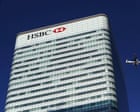
Three miles away, in a sleek glass monolith piercing the gray city clouds, the air is meticulously climate-controlled. Screens flicker with emerald-green numbers. Telephones chime with the quiet urgency of immense wealth changing hands. Here, billions are not a concept; they are a gravity.
HSBC had just announced its annual profits. Seven point five billion pounds.
Pause on that number for a moment. Seven billion, five hundred million pounds. It is a sum so large it ceases to mean anything to the human brain. You cannot picture it stacked in five-pound notes. You cannot imagine hauling it in a lorry. It is an abstract monument of corporate triumph, a mathematical titan born from interest rates, transaction fees, and global market mechanics.
To the bankers in the boardroom, it was a vindication of strategy. To Arthur, sitting in his freezing kitchen, it was an insult written in ink he could not afford to read.
This is the chasm at the heart of modern Britain. It is a country split down the middle not just by wealth, but by reality. On one side, corporate balance sheets swell to historic proportions, buoyed by rising interest rates that turn everyday borrowing into a heavy chain. On the other side, ordinary people stand in supermarket aisles, putting items back on the shelf because the price of butter has doubled.
When central banks raise interest rates to fight inflation, commercial banks experience an unexpected windfall. The money they hold suddenly generates massive returns. It is a financial tide that lifts every corporate yacht, while the wooden dinghies of the working public are quietly smashed against the rocks.
The public reaction was swift, born of exhaustion. Across the country, the murmur grew into a roar. Calls for a windfall tax on UK banks began to echo through Parliament, local council chambers, and community centers. The logic was simple, almost elemental: if corporate profits are exploding purely due to macroeconomic shocks rather than extraordinary innovation, shouldn't a slice of that windfall be channeled back into the pockets of people drowning in the cost-of-living crisis?
Consider what happens next in the political arena. Whenever a bank tax is proposed, the corporate defense mechanism kicks into gear with predictable precision. Lobbyists whisper warnings of capital flight. They argue that taxing success punishes enterprise, that banks will pack their bags and move to more hospitable shores, taking jobs and prestige with them. It is a classic narrative of fear. If you touch our profits, the economy bleeds.
But let us look past the boardroom threat matrix and examine the human cost of inaction.
When Arthur turns off his radiator, his blood pressure rises. This is not a metaphor; it is a clinical reality. Cold homes are breeding grounds for respiratory infections, cardiovascular strain, and quiet despair. The National Health Service spends millions every winter treating elderly patients whose primary ailment is simply that they could not afford to keep warm. Every pound saved on a heating bill is paid back tenfold in emergency room visits and overworked nurses.
The crisis is a web. Pull one thread in the financial sector, and it vibrates all the way down to a drafty kitchen in South London.
This is why the debate over a bank levy is not merely an accountant's quarrel. It is a moral test. When institutions post multi-billion-pound surpluses while food banks run out of tinned tomatoes, the social contract begins to fray. A society cannot function indefinitely when the gap between the ledger and the kitchen table becomes an unbridgeable canyon.
Critics of the proposed tax often ask where the line is drawn. If banks are taxed for high profits today, what happens tomorrow? Won't it stifle investment? Won't it discourage the very engine of capitalism?
The counter-argument is rooted in historical precedent. Extraordinary times demand extraordinary measures. During past crises, governments have frequently stepped in to stabilize the financial system with public funds when the pillars of capitalism wobbled on the brink of collapse. Remember 2008. Remember the bailouts funded by the taxpayer, designed to keep the very same banks from dissolving into the ether.
If the public acts as a backstop in times of corporate peril, is it unreasonable to ask those same institutions to serve as a buffer in times of public peril?
The mechanics of a targeted bank tax are entirely feasible. By levying a temporary surcharge on excess net interest income—the windfall generated purely by soaring interest rates—the government could unlock billions of pounds. That money wouldn't disappear into a bureaucratic black hole. It could be directly deployed to insulate homes, subsidize energy bills for low-income households, and restock the food banks that have become the tragic symbols of our era.
Yet, policy changes rarely happen without a fight. They require a shift in imagination. We have been trained to view the economy as a weather system—impersonal, inevitable, and impossible to steer. We talk about inflation as if it were a rainstorm, and corporate profits as if they were a law of physics.
They are not. They are choices.
They are the result of rules written by humans, executed by humans, and capable of being rewritten by humans.
Back in the kitchen, the kettle finishes its cycle. Arthur clicks the switch down, and the metal hum dies away. He pours the boiling water over a teabag that has been used once already, hoping to coax a second cup of comfort from leaves that have given their best hours away.
Outside, the city hums with motion and money. Somewhere in a high-rise office, a calculator adds another zero to a ledger that stretches beyond imagination. And somewhere in the dark, a radiator stays cold, waiting for a spring that feels like it will never arrive.

.png?itok=1mb05mKJ)

