The collapse of cross-border trade negotiations between Canada and the United States has introduced severe structural shockwaves into the provincial economy of Ontario. With fifty percent tariffs applied to billions of dollars in Canadian goods and retaliatory frameworks mobilizing, executive governance models are facing immediate strain. The central friction point centers on whether executive authority alone can manage industrial stabilization, or if recalling the provincial legislature is a structural necessity for passing emergency relief measures. Examining this dispute requires stripping away political rhetoric to analyze the economic mechanics of legislative delay, executive resource allocation, and the real cost of policy friction during a trade crisis.
The Structural Mechanics of Executive Resistance
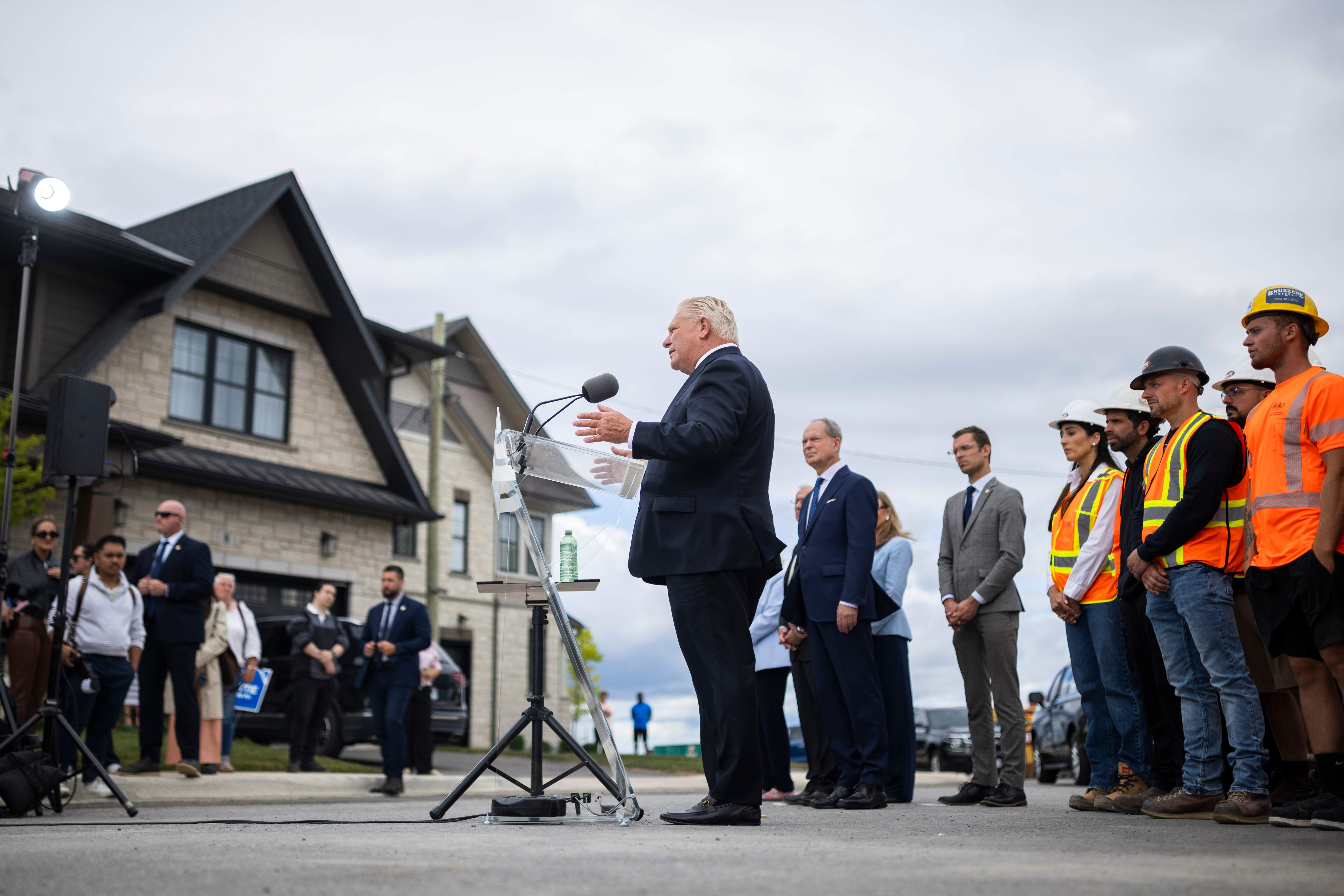
Premier Doug Ford's refusal to recall Members of Provincial Parliament (MPPs) from their extended recess—which stretches until late October—highlights a fundamental tension between speed and parliamentary oversight. In crisis management, the executive branch prioritizes velocity. Decision-making centralized within the Premier's Office and targeted ministries allows for rapid deployment of existing administrative tools, such as expanding the Protect Ontario financing program or adjusting provincial loan guarantees for affected manufacturers.
However, this executive-heavy model introduces a distinct vulnerability: the absence of statutory authorization for major fiscal deployments. When a provincial government attempts to alter public procurement laws, cancel cross-border data centre agreements, or mandate domestic supply chain prioritization without legislative consent, it operates within narrow administrative boundaries. Relying solely on executive discretion limits the scale of intervention. Without a sitting parliament, new statutory frameworks cannot be enacted to legally compel structural shifts in trade exposure or reallocate capital on a macro scale.
The Cost Function of Parliamentary Avoidance
Opposition leaders argue that bypassing the legislature removes public scrutiny and accountability during a critical economic transition. From a strategic standpoint, this debate exposes a clear trade-off between administrative efficiency and democratic legitimacy.
- The Velocity Argument: Executive governance avoids the procedural delays of debate, committee readings, and partisan gridlock, allowing funds to reach designated industrial sectors without procedural friction.
- The Authorization Argument: Executive action lacks the legal weight required to force structural changes onto private entities, such as overriding existing commercial contracts with United States firms or legally enforcing buy-Ontario procurement mandates.
- The Transparency Deficit: Closed-door decision-making obscures the allocation criteria for emergency funds, reducing market predictability for firms attempting to restructure their supply chains away from American inputs.
When legislative debate is deferred, economic actors receive mixed signals. Steelworkers, automotive part manufacturers, and technology providers require statutory certainty to re-engineer their operational footprints. Relying on press conferences and ad-hoc announcements rather than passed legislation creates a vacuum of long-term confidence.
Strategic Interventions and Market Realities
The policy proposals tabled by opposition parties—including the prohibition of data infrastructure linked to United States entities and the redirection of government fleets exclusively toward domestic automotive assembly—reveal the depth of the structural decoupling required by a prolonged trade conflict. Yet, implementing these measures via executive fiat carries severe legal and operational risks. Trade agreements, municipal-provincial frameworks, and existing vendor contracts are bound by legal frameworks that executive decrees cannot easily dissolve without legislative amendments.
For industrial sectors exposed to fifty percent tariff barriers, the primary variable is time. Every week that passes without a codified legislative response increases the probability of capital flight and permanent production curtailment. While the executive branch maintains that direct, informal communication channels with business leaders suffice, informal channels cannot substitute for statutory appropriations bills or emergency tax relief codified into law.
Execute a comprehensive audit of all provincial procurement contracts currently tied to cross-border vendors, and immediately table an omnibus emergency bill that establishes statutory indemnity for tariff-impacted industrial sectors, bypassing procedural delays through a unified, cross-party consent framework.