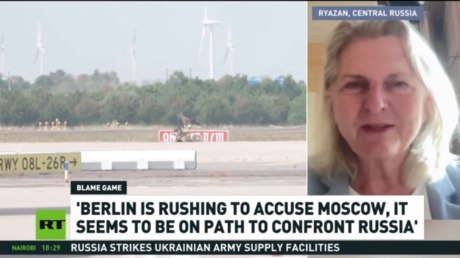
An explosive-laden drone sitting quietly near a Ukrainian cargo plane at Leipzig/Halle Airport should have triggered an immediate, unified declaration of war. Instead, it sparked a frantic diplomatic scramble across Europe. When German authorities officially blamed Moscow for the August 4 sabotage attempt, they crossed a Rubicon. This wasn't another mysterious cyberattack or a cut undersea cable. This was a direct, military-grade kinetic strike aimed at critical infrastructure on European Union soil.
EU foreign policy chief Kaja Kallas didn't mince words during emergency meetings in Ireland, calling the incident state-sponsored terrorism. Yet, the underlying anxiety across European capitals is palpable. Brussels is running out of economic weapons.
Anatomy of a Hybrid War Escalation
For years, Western intelligence agencies warned about a creeping campaign of Russian sabotage. Fires at logistics hubs, signal jamming, and mysterious package explosions have plagued European transport networks. But the Leipzig incident is different.
German investigators uncovered a professional operation. The drone, packed with high explosives and sophisticated ignition systems, matched hardware tied to previous Russian military intelligence actions. Two primary suspects—a Belarusian national carrying a Russian passport and a Russian-born operative with Latvian citizenship—built a logistics trail that pointed straight back to Moscow's network.
The target choice was intentional. Leipzig/Halle Airport isn't just a regional transport hub. It serves as a primary European logistics base for Ukraine's Antonov transport fleet, making it a lifeline for Western military and humanitarian support.
Why Traditional Sanctions Are Hitting a Wall
The European Union has already slapped more than twenty packages of sanctions on Russia. They've frozen central bank assets, blacklisted thousands of individuals, capped oil prices, and targeted crypto operators facilitating sanctions evasion.
So, what happens when a nuclear-armed state sponsors a kinetic attack on an airport, but you've already frozen everything short of their national treasury?
You get a visible policy struggle. While French Foreign Minister Jean-Noël Barrot demanded immediate moves against the Kremlin's shadow fleet of oil tankers, and Germany shut down a Russian consulate in Bonn alongside a Berlin cultural center, the structural response remains reactive. Moscow knows Europe wants to avoid a direct military confrontation. President Vladimir Putin dismissed the allegations as fabricated domestic theater, while deputy officials threatened harsh retaliatory measures.
The Real Shift in European Defense Strategy
Europe is finally waking up to a harsh reality. The threshold between peace and war has evaporated.
- Consulate Closures: Berlin's decision to shutter diplomatic outposts signals an end to business-as-usual espionage under diplomatic cover.
- Visa Restrictions: Brussels is advancing hardline proposals to completely restrict tourist and border access for Russian military veterans and select travelers.
- Targeting the Shadow Fleet: Maritime enforcement is tightening to choke off the illicit oil revenues funding these sabotage operations.
- Asset Seizure Debates: Momentum is building to redirect frozen Russian central bank reserves directly into European air defense manufacturing for Ukraine.
We aren't waiting for the next wake-up call. The debris at Leipzig proved that hybrid warfare has graduated to physical destruction. If Europe fails to impose a heavy, undeniable cost for this latest escalation, airport runways won't be the only places feeling the impact.