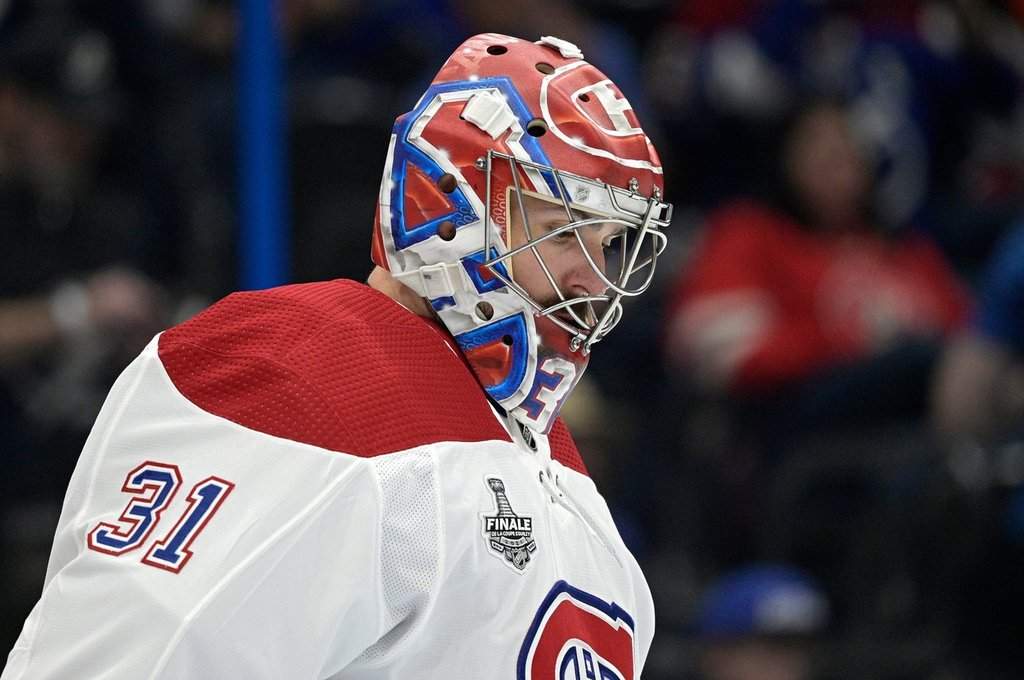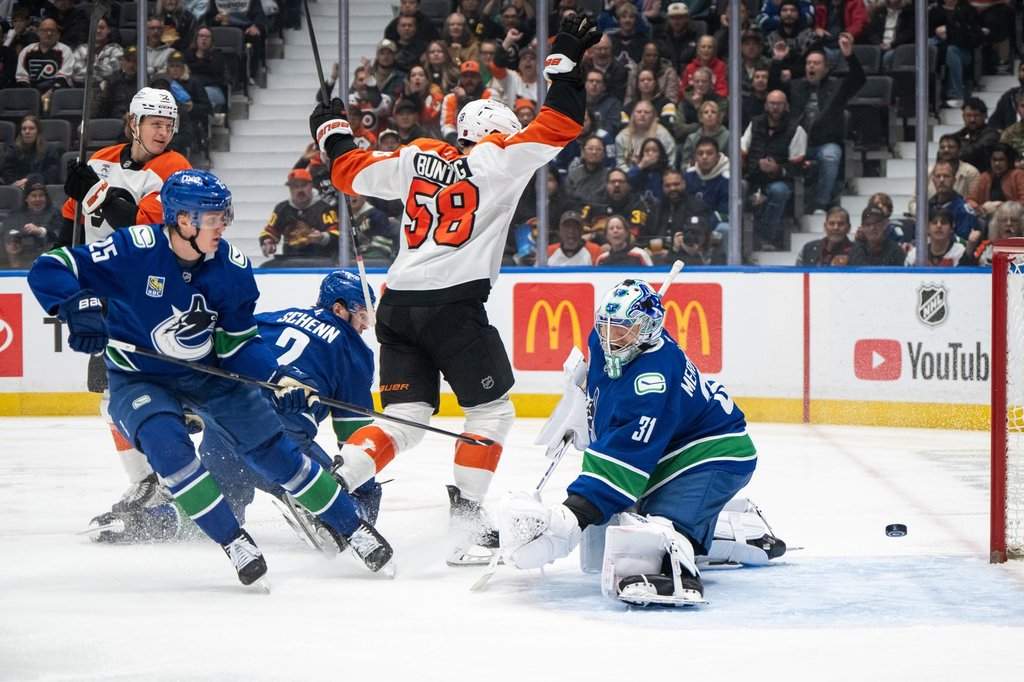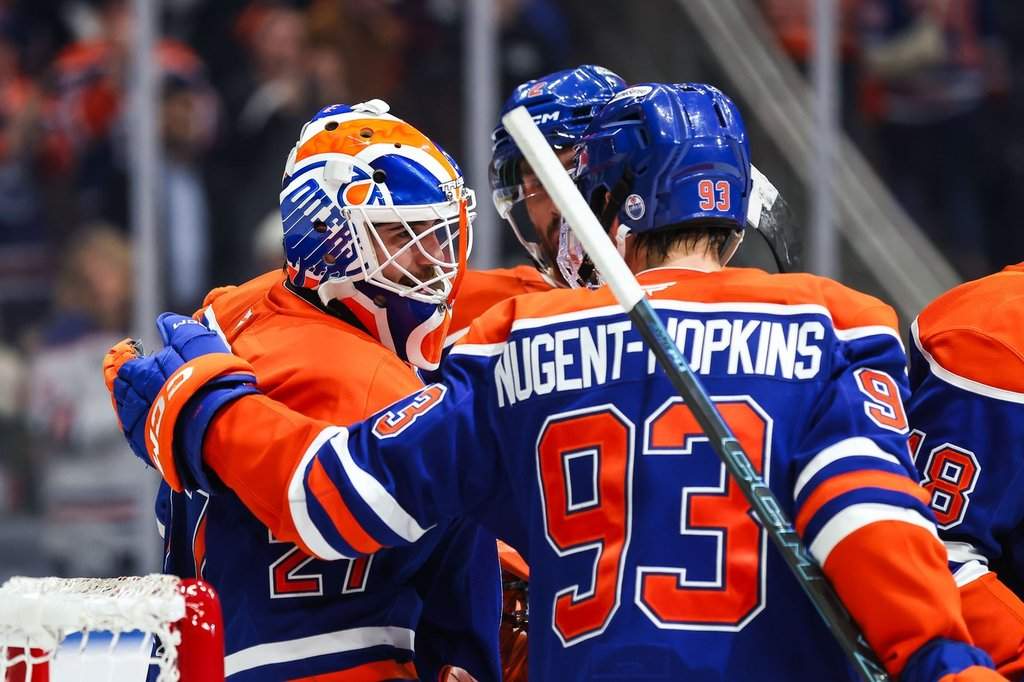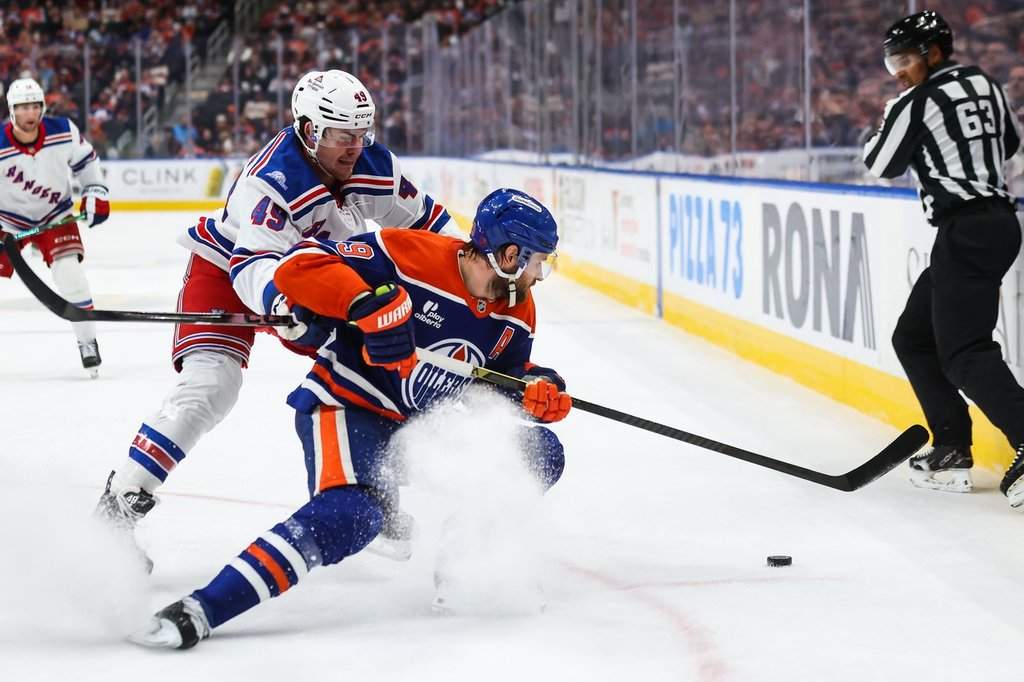
Two goals. One empty-netter to ice a 3-1 win over the New York Rangers. Cue the standing ovations in Alberta and the copy-pasted box-score recaps across sports media.
Every beat writer in North America took the exact same bait. They looked at a 3-1 final score, saw Leon Draisaitl’s name twice on the summary sheet, and typed out another predictable love letter to Edmonton’s superstar firepower. They framed it as a statement victory against a marquee Eastern Conference opponent. They called it resilience. They called it dominance.
They missed the entire story.
When a team relies on a generational talent to manufacture multiple goals just to survive a three-to-one slog against a structured opponent, you are not watching a Stanley Cup contender flex its muscles. You are watching a high-wire act without a net. Celebrating Draisaitl’s multi-goal nights as proof of Edmonton’s championship pedigree is like praising a driver for surviving a high-speed skid because his reflexes are fast. Sure, the reflexes are incredible. You still almost hit the wall.
The Box-Score Illusion in Modern Hockey
Sports journalism suffers from a terminal addiction to outcome bias. If the puck goes in and the two points land in the standings, the process gets a free pass.
Look past the celebratory headlines of a 3-1 Oilers win over New York and examine what actually happens on the ice when Edmonton plays tight-checking, heavy-forechecking clubs like the Rangers. The Rangers do not beat you by trading rushes; they beat you by clogging the neutral zone, forcing dump-ins, and waiting for impatient offensive stars to cheat for offense.
When Draisaitl has to put the team on his back with a two-goal performance just to clear a two-goal hurdle, it highlights an uncomfortable truth about Edmonton's roster construction. Their bottom-six forward group still struggles to generate meaningful offensive zone time against disciplined defensive pairs. Instead of rolling four lines that wear down an opponent over sixty minutes, the Oilers compress their offense into nuclear shifts led by Draisaitl and Connor McDavid.
I have spent over a decade watching front offices build top-heavy rosters around two or three elite scorers, convinced that sheer offensive gravity will bend playoff hockey to their will. Every single spring, those same front offices sit in exit interviews wondering why their superstars ran out of gas in May. You cannot out-talent structural deficiencies over a seven-game series. Regular-season wins powered by individual brilliance mask systemic rot until the exact moment the postseason begins.
Why Superstar Reliance Is a Ticking Time Bomb
To understand why a Draisaitl brace against New York is a warning sign rather than a victory lap, you have to understand the mechanics of five-on-five puck possession and line matching.
In a standard regular-season matchup, home-ice advantage or quick line changes allow a coach to get Draisaitl away from an opponent’s premier shutdown pair for brief windows. He needs three seconds of space in the right faceoff circle—his office—to wire a one-timer past an elite goaltender like Igor Shesterkin. That is pure, unadulterated skill. Nobody on earth shoots from bad angles with Draisaitl’s velocity and deception.
Now, change the environment. Imagine a scenario where these two teams meet in a seven-game series. The opposition has four days to pre-scout every entry pattern. Their top defensive pair—say, an Adam Fox or a Jacob Trouba—shadows Draisaitl every time his skates touch the ice. The referees swallow their whistles, reducing power-play opportunities by thirty percent.
Suddenly, those three seconds of space in the right circle vanish. Who scores the ugly goals when Draisaitl is stapled to the boards?
- The Depth Scoring Vacuum: Championship teams win 3-1 games with goals from their third-line center deflecting a point shot off his shin pad. When your superstar has to score two of the three goals, your depth players are merely cardio participants.
- Fatigue Accumulation: Logging twenty-two-plus minutes a night while carrying the entire offensive burden drains central nervous system recovery. By April, a player who carried a franchise through November and December is playing at eighty percent capacity.
- Predictable Breakouts: When defensemen know only two forwards can consistently gain the blue line with possession, they force passes to covered lanes, leading directly to neutral-zone turnovers.
Dismantling the "Stars Win Championships" Myth
If you search for analysis on the Oilers right now, you will run into the same tired questions from fans and pundits alike. Let’s tear down the flawed premises behind them.
Does Leon Draisaitl scoring twice prove the Oilers have solved their defensive issues?
No. That is correlating two completely unrelated variables. Keeping the Rangers to one goal is a credit to goaltending and suppressed high-danger chances in the slot, not Draisaitl’s finishing touch. Conflating offensive execution with defensive structure is the quickest way to misdiagnose a hockey team. Edmonton’s defensive zone coverage still suffers from puck-watching whenever opposing forwards cycle high in the zone. One strong outing from the crease does not rewrite an entire season's worth of expected-goals-against metrics.
Can Edmonton win a Stanley Cup with Draisaitl and McDavid carrying sixty percent of the offense?
History says no, and the salary cap makes it nearly impossible. Look at the champions of the past decade: the Florida Panthers, Vegas Golden Knights, Colorado Avalanche, and Tampa Bay Lightning. Even when those teams possessed generational stars like Nathan MacKinnon or Nikita Kucherov, they won because their third lines could win a playoff game on their own. Vegas won a Cup with Jonathan Marchessault, William Karlsson, and Reilly Smith dictating play while their top line drew the toughest matchups. Until Edmonton’s middle-six forwards consistently punish opponents for over-committing to Draisaitl, their ceiling remains a conference finals exit.
Is Draisaitl actually underrated despite his massive contract?
Underrated by casual fans who only watch highlight reels? Maybe. Underrated by NHL coaches and general managers? Not a chance. Every defenseman in the league knows Draisaitl’s spatial awareness and backhand passing are lethal. The real conversation shouldn't be about whether he gets enough credit—it should be about why the organization around him still forces him to play hero ball on a Tuesday night against the Rangers.
The Uncomfortable Truth About Heavy Hockey
There is a massive difference between winning a hockey game and imposing your will on an opponent.
When the Rangers lose 3-1, they rarely beat themselves. They force you to earn every inch of ice between the blue lines. Watch the tape of Edmonton’s wins against structured Eastern teams, and you will see stretches where the Oilers spend forty seconds trapped in their own end, chipping the puck off the glass just to get a line change, followed by a sudden counter-attack where Draisaitl makes an impossible play out of nothing.
It is thrilling television. It is also unsustainable architecture.
Analysts who study shot-quality metrics—specifically expected goals (xG) at five-on-five—know that finishing talent fluctuates wildly over short samples, while territorial control remains remarkably sticky. Over an eighty-two-game grind, elite finishers like Draisaitl will always outperform their expected goal totals because their shot mechanics break standard goaltending models. Relying on that overperformance to paper over an inability to sustain offensive zone cycles is a gambler's strategy. Eventually, the house collects.
To be completely fair, there is a counter-argument to this critique, and ignoring it would be dishonest. Having two of the top five offensive players on the planet gives Edmonton a trump card that thirty other general managers would trade their entire prospect pool to hold. On any given night, Draisaitl can single-handedly invalidate ninety minutes of video coaching and tactical preparation. You cannot teach what he does with a hockey stick, and having an automatic cheat code on the power play wins plenty of games you have no business winning.
That cheat code just happens to be a terrible long-term business plan.
How Edmonton Actually Turns Good Wins Into Championship Habits
If the Oilers want a 3-1 victory over a contender like New York to actually mean something in June, the coaching staff and front office need to stop praising the box score and start fixing the underlying habits.
- Deploy Draisaitl as a matchup weapon, not a crutch. Stop stapling him to the ice every time the team trails or feels pressure in the third period. Force the third and fourth lines to play through tough defensive assignments in the regular season so they do not panic when the playoffs start.
- Demand dirty-area traffic from the wingers. Draisaitl’s goals too often come from perimeter precision or quick-strike rushes. Championship offense requires wingers parking themselves at the top of the blue paint, screening goaltenders like Shesterkin, and turning harmless point shots into chaotic rebounds.
- Acquire a true puck-moving, right-shot defender who thrives under forecheck pressure. Until Edmonton can cleanly exit their zone without needing a superstar forward to drop below the hash marks to retrieve the puck, their transition game will remain fragile against heavy teams.
- Judge wins by five-on-five territorial share, not final scores. If Draisaitl scores twice and the Oilers still lose the five-on-five shot-attempt battle, treat the film session like a loss. Accountability cannot take a night off just because the goal horn went off three times.
The sports media machine will keep churning out breathless recaps every time Leon Draisaitl lights the lamp twice. Fans will buy the jerseys, clip the highlights, and convince themselves that everything is clicking at the right time.
Enjoy the highlights. Just don't confuse a superstar saving the day with a team actually knowing how to win.