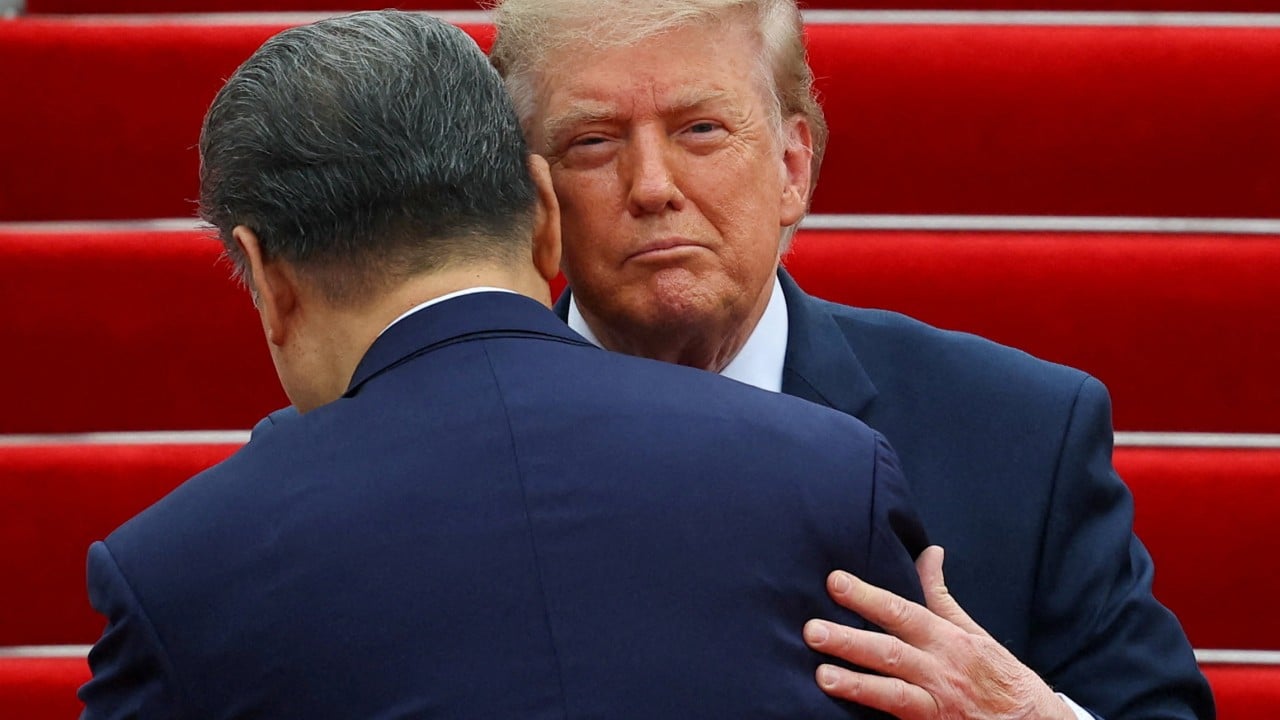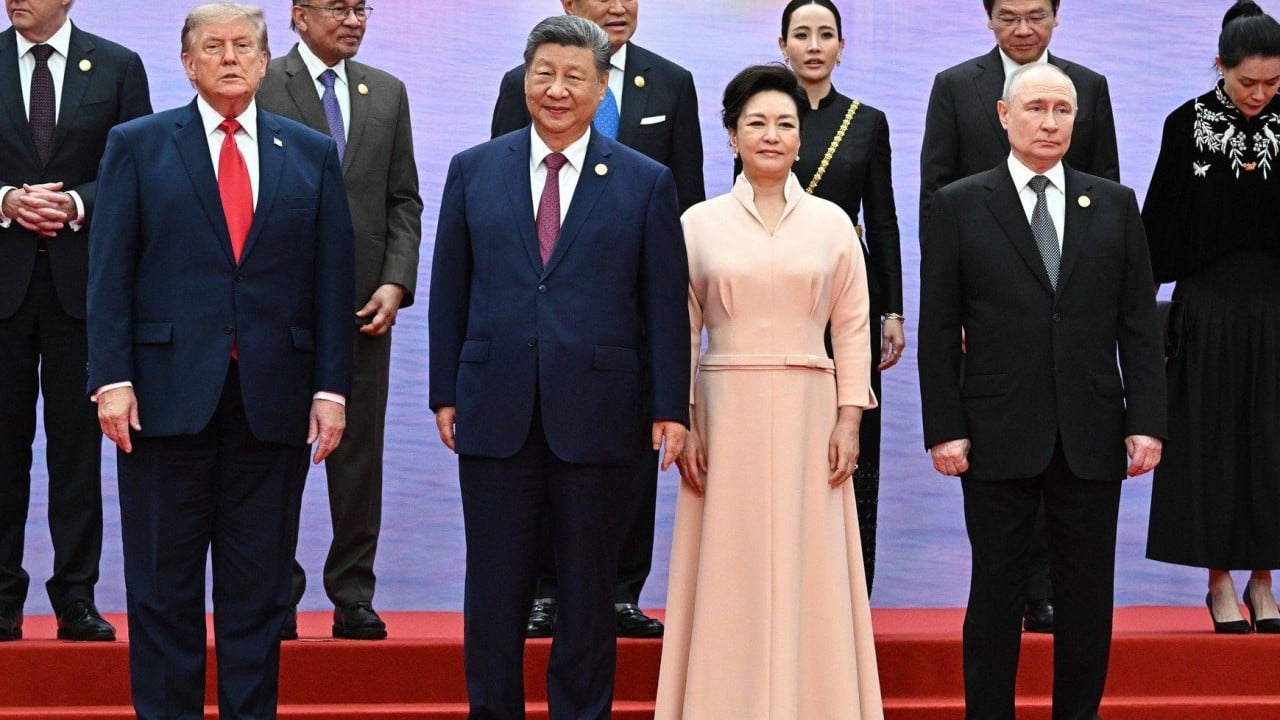
When a spouse of a head of state chooses to speak a foreign guest's native language during a televised state arrival, the action is not a spontaneous display of hospitality; it is a calibrated diplomatic signal designed to bypass formal bureaucratic friction and establish immediate interpersonal rapport. In diplomatic practice, the deployment of English by China’s First Lady, Peng Liyuan, during engagements with U.S. leadership—specifically Donald Trump—functions as an asymmetric soft-power asset. While mainstream coverage often reduces these moments to human-interest anecdotes about charm or poise, an operational analysis reveals a structured communication strategy aimed at recalibrating bilateral optics during periods of acute geopolitical tension.
The Structural Architecture of Spousal Diplomacy
Modern statecraft relies on a division of labor between formal policy execution and informal atmospheric conditioning. Heads of state operate within rigid institutional boundaries, bound by talking points, domestic political constraints, and zero-sum negotiating postures. The diplomatic spouse operates outside these formal constraints, creating a parallel channel for cultural and interpersonal messaging.
To understand the mechanics of Peng Liyuan’s linguistic choices, one must separate the persona from the institutional function. Unlike previous generations of Chinese first ladies, who maintained low public profiles focused entirely on domestic protocol, Peng entered the role with established public recognition as a prominent soprano and major general in the People's Liberation Army. This background provided an existing foundation of domestic legitimacy and media fluency, enabling the Chinese diplomatic apparatus to deploy her as an active instrument of public diplomacy rather than a passive ceremonial figure.
The Three Pillars of Linguistic Signaling
When a high-ranking representative speaks the language of a counterpart without an interpreter, three distinct operational mechanisms are triggered simultaneously.
- Friction Reduction in Initial Contact: Interpreters introduce a temporal and emotional buffer into human interaction. The cadence of conversation slows, non-verbal cues are decoupled from spoken words, and the exchange feels inherently transactional. Direct linguistic engagement eliminates this latency. In the first thirty seconds of a state visit—the period most heavily scrutinised by global media—unmediated speech projects warmth and accessibility, countering narratives of institutional rigidity or hostility.
- Projection of Cosmopolitan Competence: In international relations, linguistic fluency serves as a proxy for modernity and global integration. For Beijing, presenting a first lady who communicates comfortably in English reinforces a broader state narrative of China as an open, sophisticated, and globally engaged power, contrasting with external characterizations of the state as insular or strictly authoritarian.
- Asymmetric Reciprocity: In bilateral U.S.-China engagements, linguistic accommodation is almost exclusively unidirectional. U.S. principals rarely possess functional fluency in Mandarin, meaning the burden of linguistic bridging falls entirely on the Chinese side. By voluntarily assuming this burden in public-facing moments, the host demonstrates cultural competence and confidence, subtly shifting the psychological dynamic of the encounter without conceding any substantive policy ground.
Deconstructing the Trump Engagement Dynamics
The bilateral relationship between Washington and Beijing during the Trump administration was characterized by structural friction, trade disputes, and unpredictable personal diplomacy. Standard diplomatic protocols, which rely on predictability and incremental consensus-building, frequently stalled under an executive style that prioritized personal rapport and transactional deal-making over institutional process.
Within this specific environment, Peng Liyuan’s use of English functioned as a targeted stabilizing mechanism. Donald Trump’s diplomatic approach placed high value on personal warmth, flattery, and visible displays of respect from foreign counterparts. Formal policy concessions were costly for Beijing to offer upfront; atmospheric concessions, however, carried zero policy cost while yielding immediate perceptual dividends.
The Mechanics of Atmospheric Conditioning
The execution of this strategy can be observed in the choreography of high-profile summits, such as the 2017 meetings at Mar-a-Lago and the subsequent state visit to Beijing. The sequencing of interactions followed a clear operational logic:
- Bypassing the Bureaucratic Layer: By engaging directly in English during greetings, cultural tours, and informal transitions, Peng established a direct personal connection with both the U.S. President and First Lady Melania Trump. This created a positive emotional baseline before formal delegations entered closed-door negotiations.
- Shifting the Media Frame: State visits generate two distinct streams of media coverage: policy analysis focused on trade deficits, security, and intellectual property, and visual coverage focused on pageantry and personal chemistry. Fluent, unscripted-appearing English exchanges dominate the visual news cycle. They provide broadcasters with easily digestible soundbites that frame the summit around cooperation and mutual respect, temporarily diluting coverage of underlying structural conflicts.
- Leveraging Cultural Literacy: Fluency in a language implies familiarity with the underlying cultural norms of its speakers. Direct greetings, conversational pacing, and appropriate idiomatic usage signal to a Western audience that the speaker understands their cultural framework. This reduces the perceived "otherness" of the Chinese leadership, a critical objective when attempting to influence U.S. public opinion and elite perception.
The Economics of Soft Power Cost Functions
In strategic communications, every public action carries a cost-benefit ratio measured in domestic political capital, international credibility, and operational risk. Deploying a principal's spouse as a linguistic bridge represents a remarkably efficient allocation of diplomatic resources, though it is not without structural constraints.
Low-Cost, High-Visibility Yield
Training, preparation, and precise scripting are required to execute public engagements in a second language under intense media scrutiny. However, compared to the economic cost of trade concessions or the geopolitical cost of security compromises, the expenditure is negligible. The return on investment is immediate: global media amplification of a humanizing moment that softens the hard edges of state power.
Furthermore, this approach utilizes the psychological principle of reciprocity. When a host goes out of their way to accommodate a guest in the guest's native tongue, social norms dictate that the guest respond with heightened politeness and receptivity. While this does not alter core national interests, it lowers the temperature of the room, creating marginal space for pragmatic dialogue on contentious issues.
Operational Risks and Limitations
No diplomatic tool operates without friction or diminishing returns. Relying on linguistic charm and spousal diplomacy introduces specific vulnerabilities that strategists must manage:
- The Linguistic Risk: Speaking a non-native language in unscripted environments carries the constant risk of misinterpretation, awkward phrasing, or grammatical error. For a diplomatic apparatus that prizes absolute control over messaging, any deviation from approved scripts represents a vulnerability. Consequently, these English interactions are typically confined to tightly controlled environments—arrivals, departures, and structured cultural events—rather than open-ended press conferences or policy discussions.
- The Ceiling of Soft Power: Atmospheric improvements cannot resolve structural divergences. Warmth generated on a red carpet or during a museum tour does not alter tariff schedules, maritime territorial disputes, or technological competition. When underlying geopolitical realities remain unaddressed, repeated reliance on symbolic gestures can begin to look performative, leading analysts and the public to discount their significance over time.
- Domestic Audience Calibration: Diplomatic messaging must simultaneously satisfy international observers and domestic constituents. While international media applauds cosmopolitan fluency, domestic nationalist audiences may scrutinize perceived over-accommodation of a foreign rival. The messaging must therefore be carefully balanced: projecting confidence and hospitality as a gracious host, rather than deference.
Comparative Frameworks in Diplomatic Language Choice
To evaluate the strategic weight of Peng Liyuan’s approach, it is necessary to contrast it against standard diplomatic protocol regarding language selection. Historically, high-level diplomacy has operated under strict norms of linguistic parity, governed by the principle of sovereign equality.
The Protocol of Sovereign Parity
In traditional statecraft, leaders speak their native language during official proceedings, even if they possess fluent command of their counterpart’s tongue. This rule exists for two primary reasons:
- Precision of Meaning: Nuance in international agreements is critical. Speaking in one’s native language ensures complete command over vocabulary, tone, and legal implications, placing the burden of accurate translation on professional interpreters.
- Assertion of Status: Insisting on one's own language asserts equal standing on the world stage. To default to another nation's language in formal settings can be interpreted domestically as a subtle concession of cultural or political hierarchy.
Strategic Deviation as a Calculated Signal
Because the norm of speaking one's native language is so deeply entrenched, any deliberate deviation carries amplified meaning. When a leader or their spouse breaks protocol to speak the visitor's language, the deviation itself becomes the message.
This tactic is not unique to Beijing. European leaders frequently switch to English during bilateral meetings in Washington to signal transatlantic solidarity and operational alignment. Similarly, U.S. presidents have historically deployed isolated phrases in a host's language—such as John F. Kennedy in Berlin or Barack Obama in various international capitals—to signal empathy and shared values.
The distinction in the U.S.-China context lies in the structural asymmetry of the relationship. Unlike transatlantic allies, Washington and Beijing are systemic competitors. Therefore, when Peng Liyuan uses English, it is not an affirmation of an existing alliance, but a deliberate effort to bridge an ideological and geopolitical divide. It functions as a tactical de-escalation tool, signaling willingness to engage on human terms despite systemic rivalry.
Tactical Execution of High-Context Messaging
The effectiveness of this communication strategy depends entirely on execution. In high-context cultures—where meaning is derived heavily from non-verbal cues, setting, and relationship dynamics rather than explicit verbal statements—the delivery of the message is as critical as the words themselves.
Controlling the Visual and Auditory Frame
The integration of English into Peng’s diplomatic appearances is supported by rigorous stagecraft:
- Vocal Control and Pacing: Drawing on decades of professional vocal training, Peng manages pitch, cadence, and projection with precision. Speaking slowly and clearly in a second language projects calm authority and prevents the rushed, anxious delivery that often undermines non-native speakers in high-pressure environments.
- Non-Verbal Alignment: Verbal greetings are paired with open body language, sustained eye contact, and composed posture. This alignment ensures that the auditory signal (speaking English) matches the visual signal (welcoming host), eliminating cognitive dissonance for the observer.
- Strategic Brevity: The interactions are kept concise. By limiting English usage to greetings, brief pleasantries, and guided explanations during cultural showcases, the interaction maximizes impact while minimizing exposure to conversational complexity where fluency might falter.
The Role of the First Lady as a Cultural Intermediary
Beyond language itself, the content of these interactions typically centers on shared cultural touchpoints—art, music, education, and family. Peng Liyuan’s background as an artist and her role as a UNESCO Special Envoy for the Advancement of Girls' and Women's Education provide natural, non-political domains for engagement.
When she discusses traditional Chinese opera, calligraphy, or educational initiatives in English with a visiting U.S. delegation, she reframes the bilateral relationship away from zero-sum economics and toward shared human heritage. This reframing is particularly effective with counterparts like Donald Trump, whose worldview is heavily influenced by visual grandeur, historical legacy, and personal prestige. By curating an experience that highlights China’s cultural depth in a language the guest immediately understands, the host shapes the guest's emotional perception of the nation.
Evaluating the Long-Term Strategic Impact
Analysts frequently debate whether symbolic diplomacy yields tangible policy outcomes. If one measures success solely by immediate changes in trade policy or security posture, the impact of a first lady speaking English appears negligible. However, evaluating soft power through hard-power metrics is a category error.
The true function of this strategy is risk mitigation and narrative management. In a bilateral relationship prone to sudden escalations, personal channels of communication act as shock absorbers. When leaders and their families have established a baseline of mutual courtesy and direct communication, it becomes marginally harder to demonize the counterpart entirely during subsequent policy disputes.
Furthermore, these moments serve a vital archival function in global public diplomacy. Images and video clips of warm, English-language exchanges circulate indefinitely across digital platforms, providing a counter-narrative to coverage focused exclusively on geopolitical friction. For international audiences—particularly in third-party nations observing the U.S.-China dynamic—these visuals project an image of Chinese leadership as composed, culturally fluent, and committed to constructive engagement.
Strategic Forecast and Operational Directives
As geopolitical competition between the United States and China continues to harden across technological, economic, and security domains, formal diplomatic channels will face increasing structural constraints. In this environment, asymmetric soft-power tools—such as linguistic bridging and spousal diplomacy—will grow in tactical importance, even as their capacity to alter core strategic trajectories remains capped.
For communications strategists and diplomatic practitioners managing high-stakes, adversarial relationships, the operational takeaway is clear: separate atmospheric conditioning from policy negotiation, and deploy low-cost symbolic assets systematically to manage the media frame.
- Institutionalize Linguistic Bridging in Protocol: Do not treat second-language proficiency among principals and spouses as a peripheral personal trait. Integrate targeted, brief, and unmediated second-language exchanges into the arrival and cultural phases of high-stakes engagements to establish immediate interpersonal rapport and dominate the visual news cycle.
- Enforce Strict Domain Boundaries: Confine non-native language deployment strictly to ceremonial, cultural, and interpersonal contexts. Never allow symbolic linguistic accommodation to bleed into substantive policy negotiations, where precision of meaning and sovereign parity must remain absolute.
- Calibrate Against Diminishing Returns: Recognize that atmospheric warmth has a short half-life when detached from substantive progress. Pair high-visibility cultural diplomacy with concrete, low-friction deliverables—such as educational exchanges, cultural loans, or humanitarian cooperation—to prevent symbolic gestures from being dismissed by domestic and international audiences as empty theater.