Trust is an invisible architecture. We build it out of small habits: the sound of a key turning in the lock, a cup of tea left on a bedside table, the quiet certainty that the person sleeping next to you is a sanctuary, not a threat. We assume the walls of our homes are proof against the dark. We assume the bedroom is the safest place on earth.
Then comes the unravelling.
For two decades, in a home in the south of France, that architecture was systematically hollowed out from the inside. Dominique Pelicot stood accused of an unimaginable betrayal: drugging his wife, Gisèle Pelicot, rendering her unconscious, and inviting dozens of strangers into their bedroom to violate her. The sheer scale of the horror—documented on hard drives, cataloged with chilling administrative precision—stunned the global conscience when the trial finally opened in Mazan. It was a crime so grotesque it felt displaced from reality, a nightmare smuggled into the daylight of a quiet retirement.
Yet, as the legal proceedings ground forward, a new kind of shock rippled through the courtroom. Dominique Pelicot was no longer part of the trial.
Not because justice had run its course. Not because he had found redemption or faced a sudden reckoning of the soul. He was absent because of severe illness, retreating behind medical exemptions while the woman he had broken sat in the front row, day after day, choosing light over shadow.
Consider what happens when the perpetrator vanishes from the stage. The machinery of justice is designed to run on confrontation—the accused and the accuser standing in the same harsh fluorescent light, forced to look one another in the eye. When illness removes the architect of the abuse from the room, the trial shifts. The burden of witness falls heavier still on the survivor. The empty chair becomes a strange kind of monument to cowardice, a physical manifestation of a man who spent twenty years hiding in plain sight, only to hide again when the bill came due.
We need to talk about what it means to survive an invisible crime.
Most violence announces itself with a shout, a bruise, the shattering of glass. It leaves forensic trails that the world can easily parse. But what happens when the weapon is stealth? When the poison is slipped into a glass of evening water under the guise of care? Gisèle Pelicot did not know she was being assaulted. For twenty years, she walked through her days feeling a strange, persistent exhaustion, blaming her age, blaming her health, never suspecting that the man she trusted with her life was the very author of her confusion.
That is the true terror of drug-facilitated sexual assault. It steals your reality before it steals your body. It rewrites your memories, replacing them with blank spaces that your mind tries desperately to fill with harmless explanations. I must be getting old. I must be stressed. The gaslighting is total because it happens at a cellular level, engineered by someone who knows your rhythms, your vulnerabilities, and the exact dose required to switch off your consciousness while leaving your pulse intact.
When the gendarmes finally raided the Pelicot home, they did not find a dungeon. They found an ordinary house. That is the detail that stays with you. Evil rarely looks like a monster in the shadows; most often, it looks like a man mowing his lawn, smiling at the neighbors, carrying the groceries inside.
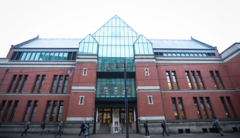
The trial in Avignon became a watershed moment, largely because Gisèle Pelicot made a deliberate, searing choice. She refused the protective shield of anonymity. In a legal system that often shields victims to spare them further trauma, she demanded that the doors be thrown open. She insisted that the public see the faces of the men who stood accused—ordinary husbands, fathers, grandfathers, professionals who had accepted an online invitation to violate an unconscious woman.
She stripped away the shame and laid it squarely where it belonged: on the perpetrators.
And yet, the absence of the primary defendant casts a long, complicated shadow over the pursuit of closure. When a trial loses its central figure to medical leave, the narrative fractures. The public is robbed of the catharsis of direct cross-examination, of watching the mask slip, of hearing an explanation for the unexplainable. Why? How does a human mind fracture to the point where decades of affection can coexist with industrial-scale cruelty?
We look for answers because we want safety. We want to believe that monsters are identifiable by their sharp edges, that we would spot them across a crowded room, that our own marriages and friendships are built on unshakeable ground. When we learn that ordinary men can commit extraordinary atrocities behind closed doors, our internal map of the world shatters.
Gisèle Pelicot’s resilience has since become a global symbol, but let us not romanticize her strength. Strength in this context is not a superpower; it is simply what is left when every other option has been burned away. She did not ask for this mantle. She would gladly trade the global solidarity, the magazine covers, and the courtroom applause for twenty years of genuine peace, for memories unpoisoned by betrayal.
The trial continues with the co-accused—the strangers who answered the digital call, who drove to that house, who walked into a bedroom knowing a woman lay drugged and defenseless. Their defense arguments often rely on a staggering cognitive dissonance: I thought it was a game. I thought she was participating. I didn't know.
The excuse of ignorance collapses under the weight of basic human decency. You do not stumble into a crime of that magnitude by accident. You have to actively choose to ignore the absence of breath, the stillness of the body, the fundamental red flags of human interaction. The men in that courtroom are not cartoon villains; they are ordinary citizens whose moral compasses proved remarkably pliable when convenience and impulse whispered in their ears.
As the legal battle winds toward its eventual verdict, the empty chair at the defense table remains a haunting metaphor for how perpetrators evade the full emotional weight of their actions. They hide behind health reports, behind legal technicalities, behind the sheer passing of time.
But the truth has already escaped the room. It echoes in the quiet spaces between heartbeats, in the courage of a woman who looked into the abyss and refused to blink.
The doors of that house in Mazan are locked now, or perhaps inhabited by strangers who know nothing of the ghosts in the walls. But the legacy of what happened there demands more than a judicial sentence. It demands an unsparing look at the culture of silence that allows domestic horrors to fester in plain sight, protected by the polite fictions of suburban life.
We are left with the silence of an empty chair, and the resounding voice of a woman who proved that even the darkest secrets cannot survive the stubborn, terrifying glare of the truth.


