The projected 50% surge in Malaysian food prices is not a speculative anomaly but a mathematical certainty derived from the convergence of fuel subsidy rationalization and the structural inefficiency of the domestic supply chain. When transport costs escalate in a market characterized by high middleman density and low cold-chain optimization, the resulting "margin stacking" creates a non-linear price explosion for the end consumer. Traders are not merely predicting inflation; they are signaling the breaking point of a low-cost equilibrium that has been artificially sustained by government intervention for decades.
The Cost-Push Mechanism of Subsidy Withdrawal
Malaysia’s food ecosystem relies on a high-frequency, low-tonnage logistics model. Because the majority of domestic produce moves from smallholder farms to central markets via aging fleets of light commercial vehicles, the "diesel intensity" per kilogram of food is disproportionately high. The removal of fuel subsidies triggers a three-stage transmission of cost: Don't forget to check out our earlier post on this related article.
- Primary Logistics Shock: Direct operational costs for transporters rise. In a thin-margin environment (typically 3% to 5% for hauliers), these costs are passed to the wholesaler within a single billing cycle.
- Compounded Markup: Each intermediary in the Malaysian food value chain—collector, primary wholesaler, secondary wholesaler, and retailer—applies a percentage-based markup rather than a flat-fee service charge. If a wholesaler applies a 20% margin, they are not just marking up the cost of the vegetable, but also the increased cost of the fuel used to transport it.
- Last-Mile Asymmetry: The final leg of delivery to urban wet markets and hypermarkets is the most inefficient. Traffic congestion in the Klang Valley, coupled with the lack of "green lane" logistics for perishables, means idling engines consume expensive fuel while value-added time remains stagnant.
The Three Pillars of Price Elasticity in Malaysian Staples
To understand why a 30% rise in fuel could lead to a 50% rise in food prices, one must examine the specific vulnerabilities of the Malaysian basket.
The Import Dependency Ratio (IDR)
Malaysia remains a net importer of food, particularly for livestock feed (corn and soy) and specialized produce. These goods are subject to "double-transport" volatility. They incur international shipping costs (indexed to global oil prices) and domestic haulage costs (indexed to local fuel prices). When the Ringgit fluctuates alongside fuel hikes, the IDR acts as a force multiplier for inflation. If you want more about the background here, Reuters Business provides an excellent breakdown.
Cold-Chain Fragmentation
The absence of a unified, national cold-chain infrastructure means that perishability is a hidden tax. Currently, post-harvest losses in Malaysia are estimated between 20% and 40% for leafy greens. As fuel costs rise, the cost of running refrigerated trucks (reefers) becomes prohibitive for smaller players. They revert to ambient-temperature transport, which increases spoilage rates. To recoup the loss of 30% of their cargo to rot, traders must raise the price of the remaining 70% to maintain breakeven points.
Labor-Fuel Substitution Failure
In more advanced economies, rising fuel costs are often mitigated by automating logistics or optimizing routes via AI-driven fleet management. In the Malaysian context, the reliance on manual labor for loading and outdated "pen-and-paper" dispatching means there is no technological buffer to absorb the fuel shock. The system is rigid; it cannot "lean out" its operations to offset the fuel increase.
The Mathematics of the 50% Threshold
The "50% increase" warning from traders is often dismissed as hyperbole, but a basic cost-function analysis supports the possibility for specific categories, notably poultry and short-cycle vegetables.
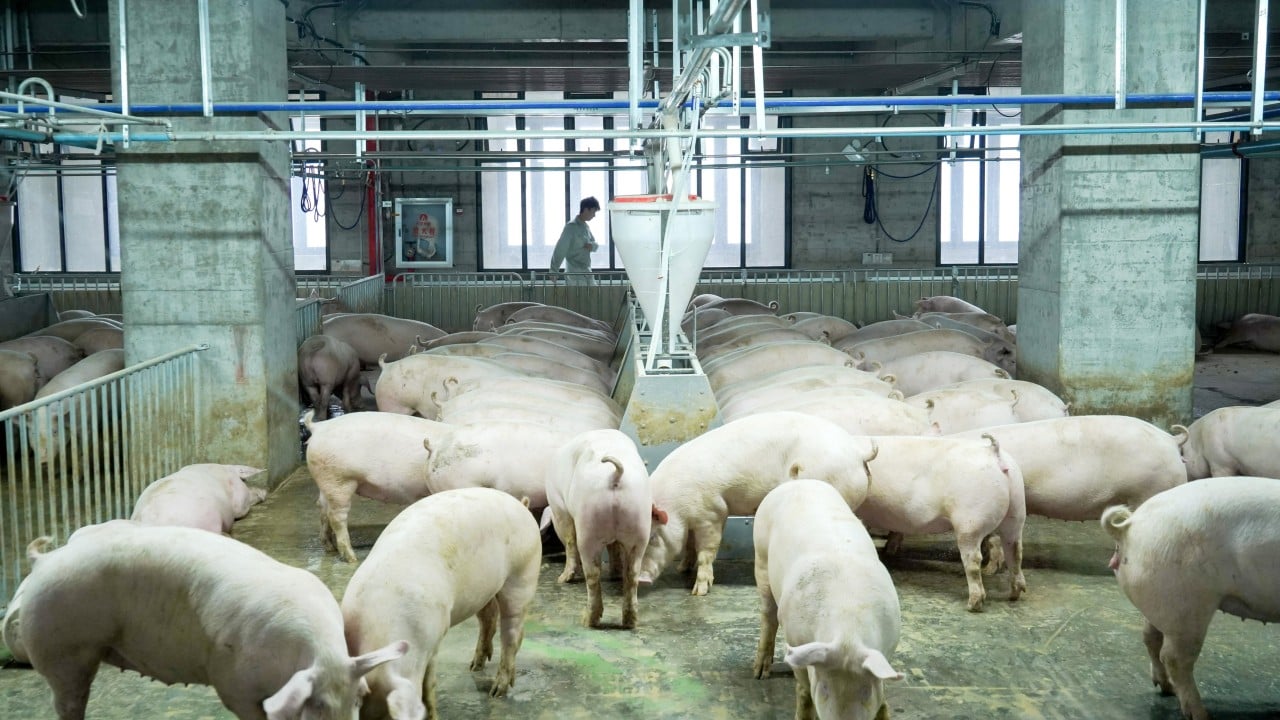
Consider the poultry sector. Feed accounts for approximately 70% of production costs. If the fuel required to transport that feed from port to mill, and from mill to farm, increases by 30%, the base cost of a chicken rises immediately. When you add the fuel cost of transporting live birds to slaughterhouses, and then chilled meat to retailers, the cumulative fuel touchpoints exceed seven stages. By the time the consumer reaches the checkout, the "cumulative fuel weight" of that chicken has been taxed at every transition.
The Strategic Failure of Price Ceilings
Historical data suggests that government-imposed price ceilings during fuel spikes often exacerbate the problem they intend to solve. When the ceiling is set below the "Total Landed Cost" (Production + Transport + Margin), a supply vacuum occurs.
- Diversion: Producers redirect stock to export markets (such as Singapore) where prices are not capped, reducing domestic availability.
- Quality Degradation: To meet the price ceiling while absorbing fuel hikes, producers reduce inputs, leading to lower-weight livestock or lower-grade produce.
- Shadow Markets: Essential goods disappear from regulated shelves and reappear in unregulated "informal" markets at a significant premium.
The current strategy of "targeted subsidies" via the Budi Madani program or similar cash transfers addresses the demand side (giving people money to buy food) but fails to address the supply side (the cost of moving that food).
Operational Bottlenecks in the "Farm-to-Table" Loop
The geography of Malaysian agriculture creates a natural bottleneck. Large-scale vegetable production is concentrated in the Cameron Highlands, while the primary consumption hub is the Greater Kuala Lumpur area. This 200km transit involves steep gradients that maximize fuel consumption.
The logistical "deadhead" problem—where trucks return from the city to the highlands empty—effectively doubles the fuel cost per unit of produce. Without a "backhaul" economy where goods flow both ways, the consumer in KL is effectively paying for the fuel of a 400km round trip for every crate of tomatoes.
The Geopolitical Feed-Link
While domestic fuel policy is the primary driver, it is coupled with an external vulnerability: the global protein cycle. Malaysia’s poultry and egg industry is a "conversion industry"—it converts imported grain into animal protein. This conversion is energy-intensive. Any disruption in global energy markets that raises the cost of synthetic fertilizers or international dry-bulk shipping creates a "pre-shipped" inflationary pressure before the grain even touches Malaysian soil.
The domestic fuel subsidy removal acts as the final spark in a room already filled with the gas of global commodity volatility.
Reconfiguring the National Food Logistical Matrix
Addressing a potential 50% price hike requires a shift from price control to structural optimization. The current model is unsustainable under a market-price fuel regime.
The first move must be the Aggregation of Smallholder Logistics. The government or private sector lead should establish "Logistics Hubs" at the farm-gate level. Instead of 50 half-empty small trucks driving to the city, produce should be consolidated into high-tonnage, fuel-efficient 20-tonne reefers. This reduces the diesel footprint per kilogram by an estimated 40% to 60%.
The second move is the Digitization of the Middleman. The "trader warning" is a symptom of information asymmetry. By implementing a national digital exchange for food items, the "margin stacking" of multiple wholesalers can be bypassed in favor of direct-to-retailer fulfillment. This removes at least two layers of percentage-based markups.
The third move involves Decentralized Urban Farming. Reducing the "food miles" between the point of growth and the point of consumption is the only long-term hedge against fuel volatility. Converting underutilized urban spaces into high-yield hydroponic centers eliminates the Cameron-to-KL transport cost entirely.
The Immediate Strategic Play for Market Participants
Retailers and large-scale food service providers should move immediately to secure long-term, fixed-rate procurement contracts that include "fuel-surcharge caps." Relying on the spot market during a subsidy transition is a recipe for margin erosion. Simultaneously, investing in private "backhaul" networks—ensuring delivery trucks never travel empty—will be the primary differentiator between firms that survive the 50% shock and those that collapse under the weight of their own logistics.
The era of cheap movement in the Malaysian food sector is over. Profitability will now be determined by the precision of the pallet, not the volume of the trade.