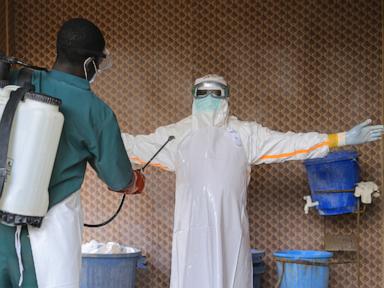
Repatriating a patient infected with Zaire ebolavirus from an active outbreak zone in the Democratic Republic of the Congo (DRC) to a high-level isolation unit in the United Kingdom represents one of the most complex logistical, clinical, and biosecurity operations in modern medicine. Standard news reporting frames these events as straightforward airlifts—a linear movement from a field clinic to a domestic hospital. In reality, an aeromedical evacuation (AE) of a Biosafety Level 4 (BSL-4) pathogen is a multi-stage containment problem governed by fluid dynamics, aviation regulatory bottlenecks, and the narrow physiological window of viral hemorrhagic fever progression.
To understand the mechanics of transporting a British national from the Congo basin to a UK High Consequence Infectious Disease (HCID) unit, one must strip away the narrative of simple emergency response and examine the underlying operational architecture. The decision to evacuate hinges on a strict risk-reward equation comparing local supportive care capacity against the physiological stress of altitude and the absolute imperative of zero secondary transmission.
The Pathophysiological Clock and the Evacuation Window
Ebola virus disease (EVD) is not a static clinical condition; it is a rapidly accelerating cascade of endothelial damage, systemic inflammatory response, and hypovolemic shock. The viability of an intercontinental air transfer is dictated entirely by where the patient sits on this clinical timeline.
- The Prodromal Phase (Days 1–3): Characterized by non-specific febrile symptoms, myalgia, and fatigue. Viral load in peripheral blood is rising, but gastrointestinal fluid losses have not yet peaked. This is the optimal window for aeromedical extraction. The patient is hemodynamically stable enough to tolerate the physiological stressors of flight, and bodily fluid output is manageable within a closed containment pod.
- The Wet Phase (Days 4–9): Marked by severe secretory diarrhea (often exceeding 5 to 10 liters per day), intractable vomiting, and profound electrolyte derangements. Executing an air evacuation during this phase introduces severe clinical and containment hazards. In-flight intravenous fluid resuscitation at rates exceeding 500 mL/hour requires massive onboard fluid reserves, while the constant expulsion of high-titer infectious fluids tests the mechanical limits of waste management within an isolation unit.
- The Terminal or Convalescent Inflection (Days 10+): Either the patient succumbs to multi-organ failure and disseminated intravascular coagulation, or the adaptive immune response begins clearing viremia. Evacuating a patient in decompensated shock is generally contraindicated; the risk of in-flight cardiac arrest—where performing cardiopulmonary resuscitation inside a pressurized isolation bubble is practically impossible—outweighs the marginal benefit of tertiary care.
Known clinical protocols dictate that extraction teams must launch the moment a positive reverse transcription-polymerase chain reaction (RT-PCR) test confirms filovirus infection, provided the patient remains in the early prodromal window. Delays caused by diplomatic clearances or aircraft positioning directly compress the survival probability by pushing the flight into the wet phase.
The Aeromedical Containment Architecture
Transporting a BSL-4 pathogen across international airspace cannot be achieved on a standard air ambulance. Even a minor cabin depressurization or an uncontained emesis event would render a conventional jet a biohazard write-off and expose the flight crew to lethal infection. The operation relies on specialized negative-pressure isolation systems, such as the EpiShuttle or the Containerized Bio-Containment System (CBCS), integrated into dedicated long-range airframes.
Negative-Pressure Differential Mechanics
The foundational principle of safe filovirus transport is maintaining a continuous pressure gradient. The isolation pod must remain at a lower atmospheric pressure than the surrounding aircraft cabin.
- Airflow Direction: If a breach occurs in the polyvinyl chloride (PVC) canopy or a glove port tears, air flows into the pod rather than escaping into the cabin.
- Filtration Loops: Exhaust air from the pod is drawn through dual High-Efficiency Particulate Air (HEPA) filters, capable of trapping 99.97% of particles down to 0.3 microns. While filovirus virions measure roughly 80 nanometers in diameter, they travel suspended in respiratory droplets or aerosolized bodily fluids significantly larger than the HEPA threshold, ensuring effective capture.
- Air Changes Per Hour (ACH): High-consequence pods maintain a minimum of 15 to 20 ACH to prevent carbon dioxide buildup and dissipate heat generated by the patient's febrile state and onboard medical electronics.
Ergonomic and Clinical Constraints in Flight
Operating inside a negative-pressure pod strips medical personnel of tactile sensitivity and peripheral vision. Clinicians must perform complex interventions—such as placing central venous catheters or managing airway emergencies—through thick, rigid butyl rubber gloves integrated into the pod walls.
This creates an immediate operational bottleneck. Procedures that require two minutes in a standard intensive care unit take fifteen minutes inside an isolation chamber. Sharp instruments, such as hollow-bore needles, represent the highest vector risk for the medical team. Consequently, needleless intravenous access systems and pre-filled syringes are mandatory, and any breach of glove integrity triggers an immediate post-exposure prophylaxis protocol upon landing, including the deployment of experimental monoclonal antibodies or ring vaccination with rVSV-ZEBOV.
The Geopolitical and Aviation Bottlenecks
A common misconception is that an air ambulance simply flies a direct great-circle route from Kinshasa or Goma to London. In practice, moving an active EVD case requires navigating a dense web of international aviation law and sovereign airspace permissions.
Under International Civil Aviation Organization (ICAO) regulations and World Health Organization (WHO) International Health Regulations, member states retain sovereign authority to deny overflight or landing rights to aircraft carrying Category A infectious substances—a classification that includes live Ebola virus cultures and infected human patients.
- Diplomatic Overflight Clearances: Before wheels-up in the DRC, foreign ministry officials must secure explicit diplomatic clearances from every nation along the flight path. A single refusal requires recalculating the entire route, adding hours of flight time and burning critical fuel margins.
- Technical Refueling Stops: Long-range air ambulances, such as modified Gulfstream or Boeing 737 platforms, often require a technical stop for refueling between Central Africa and Northern Europe depending on payload and headwinds. Finding an airport willing to accept an aircraft with an active Ebola patient on board—even if the patient never leaves the tarmac and the crew remains inside the airframe—is a primary point of failure. Diplomatic agreements must pre-establish secure, isolated tarmac zones where refueling occurs without ground crew contact.
- Diversion Contingencies: Every flight plan requires designated diversion airports in the event of mechanical failure or sudden patient decompensation. For a BSL-4 flight, standard diversion protocols fail; an emergency landing at a commercial hub without an adjacent HCID facility creates a localized public health crisis.
The UK High Consequence Infectious Disease Reception Chain
Upon entering British airspace, the operational burden shifts from the aeromedical transport team to the National Health Service (NHS) England HCID network. The UK maintains one of the most rigid containment reception chains globally, anchored by specialized centers such as the Royal Free Hospital in London and the Royal Victoria Infirmary in Newcastle.
Tarmac-to-Ward Biosecurity Transfer
The aircraft is directed to a remote stand at a designated military or secured civilian airfield, such as RAF Brize Norton or London Stansted, entirely segregated from commercial terminal traffic.
- The Hazmat Ambulance Transfer: A specialized Hazardous Area Response Team (HART) meets the aircraft. The patient remains sealed inside the negative-pressure transport pod throughout the offloading process. The pod is loaded directly into the rear of an ambulance stripped of non-essential porous surfaces and lined with impermeable sheeting.
- Police Escort and Route Sterilization: To eliminate the risk of a traffic collision breaching the containment pod on a public motorway, the convoy travels under continuous police escort, holding traffic at intersections to ensure an uninterrupted transit to the receiving hospital.
- The Trexler Isolator Transition: Inside the Royal Free Hospital’s high-level isolation unit, the patient is transferred from the mobile transport pod into a permanent negative-pressure Trexler isolator—a room-sized, transparent flexible film tent maintained under strict negative pressure. All waste generated during care—including human waste, disposable personal protective equipment (PPE), and dialysis effluent—is double-bagged, chemically treated with high-concentration sodium hypochlorite, and autoclaved (steam sterilized under pressure) on-site before leaving the containment perimeter.
The Cost-Benefit Calculus of Repatriation vs. Forward Care
Evacuating a single patient from the DRC to the UK costs between £250,000 and £1,000,000, depending on aircraft charter rates, diplomatic coordination overhead, and the duration of subsequent HCID intensive care. Critics frequently question the resource allocation of spending seven figures on one individual when outbreak zones face severe shortages of basic PPE and intravenous fluids.
This critique misunderstands the strategic function of repatriation guarantees in global health security.
The Personnel Recruitment Mechanism
International outbreak response relies entirely on the willingness of skilled epidemiologists, clinicians, logisticians, and humanitarian workers from high-income nations to deploy to austere, high-mortality environments. During the 2014–2016 West African epidemic, volunteer recruitment stalled until Western governments guaranteed rapid, state-backed aeromedical evacuation in the event of occupational exposure. Without a credible extraction pipeline, the international surge capacity required to contain outbreaks at their source collapses. Repatriation is not merely a clinical intervention for an individual; it is the foundational insurance policy that enables foreign technical teams to enter active filovirus zones.
Clinical Outcome Differentials
In field Ebola Treatment Centers (ETCs) in the DRC, case fatality rates for Zaire ebolavirus historically range between 50% and 70%, even with the introduction of monoclonal antibody therapies like mAb114 (ansuvimab) and REGN-EB3 (inmazeb). The limiting factor in field settings is rarely the availability of antivirals; it is the absence of continuous invasive physiological monitoring and organ replacement therapy.
In a UK HCID unit, clinicians can deploy continuous renal replacement therapy (CRRT) for acute kidney injury, mechanical ventilation for acute respiratory distress syndrome (ARDS), and real-time arterial blood gas analysis to correct severe metabolic acidosis. During the 2014–2016 outbreak, the case fatality rate for patients evacuated to European and North American high-level isolation units dropped below 20%. The evacuation directly alters the survival probability by bridging the patient across the acute phase of multi-organ dysfunction until endogenous viral clearance occurs.
Operational Vulnerabilities and Failure Modes
Despite rigorous protocols, the extraction chain remains vulnerable to specific systemic failures. A realistic assessment requires accounting for these friction points rather than assuming seamless execution.
- Diagnostic Latency: Confirmation of EVD requires transporting blood samples from remote health zones in the DRC to regional reference laboratories equipped with GeneXpert or standard RT-PCR platforms. A 48-hour delay in sample transit or laboratory processing can push a patient past the viable aeromedical window before the evacuation aircraft is even tasked.
- Co-Infection Masking: Central Africa is hyper-endemic for Plasmodium falciparum malaria and typhoid fever. A patient presenting with fever and positive malaria rapid diagnostic tests may initially be treated solely for malaria, delaying filovirus isolation and exposure tracing until the onset of hemorrhagic or severe gastrointestinal symptoms.
- Crew Fatigue and PPE Heat Stress: Full BSL-4 PPE—comprising impermeable Tyvek suits, double or triple nitrile gloves, sealed boot covers, and powered air-purifying respirators (PAPRs)—induces rapid hyperthermia and dehydration in medical attendants. Operational shift limits inside active containment are strictly capped at 60 to 90 minutes, requiring large, redundant teams of flight nurses and physicians for a 10-hour intercontinental transit.
Strategic Imperatives for Future Filovirus Containment
Relying on ad-hoc intercontinental evacuations to Europe for every exposed international worker is neither scalable nor sustainable during large-scale urban outbreaks. To optimize global health security and reduce the physiological risks of long-haul transport, health ministries and international NGOs must execute three structural shifts.
First, decentralize high-acuity care through regionalized containment hubs. Rather than flying patients 4,000 miles to London, international donors must fund permanent, solar-backed, negative-pressure intensive care units within stable regional capitals in East and Central Africa, such as Entebbe or Nairobi. Cutting flight times from ten hours to two hours drastically reduces in-flight physiological decompensation and eliminates intercontinental diplomatic overflight bottlenecks.
Second, mandate pre-deployment ring vaccination and baseline monoclonal antibody stockpiling. Every foreign national operating in an active DRC outbreak zone must receive the rVSV-ZEBOV vaccine at least ten days prior to entry, paired with pre-positioned doses of REGN-EB3 at the point of deployment. Administering monoclonal antibodies within 24 hours of a high-risk needle-stick or mucosal exposure—before systemic viremia peaks—can abort disease progression entirely, converting an emergency BSL-4 evacuation into a routine precautionary monitoring flight.
Third, standardize bilateral diplomatic standing orders. Foreign ministries must replace case-by-case diplomatic negotiations with standing multinational aeromedical transit treaties among African and European aviation authorities. Pre-clearing flight corridors and designated refueling airfields for certified negative-pressure isolation aircraft will shave 12 to 24 hours off launch times, securing the narrow prodromal window that dictates patient survival.