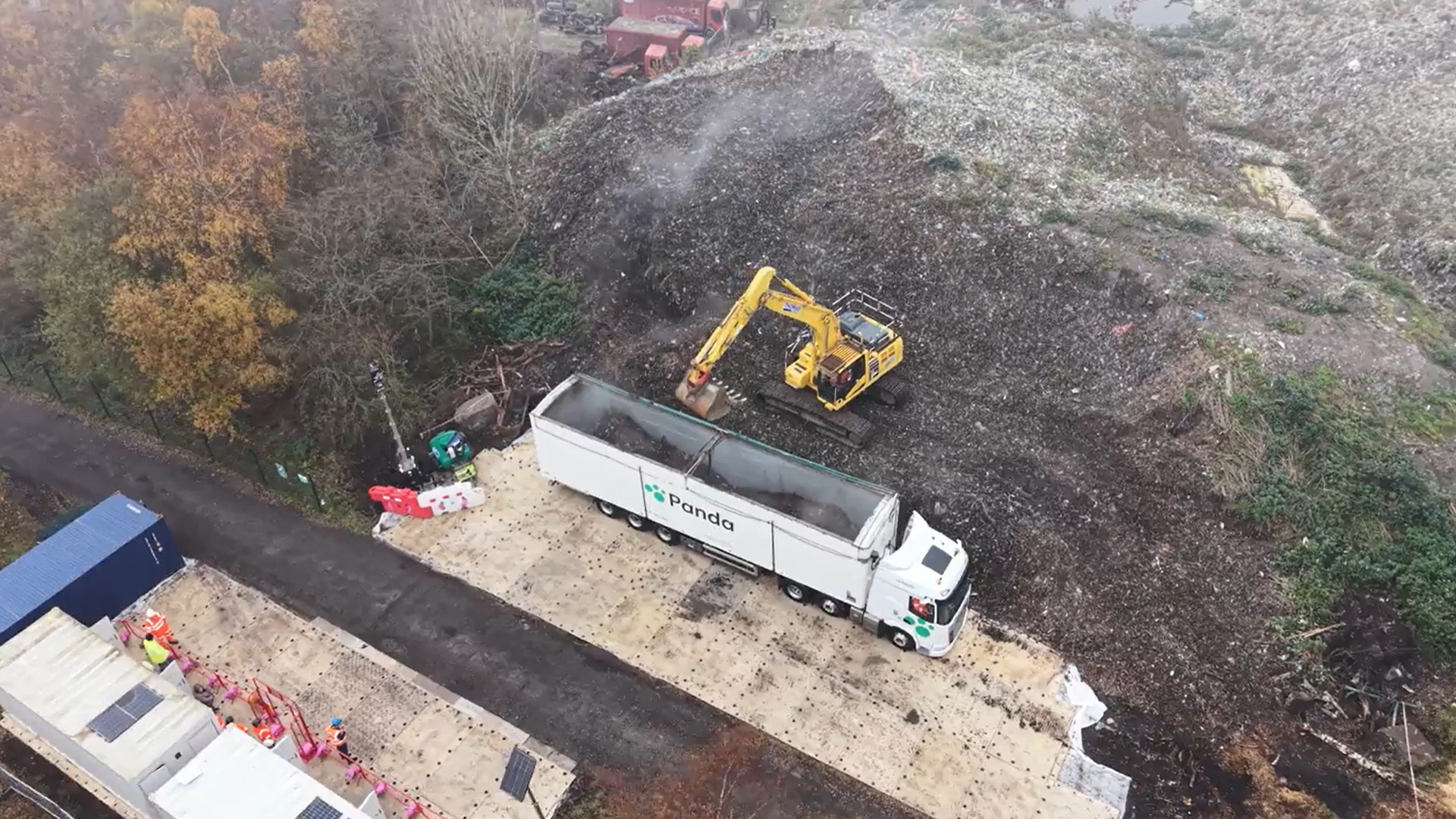
Removing 25 lorry loads of waste from a single site every day represents an operational throughput problem governed by cycle times, loading bay geometry, and regulatory chain-of-custody laws. Standard reporting treats daily vehicle movements as a simple measure of progress. In industrial project management, moving 25 heavy goods vehicles (HGVs) through an active remediation or demolition zone within an eight-to-ten-hour shift is a tight synchronization exercise where a single bottleneck collapses site productivity.
The Throughput Equation of 25 Daily Movements
To understand the operational reality behind 25 daily lorry loads, strip away the headline number and examine the underlying time-motion constraints. Assuming a standard commercial haulage window of 8.5 hours (510 minutes) to comply with urban noise ordinances and driver hour regulations, the site must process one vehicle every 20.4 minutes.
This 20-minute interval is not simply driving time; it is the total turnaround window inside the site perimeter. That window breaks down into four distinct sequential phases:
- Ingress and Weighbridge Registration: The vehicle enters the perimeter, clears security, and records tare weight.
- Spotting and Positioning: Banksmen guide the HGV through active plant zones to the designated loading face.
- Material Extraction and Loading: Excavators load the payload while operators monitor axle weight limits to prevent highway violations.
- Decontamination and Egress: The vehicle passes through wheel-wash facilities, covers the load, records gross weight, and exits into live traffic.
If loading takes 12 minutes and wheel-washing takes 5 minutes, the system operates with only 3.4 minutes of buffer per vehicle. Any variance—such as wet clay sticking to excavator buckets, an unscheduled delivery blocking the haul road, or a queuing delay at the weighbridge—creates a cascading queue. In queuing theory, when utilization approaches 85% to 90% in a single-server system, wait times grow exponentially rather than linearly. Running 25 loads a day without external staging areas pushes site logistics directly into that high-variance zone.
Why Specialist Contractors Replace General Hauliers
General earthmoving contractors optimize for bulk volume movement: moving maximum tonnage at the lowest cost per cubic meter. Specialist waste contractors optimize for compliance, segregation, and hazard containment. When a site requires specialists rather than standard muck-away operators, the material stream involves regulatory triggers that alter the economics of the project.
The Cost Function of Mixed vs. Segregated Waste
Under waste hierarchy regulations and landfill tax structures, mixing waste streams destroys project margins. If inert subsoil becomes cross-contaminated with hazardous materials—such as asbestos-containing materials (ACMs), heavy metals, hydrocarbons, or invasive plant species like Japanese knotweed—the entire 20-tonne payload is reclassified at the higher tax rate.
Specialist teams deploy three operational controls to prevent reclassification:
- Source Segregation: Excavators work in targeted lifts rather than bulk digs, separating topsoil, inert sub-base, non-hazardous structural rubble, and contaminated zones before material ever reaches a lorry bed.
- Pre-Characterization Testing: Soil samples undergo laboratory analysis (such as Waste Acceptance Criteria testing) prior to excavation. This maps the site into a three-dimensional grid, dictating which specific treatment facility or permitted landfill each lorry must travel to before the vehicle leaves the gate.
- Enclosed and Sheeted Containment: Depending on the hazard profile, open-top tipper lorries are replaced by sealed roll-on/roll-off (RoRo) containers, vacuum tankers, or lined tippers with automated sheeting systems to eliminate fugitive dust and leachate spills during transit.
The Three Pillars of High-Frequency Site Clearance
Sustaining 25 outbound loads per day over weeks or months requires engineering the site layout around outbound logistics rather than treating waste removal as an afterthought to demolition or excavation.
1. Haul Road Geometry and Internal Circulation
A site moving 25 HGVs daily cannot rely on two-way single-track access roads with reversing bays. Reversing heavy vehicles on congested sites is the primary cause of both fatal accidents and schedule slippage. High-throughput sites implement a one-way gyratory loop. Vehicles enter at one gate, traverse an all-weather compacted stone haul road, load parallel to the excavation face, and exit via a separate egress point. Where site boundaries prevent a full loop, dedicated turning heads with radii exceeding 15 meters must be maintained to allow articulated or rigid eight-wheel tippers to turn in a single maneuver.
2. Fleet Sizing and Cycle Time Synchronization
The number of lorries required to achieve 25 daily loads is a function of round-trip transit time to the receiving facility, not the size of the site.
$$\text{Required Fleet Size} = \frac{\text{Total Cycle Time (Loading + Transit + Tipping + Return)}}{\text{Target Dispatch Interval (20.4 minutes)}}$$
If the permitted waste facility is 45 minutes away in peak traffic, the round-trip transit takes 90 minutes. Add 20 minutes for site turnaround and 25 minutes for weighbridge and tipping queues at the receiving facility, and the total cycle time reaches 135 minutes. Dividing 135 minutes by the 20.4-minute dispatch interval reveals that the contractor must dedicate 6.6—practically 7—dedicated HGVs running continuously in a closed loop to hit the daily target of 25 loads. If traffic congestion adds 20 minutes to the transit leg, the contractor must inject an eighth vehicle into the loop immediately or accept a linear drop in daily site clearance.
3. Regulatory Documentation and Digital Chain of Custody
Every single one of those 25 daily loads generates a legal paper trail. Under environmental protection statutes, the waste producer retains a statutory Duty of Care until the material is legally recovered or disposed of at an authorized site.
- Waste Transfer Notes (WTNs): Required for every load of non-hazardous waste, detailing Standard Industry Classification (SIC) codes, European Waste Catalogue (EWC) six-digit codes, and exact weights.
- Hazardous Waste Consignment Notes: Mandatory prior to movement if the material triggers hazardous thresholds, requiring pre-notification and multi-part sign-offs across producer, carrier, and consignee.
Processing 25 manual paper forms per day introduces a high probability of clerical error—wrong EWC codes, missing carrier registration numbers, or unrecorded weights—that can result in regulatory fines or rejected loads at the receiving weighbridge. Specialist operations replace clipboards with automated weighbridge software linked to ANPR (Automatic Number Plate Recognition) cameras, generating digital consignment records the moment the lorry crosses the exit loop.
Environmental and Community Friction Points
Moving 50 heavy vehicle movements (25 in, 25 out) daily through local road networks generates immediate friction with municipal authorities and neighboring properties. Left unmanaged, local opposition leads to stop-work notices or restricted operating hours that cripple the cycle-time math.
Particulate Matter and Mud Track-Out
The most visible failure mode of high-volume site clearance is mud deposited on public highways. Beyond violating highway safety statutes, dried mud turns into airborne particulate matter ($PM_{10}$ and $PM_{2.5}$). Specialist contractors mitigate this through a multi-stage boundary defense:
- Rumble Grids: Heavy steel grids vibrate loose mud from tire treads before the vehicle reaches the wash station.
- Automated Wheel-Wash Systems: High-pressure water jets clean the undercarriage and wheel arches without requiring the driver to exit the cab, keeping turnaround times under three minutes.
- Road Sweepers: Dedicated vacuum sweepers patrol the public highway perimeter continuously during active haulage hours rather than waiting until the end of the shift.
Acoustic and Vibration Controls
Twenty-five tipper lorries accelerating from a standstill generate recurring low-frequency noise spikes. Urban Construction Logistics Plans (CLPs) frequently impose strict delivery curfews—banning HGV movements during school drop-off hours (08:00–09:30) and evening rush hours (16:30–18:00).
If a municipal authority imposes a three-hour blackout window on a 9-hour workday, the available operational window shrinks to 6 hours (360 minutes). To maintain 25 loads within 360 minutes, the dispatch interval compresses from 20.4 minutes to 14.4 minutes. This forces the contractor to deploy a second excavator loading team simultaneously, doubling loading-zone labor and machinery costs just to maintain the same daily output.
Limitations of High-Throughput Clearance Strategies
Treating waste removal purely as a speed optimization problem creates severe operational vulnerabilities:
- Over-Reliance on Single Receiving Facilities: If the sole permitted landfill or soil treatment center experiences a weighbridge breakdown or reaches daily intake capacity, the entire 7-lorry loop backs up onto public roads within 40 minutes. Resilient operations maintain secondary permitted off-take agreements even at a higher gate fee.
- Material Bulking Factor Miscalculations: Soil and demolition rubble expand when excavated—a phenomenon known as bulking. Undisturbed clay or compacted concrete increases in volume by 20% to 40% once broken up by an excavator bucket. Estimators who calculate lorry loads based on in-situ bank cubic meters rather than loose cubic meters routinely underestimate required vehicle movements by a third, blowing out schedules and haulage budgets.
- Axle Overloading Risks: In the rush to hit a 25-load daily quota, excavator operators frequently overfill tipper bodies, particularly when rain increases the moisture content and density of excavated soil. Exceeding gross vehicle weight (GVW) or individual axle limits exposes both the haulier and the site operator to heavy penalties and vehicle prohibitions at roadside enforcement checks.
Executing the Clearance Playbook
Project directors overseeing high-volume site remediation or demolition must treat outbound logistics as a critical-path manufacturing line rather than a background support service. Before the first excavator bucket breaks ground, lock in three non-negotiable operational controls:
- Enforce On-Site Dynamic Weighing: Install load-cell systems directly on loading excavators or mandate a calibrated site weighbridge before the exit gate so operators hit 98% of legal payload capacity on every single lorry without risking highway overloads.
- Establish Off-Site Holding Bays: Never allow empty lorries to queue on public roads outside the site gate. Secure a remote holding area 10 to 15 minutes away and dispatch vehicles to the site via radio or geofenced mobile alerts only when the loading bay clears.
- Audit EWC Codes Against Live Excavation Faces: Assign a dedicated environmental clerk of works to verify material classification at the loading face every two hours, ensuring sudden changes in ground strata are diverted to the correct treatment stream before cross-contamination destroys the project's cost baseline.