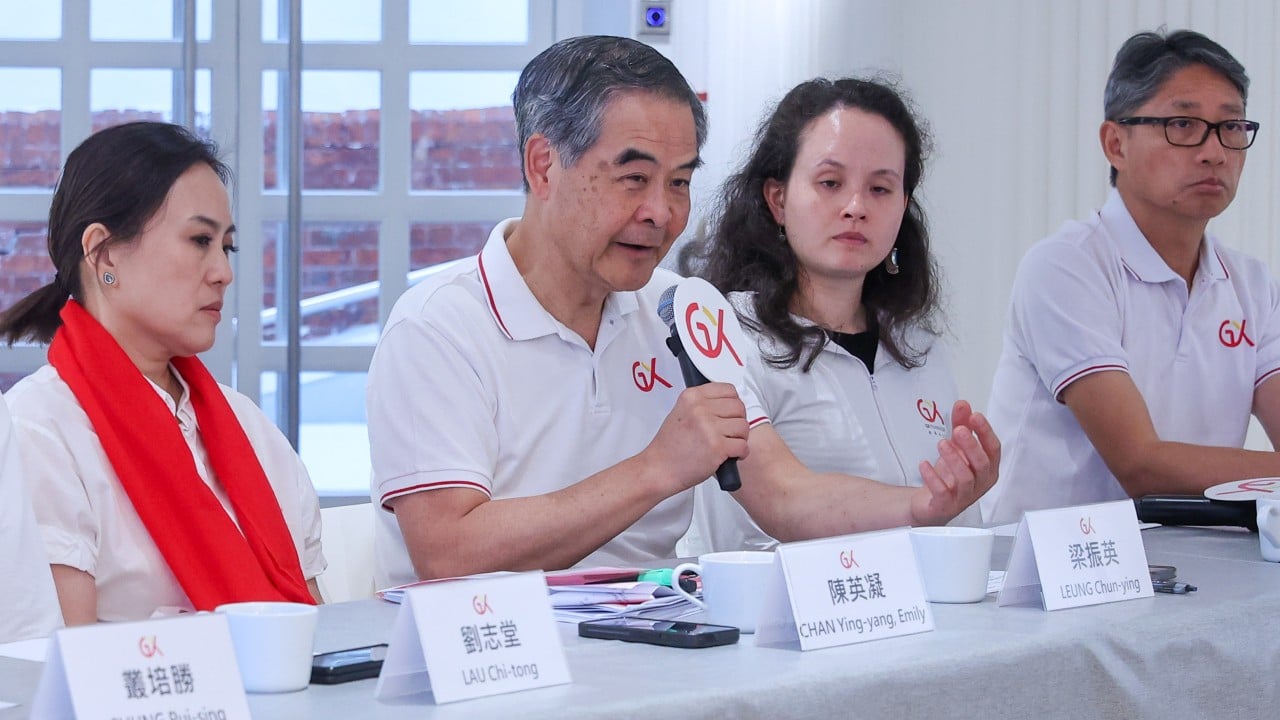
Standard reporting on former Hong Kong Chief Executive CY Leung's November 2026 appeal for Djibouti treats the event as a simple fundraising drive, missing the underlying operational bottleneck: an acute surge of approximately 4,000 Yemeni refugees has collided with fragile camp infrastructure at the Markazi Refugee Camp, transforming a routine public health program into a race against epidemiological collapse. Following a field assessment conducted between November 6 and 10, 2026, the Hong Kong-based GX Foundation pivoted its public fundraising apparatus toward emergency medical and sanitation relief. Understanding why a surgical and vector-control charity suddenly requires urgent capital injection from Hong Kong donors demands an examination of camp carrying capacity, supply chain friction in the Bab el-Mandeb corridor, and the mechanics of private philanthropic diplomacy.
The Carrying Capacity Deficit at Markazi Refugee Camp
Humanitarian crises in transit states rarely stem from total population size alone; they stem from the velocity of arrival relative to fixed infrastructure. Djibouti occupies a hyper-arid coastal zone at the southern entrance to the Red Sea, where natural freshwater aquifers are scarce and agricultural output is minimal. When roughly 4,000 displaced individuals cross the Bab el-Mandeb strait from conflict zones in Yemen within a compressed timeframe, the immediate consequence is an asymmetric shock to existing camp utilities.
At the Markazi Refugee Camp, located near the northern port town of Obock, baseline infrastructure was engineered for steady-state populations rather than rapid absorption. A sudden influx degrades four interconnected systems simultaneously:
- Potable Water and Sanitation Ratios: In emergency camp management, minimum survival thresholds require at least 15 liters of clean water per person per day, alongside a maximum ratio of 20 people per latrine. When arrivals outpace water trucking and borehole extraction, per-capita water availability drops, forcing residents to ration hygiene water. Concurrently, waste management systems saturate, creating surface runoff and contaminated standing water.
- Vector Amplification: Standing greywater and uncollected solid waste in high-temperature coastal environments accelerate the breeding cycles of Aedes and Anopheles mosquitoes, alongside filth flies. Unlike slow-onset chronic illnesses, vector-borne diseases such as dengue fever and malaria exhibit exponential transmission curves once vector density crosses a local epidemic threshold.
- Shelter and Thermal Stress: Overcrowding forces new arrivals into improvised shelters without adequate ventilation, power supply, or lighting. In Djibouti's climate, daytime heat stress compounds dehydration, lowering baseline immune resilience across vulnerable cohorts, particularly children and the elderly.
- Medical Triage Saturation: Local clinics stocked for routine primary care face immediate stockouts of essential medicines and rapid diagnostic testing kits. Without diagnostic kits, clinicians cannot distinguish between viral dengue, bacterial gastroenteritis, and malaria, leading to empirical over-prescribing or delayed critical care.
The GX Foundation's November 2026 field delegation identified precisely these four failure points—essential medicines and testing kits, shelter and water hardware, mosquito and fly control, and sanitation waste management—as the immediate targets for capital deployment.
Operational Anatomy of the GX Foundation's Pivot
To evaluate the feasibility of CY Leung's appeal, analysts must separate the organization's historical operating model from its emergency response posture. Established in Hong Kong in 2018 and chaired by Leung—who also serves as a vice-chairman of the National Committee of the Chinese People's Political Consultative Conference—the GX Foundation was built around planned, high-volume public health interventions across countries participating in the Belt and Road Initiative.
Historically, the foundation's competitive advantage has been elective surgical throughput and preventative vector control, rather than rapid-response disaster relief. Seven years prior to the 2026 appeal, GX signed a Memorandum of Understanding with Djibouti's Ministry of Health. Working alongside provincial medical teams from mainland China, such as specialists from Shanxi province, the foundation established mobile surgical units in Djibouti City and Tadjourah. By November 2026, that program had completed nearly 9,000 free sight-restoring cataract surgeries for both Djiboutian nationals and resident refugees, while running a nationwide dengue prevention initiative.
Elective surgery and emergency refugee triage require entirely different supply chains:
- Elective Surgical Model: Predictable patient volume, scheduled rotation of specialist surgeons, standardized consumable kits (intraocular lenses, phacoemulsification supplies), and fixed post-operative follow-up windows.
- Emergency Refugee Model: Unpredictable casualty and morbidity profiles, high demand for broad-spectrum pharmaceuticals, bulk logistics for physical tents and solar lighting, and continuous environmental sanitation engineering.
Because GX relies entirely on public and corporate donations rather than direct state treasury appropriations, its working capital is typically earmarked for multi-year project pipelines across Laos, Cambodia, Senegal, Mauritania, Timor-Leste, and Djibouti. Diverting budgeted funds from scheduled cataract missions to buy tents and larvicides in Obock would create operational deficits in other host nations. Leung's public appeal to Hong Kong's commercial and civic sectors is therefore a liquidity mechanism: it raises unallocated emergency cash to ring-fence the foundation's core surgical programs while funding an acute humanitarian surge.
Why Djibouti Functions as a Geopolitical and Logistical Bottleneck
Surface-level coverage frequently overlooks why a Hong Kong charity maintains such deep institutional roots in a nation of roughly one million people. Djibouti's strategic value is dictated by geography and maritime economics. Sitting at the chokepoint linking the Red Sea and the Gulf of Aden, the country serves as the primary maritime gateway for landlocked Ethiopia and a critical refueling and transshipment hub for global container traffic.
This geographic reality creates an unusual concentration of foreign infrastructure and diplomatic capital:
- Multilateral Military and Logistics Presence: Djibouti hosts military bases and logistical facilities for China, the United States, France, Japan, and Italy, making stability in its port cities and coastal provinces an international security priority.
- Chinese Infrastructure Footprint: State-backed enterprises have financed and constructed major assets in the country, including the Addis Ababa–Djibouti Railway, the Doraleh Multi-Purpose Port, and cross-border water pipelines.
- Soft-Power Complementarity: Large-scale infrastructure builds state-to-state leverage, but they often generate limited immediate goodwill among ordinary citizens or displaced populations. Medical charities like the GX Foundation fill this gap through what policymakers term "people-to-people connectivity". Restoring eyesight to nearly 9,000 patients or preventing a cholera and dengue outbreak in a refugee camp delivers visible, high-impact public goods that complement hard infrastructure investments.
For Hong Kong, participating in this ecosystem serves a distinct domestic and national function. Since the launch of the Belt and Road Initiative, Hong Kong policymakers have sought to position the city not merely as a financial center, but as a professional services and philanthropic hub capable of mobilizing private capital for international development. Leung's dual role—former head of the Hong Kong government and senior national political advisor—allows him to bridge Hong Kong's tax-exempt charitable donor base with diplomatic access at the highest levels of the Djiboutian government.
The Economics of Hong Kong Private Philanthropy in Overseas Crises
Mobilizing Hong Kong donations for a crisis in the Horn of Africa faces severe behavioral and structural friction. Philanthropic capital in Hong Kong exhibits strong home-country bias and proximity weighting. Local donors respond rapidly to domestic emergencies—such as major residential fires or regional flooding in mainland China—where cultural ties are immediate and media saturation is high. Conversely, conflicts in Yemen and displacement in East Africa suffer from psychological distance and donor fatigue.
To overcome this friction, fundraising campaigns must reduce transaction costs and maximize institutional trust:
- Tax-Exempt Structuring: Operating as an approved charitable institution under Section 88 of Hong Kong's Inland Revenue Ordinance allows donations of HK$100 or more to qualify for tax deductions, lowering the net cost of giving for high-net-worth individuals and corporate treasuries.
- Existing Field Footprint: Donors routinely hesitate to fund emergency appeals from organizations that must first negotiate customs clearance, visas, and local partnerships before delivering aid. Because GX already holds an active Memorandum of Understanding with Djibouti's Ministry of Health and maintains an in-country logistics team, the lag time between capital collection and field deployment is compressed.
- Targeted Procurement Lists: Rather than soliciting vague humanitarian funds, framing the appeal around discrete physical inputs—testing kits, tents, solar lighting, and vector-control supplies—gives institutional donors clear visibility into unit-cost allocation.
Structural Limitations and Execution Risks
No private foundation can substitute for multilateral sovereign aid architecture, and treating GX's intervention as a complete solution to the Markazi camp crisis introduces analytical blind spots. Several operational constraints limit what private Hong Kong capital can achieve on the ground:
- Scale Asymmetry: Sustaining 4,000 refugees requires continuous baseline expenditure on food rations, desalination or water trucking, and primary education. While targeted grants can eliminate acute medical stockouts and supply temporary shelters, long-term camp maintenance remains dependent on major multilateral agencies such as the United Nations High Commissioner for Refugees (UNHCR) and the World Food Programme.
- Supply Chain Friction in the Red Sea: Regional maritime instability around the Bab el-Mandeb strait directly affects commercial shipping schedules and insurance premiums into the Port of Djibouti. Importing medical consumables and sanitation hardware from East Asia or Europe faces variable lead times and customs bottlenecks, forcing field teams to rely on regional procurement at higher unit costs.
- Recurrent Climate Shocks: Vector control and sanitation improvements in Markazi are perishable interventions. Seasonal flash floods or extreme heatwaves can rapidly degrade temporary tents and overwhelm drainage trenches, requiring recurring capital expenditure rather than one-off donations.
Strategic Imperatives for Institutional Donors and Aid Operators
To convert emergency fundraising into durable epidemiological containment in Djibouti, both the GX Foundation and prospective Hong Kong institutional donors must shift from ad-hoc charity to structured crisis logistics:
- Ring-Fence Capital by Intervention Tier: Donors should earmark contributions specifically for high-leverage preventative hardware—specifically rapid diagnostic kits, larvicides, and solar-powered water purification units—rather than general administrative overhead. Preventing a dengue or cholera outbreak yields a far higher return per dollar spent than funding acute inpatient hospitalization after transmission accelerates.
- Integrate Refugee Triage with Existing Surgical Infrastructure: GX should utilize its established transport and cold-chain corridors between Djibouti City, Tadjourah, and northern coastal clinics to move bulk pharmaceuticals alongside scheduled ophthalmic supplies, amortizing freight and customs clearance costs across both programs.
- Establish Transparent Burn-Rate Reporting: To sustain donor retention in Hong Kong beyond the initial news cycle, the foundation must publish audited deployment metrics within 60 days—detailing exact quantities of tents erected, diagnostic tests administered, and vector-control coverage rates—proving that private Hong Kong capital can execute faster and with lower administrative drag than bureaucratic multilateral channels.