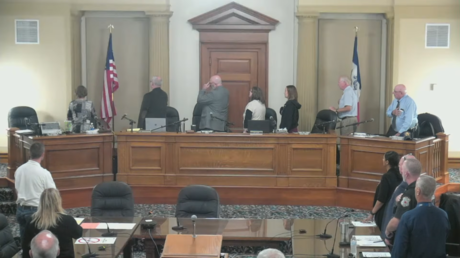
Paper rustles in a quiet Manhattan courtroom. A gavel drops, not with the thunderous roar of a falling empire, but with the dry, administrative click of a stapler.
Outside, the autumn wind cuts down Broadway, carrying the smell of roasting chestnuts and exhaust fumes. Inside, lawyers adjust their glasses, sliding thick binders across mahogany tables. To an outside observer, it looks like just another Tuesday dispute over contracts, jurisdiction, and legal technicalities.
It is not.
Underneath the dense prose of legal briefs and procedural motions lies an open wound that has bled quietly for a quarter of a century. It is the ongoing legal battle of the 9/11 families against the Kingdom of Saudi Arabia, a relentless quest for accountability that refuses to be buried under the convenient convenience of geopolitics and diplomatic immunity.
Consider what happens when time is supposed to heal all wounds. It doesn't. Sometimes, time simply hardens the grief into something heavy and metallic, a weight that a generation of children who grew up without fathers and mothers must carry into adulthood.
The Architecture of Silence
In the immediate aftermath of that Tuesday morning in 2001, the world spun on a axis of pure shock. We watched towers fold into themselves like houses of cards. We remember the gray ash coating the streets, the silent phone lines, the frantic taped-up flyers plastered to lampposts in Union Square asking if anyone had seen a smiling face in a crisp suit.
Then came the official reports, the commission findings, and the redacted pages. Those blacked-out lines became a sanctuary for suspicion.
For the families of the victims, the central agony was never just the loss. It was the absence of full truth. When you lose a loved one to a conventional tragedy, you bargain with grief. When you lose a loved one to an act of mass terror allegedly backed by sovereign power, you bargain with history.
The lawsuit, moving slowly through federal court proceedings, represents a stubborn refusal to let the past become a ghost story. In recent hearings, attorneys for the plaintiffs have continued to press for evidence, examining the web of financial and logistical support that allegedly linked certain individuals to the hijackers.
The defense counters with the ancient armor of states: sovereign immunity. They argue that foreign governments cannot be easily dragged into domestic courts, that international relations require a fragile diplomatic buffer, and that stretching the law to pierce that armor sets a dangerous precedent.
Yet, the plaintiffs look at empty chairs at Thanksgiving tables across three decades and ask a devastatingly simple question: If accountability stops at the border, where does justice go?
The Human Cost of Procedure
Law is an antiseptic language. It prefers terms like jurisdictional threshold, statutory interpretation, and plausibility standard.
If you sit in the gallery of a federal courtroom during these arguments, you realize how language is used to insulate the mind from horror. Judges talk about briefs. Counselors cite circuit precedents.
But behind every legal citation is a phantom.
Imagine waking up every September 11th to an alarm clock that sounds like a falling ceiling. Imagine spending twenty-five years watching the world move on to new crises, new wars, and new technologies, while your personal calendar remains permanently stuck on a Tuesday morning in 2001.
The litigants are not corporate entities seeking a settlement on a broken patent. They are aging mothers, siblings whose hair has turned silver, and children who now have children of their own, looking at a courtroom mirror and demanding that a superpower take them seriously.
When New York courts hear these arguments, they are wrestling with a fundamental tension at the heart of modern democracy: the desire for diplomatic stability versus the absolute imperative of moral truth.
If a government played a role—however indirect or nuanced—in bankrolling or facilitating the worst terrorist attack on American soil, should diplomatic convenience protect them from discovery? That is the heart of the matter. It is not just about money. It is about a subpoena. It is about sworn testimony. It is about the simple, radical act of putting powerful people under oath.
The Long Road Ahead
The courtroom doors swing open. Spectators file out into the cool afternoon air. Reporters check their phones, tapping out summaries of oral arguments for evening news cycles.
The legal battle will not end tomorrow. Appeals will crawl upward. Motions will be filed and refiled. The machinery of justice grinds exceedingly fine, often so fine that the people waiting for its product have grown old watching it turn.
Yet, every time these families step into a courtroom, they alter the gravitational pull of history. They remind us that national security policies signed behind closed doors leave collateral damage that echoes for generations.
The dust settled from the Manhattan sky long ago. The memorial pools now catch the reflections of tourists who were barely born when the towers fell. But down the hall, behind heavy wooden doors, the questions remain unanswered, waiting for a court brave enough to listen to the silence.