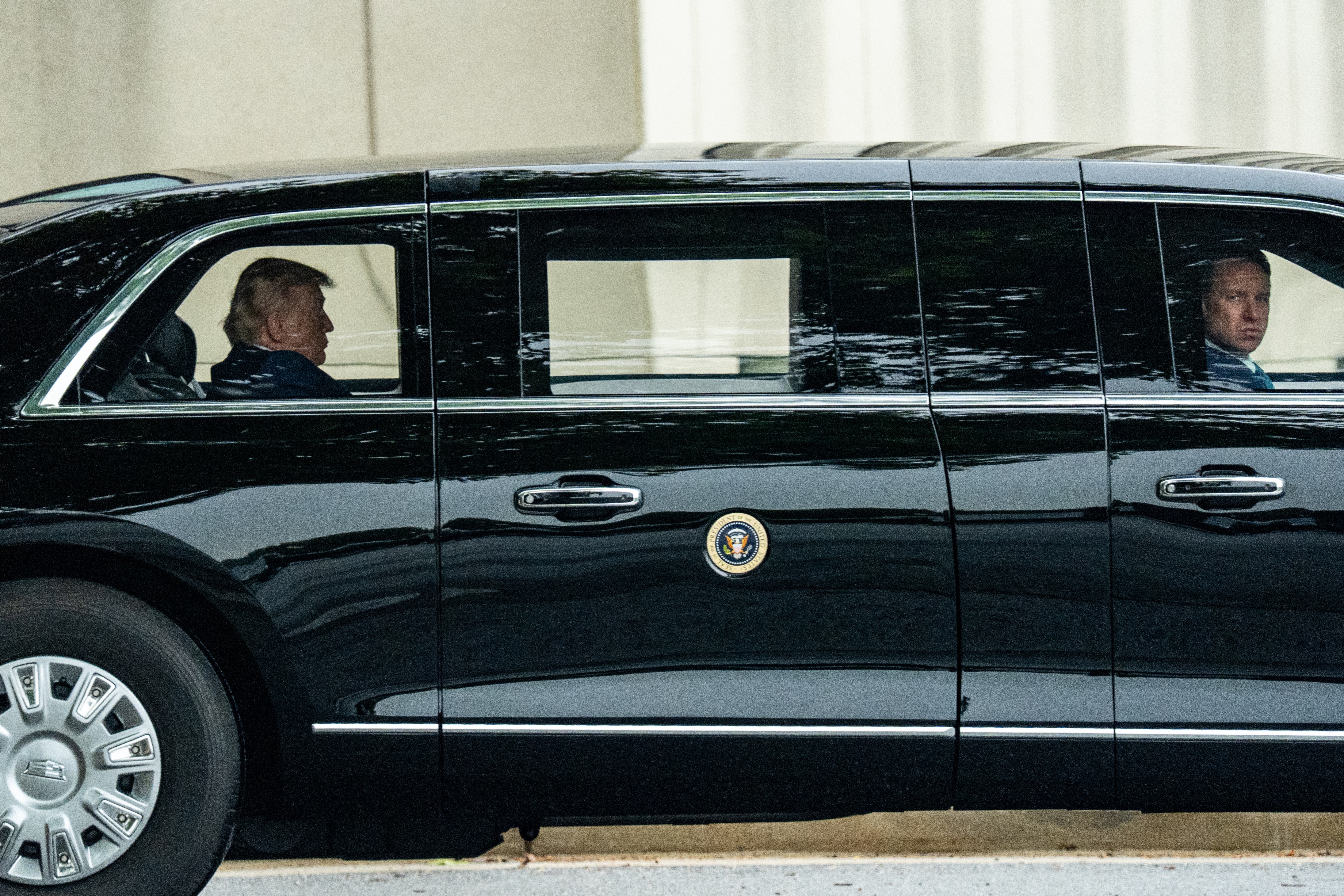
The air in the room didn't just feel heavy; it felt thick with the residue of a thousand missed opportunities. Outside, the world watched a silent video feed of a door. Inside, a group of people sat around a polished table, their faces etched with the kind of exhaustion that sleep cannot fix. This wasn't just a meeting of a Cabinet. This was the final weighing of a blood-soaked ledger.
When Donald Trump walked into that room, he wasn't just looking at his advisors. He was looking at the end of a math problem that had cost the world hundreds of thousands of lives. The "deal" people talk about in headlines is often treated like a real estate transaction—square footage for cash, borders for peace. But for the woman in a basement in Kharkiv or the father in a trench near Donetsk, the deal is the difference between breathing and becoming a statistic.
The room held the architects of a new American posture. They weren't there to discuss the "if" of ending the war. They were there to finalize the "how." For years, the narrative had been one of endurance, of "as long as it takes." That phrase had become a ghost, haunting the halls of power as the cost of living climbed and the body count followed suit.
The Weight of the Pen
Think about the physical reality of a peace treaty. It is a piece of paper. It weighs almost nothing. Yet, the gravity it exerts is enough to shift the orbit of continents. To reach this point, the administration had to navigate a minefield of ego, history, and raw, unadulterated fear.
The strategy shifted from the traditional slow-drip of diplomacy to something more blunt. The President’s approach has always been one of leverage, a word that sounds cold until you realize that without it, the killing never stops. He gathered his Cabinet not to debate the merits of the conflict, but to synchronize the pressure points. State, Defense, Treasury—they all had a specific dial to turn.
One side wanted total victory. The other wanted total submission. Neither was going to happen. The "deal" is the uncomfortable middle ground where everyone loses a little so that everyone doesn't lose everything.
The Invisible Faces at the Table
Imagine a man named Mykola. He is hypothetical, but his reality is shared by millions. Mykola hasn't seen his son in two years. He doesn't care about the intricacies of NATO expansion or the precise line of a new border. He cares about whether he can plant wheat this spring without being vaporized by a drone.
When the Cabinet discusses "territorial concessions," they are talking about Mykola’s backyard. When they discuss "security guarantees," they are talking about whether Mykola can sleep without one ear pressed to the floor, listening for the whistle of incoming fire.
The human element is often scrubbed out of political reporting to make room for maps and arrows. But the arrows represent humans. The red zones on the map are graveyards. The President’s push to "seal the deal" is a recognition that the clock isn't just ticking for the politicians; it’s running out for the people on the ground. The urgency isn't just about campaign promises. It’s about the reality that every day of delay is another day of funerals.
The Mechanics of the Exit
Ending a war is significantly harder than starting one. It requires a level of coordination that borders on the impossible. The Cabinet meeting was a symphony of logistical nightmares. How do you verify a ceasefire across a thousand-mile front? Who monitors the neutral zones? What happens to the billions of dollars in hardware currently scattered across the mud of Eastern Europe?
The Treasury Department isn't just looking at sanctions; they are looking at the reconstruction of a shattered global economy. The ripple effects of this war have touched every grocery store in Iowa and every gas station in Berlin. The deal isn't just about stopping the bullets; it’s about restarting the heart of international trade.
The skeptics argue that a forced peace is no peace at all. They say that by pushing for an end now, the administration is rewarding aggression. But the counter-argument sat in that room with the Cabinet: how many more sons must be buried before the "reward" of a stopping the slaughter outweighs the "cost" of a compromised border?
The Silence After the Storm
There is a specific kind of silence that follows the end of a conflict. It isn't a peaceful silence. It’s a stunned, ringing quiet. It’s the sound of people realizing they have to live next to the people who were trying to kill them yesterday.
The deal being brokered isn't a fairy tale ending. There will be no parades where everyone is happy. There will be bitterness. There will be accusations of betrayal. But there will also be a lack of sirens.
Trump’s gathering of his Cabinet was the final check-off on a list that has been years in the making. The internal politics of the room were likely as fraught as the external ones. Hardliners pushing for more, pragmatists pushing for an exit, and a President focused on the singular goal of being the man who stopped the "madness."
The reality of the situation is that the world is tired. The appetite for a forever war in Europe has dissolved into a desperate hunger for normalcy. The Cabinet knows this. The President knows this. And, most importantly, the people in the trenches know this.
As the meeting broke, the participants didn't leave with the air of victors. They left with the air of people who had just finished a grueling, unpleasant, and necessary task. They were the cleaners coming in after a catastrophic wreck. They were trying to salvage what was left before the fire consumed the entire house.
The pen is hovering over the paper. The ink is dry in some places and still wet in others. But the movement is forward. The direction is toward the exit. Whether the world likes the terms or not, the momentum of the deal has become its own gravity.
The door to the room finally opened, and the faces that emerged told the story. It wasn't a story of triumph. It was a story of survival. The war hasn't ended because everyone found a common vision of the future; it is ending because they finally realized they couldn't survive another day of the past.
A mother in a village whose name the Cabinet members can't pronounce sits on her porch. She watches the horizon. For the first time in years, the sky is just the sky. No smoke. No fire. Just the terrifying, beautiful weight of a quiet afternoon.