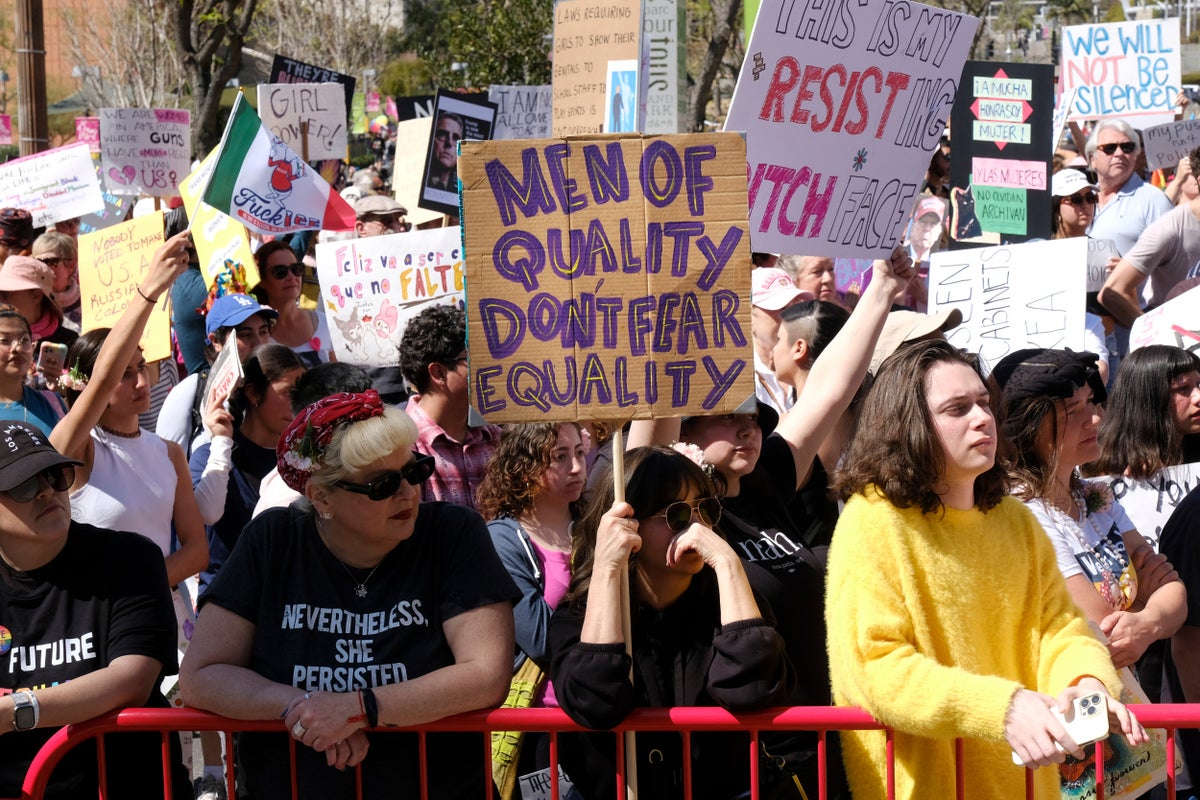
Los Angeles County has decided that what millions of residents sitting in crippling traffic, paying astronomical rent, and navigating failing infrastructure actually need is another bureaucratic office. This week, local leaders started pushing to establish an official Office of Gender Equity, modeled closely on international United Nations frameworks.
The lazy consensus from local politicians and editorial boards is predictable. They argue that equity requires institutional centralization, that abstract global guidelines will somehow translate to tangible improvements on the streets of Compton or Lancaster, and that more administration equals more justice.
They are entirely wrong.
I have watched public sector agencies burn through billions of dollars on administrative overhead while local conditions deteriorated. Creating a municipal department modeled on UN principles is not a structural reform. It is an expensive shield for elected officials who want to signal virtue without solving operational problems.
The Fallacy of Institutional Copy-Paste
Let us define the core misunderstanding driving this initiative. Proponents assume that institutional frameworks designed for international development organizations or nation-states scale downward cleanly into municipal governance. They do not.
The United Nations sets global standards, writes treaties, and operates across wildly different legal jurisdictions. Los Angeles County operates a local government responsible for trash collection, public health clinics, the jail system, and property assessments. Taking high-altitude declarations from global summits and dropping them onto a county government creates a redundant layer of oversight that produces reports instead of results.
Imagine a scenario where the county allocates five million dollars to staff a brand new Office of Gender Equity. That money pays for directors, deputy directors, administrative assistants, consultants, and endless compliance audits. Does that money fill a single pothole? Does it lower rent by a single dollar? Does it reduce violent crime in neighborhoods where women face the highest rates of victimization?
No. It creates a closed ecosystem of meetings and memos.
The Misdiagnosis of Local Disparities
The foundational premise of this office rests on the idea that gender disparities in Los Angeles persist because county departments lack a centralized ideological coordinator.
This ignores reality. The gaps in economic participation, safety, and healthcare access in Los Angeles are driven by structural economic factors: housing supply constraints, regressive tax structures, underfunded public education in specific zip codes, and an outdated workforce development pipeline.
When a single mother in Palmdale cannot find affordable childcare, her crisis is not caused by a deficit of United Nations framing. Her crisis is caused by zoning laws that choke off housing development, restrictive childcare licensing requirements that drive up costs, and transit deserts that make getting to a job physically impossible.
An equity office will not rewrite municipal zoning codes. It will not reform occupational licensing boards. It will issue PDFs about intersectionality while the underlying economic machinery continues to grind down working-class residents of every gender.
"Bureaucracy loves a crisis because a crisis justifies more bureaucracy. If you want to perpetuate a problem, institutionalize its management."
The Accountability Vacuum
The most dangerous aspect of these initiatives is the creation of unmeasurable metrics. Traditional county departments have hard metrics. Public works departments measure miles of road paved. Health departments measure vaccination rates. Sheriff departments track response times and crime statistics.
An Office of Gender Equity operates in the realm of perception, training modules, and strategic plans. When success is defined as holding twelve stakeholder workshops and publishing a comprehensive regional audit, failure becomes impossible to prove.
I have spent years auditing public-private partnerships and municipal spending. When you obscure accountability behind subjective indicators of equity, you create a system where the worse things get on the ground, the more justification the agency has to demand a larger budget for the following fiscal year.
If disparity persists, the office will claim the disparity is deeper than previously thought, requiring an expansion of their mandate. It is a brilliant self-licking ice cream cone.
What Actually Moves the Needle
If Los Angeles County leaders genuinely wanted to improve outcomes for marginalized populations, they would dismantle barriers rather than erect new departments.
- Abolish exclusionary zoning: Housing costs are the single largest driver of poverty and displacement in the region. Legalize dense, mixed-use construction across the entire county to flood the market with supply.
- Streamline occupational licensing: Remove costly, time-consuming state and local licensing barriers that lock low-income workers and immigrants out of entrepreneurship and higher-paying trades.
- Direct cash assistance over administrative bloat: Take the multi-million-dollar operating budget of a new bureaucratic office and distribute it directly via unconditional cash transfers to low-income families. Let people decide what they need rather than paying consultants to tell them.
Real progress is gritty, unglamorous, and requires confronting powerful interest groups like neighborhood NIMBYs and public sector unions. Bureaucratic offices avoid direct conflict because their survival depends on keeping everyone happy enough to approve next year's budget appropriation.
Los Angeles does not need a UN-inspired office to tell it that inequality exists. It needs leaders willing to make the hard, unpopular choices required to dismantle the actual regulatory bottlenecks choking the local economy. Until they do that, every new office is just rearranging deck chairs on a sinking municipal budget.