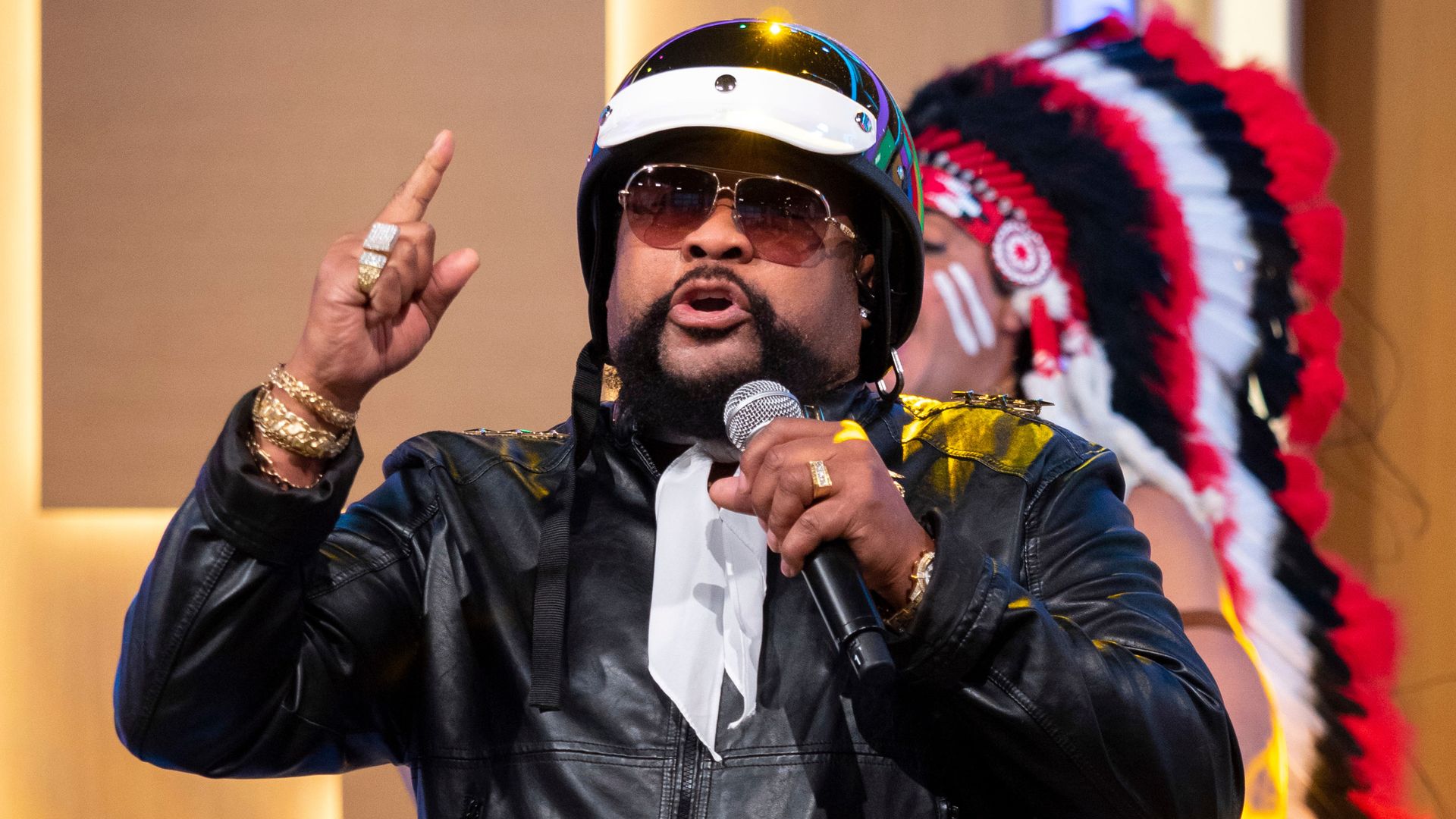
The standard celebrity obituary follows a predictable, sterile script. A famous face passes away, a publicist issues a carefully worded statement about a brief illness, and the media runs a retrospective filled with archival footage and streaming statistics. When news cycles recently began flagging the potential end of an era for the Village People, the instinct across the entertainment press was to roll out the usual nostalgic tributes. They focused heavily on the leather, the hard hats, and the campy choreography of "Y.M.C.A."
But to treat the history of the Village People as a mere novelty act is to completely misunderstand the brutal machinery of the 1970s record industry. It ignores a decades-long war over intellectual property, identity, and the rights of Black artists in a system built to exploit them. The real story isn't just about a singer or a group. It is about a fierce, litigious battle for creative control that reshaped the music business.
The Manufactured Image versus the Vocal Engine
The mid-1970s disco boom was a producer’s medium. French producers Jacques Morali and Henri Belolo did not set out to form a democratic band of brothers. They sought to commodify a specific, subterranean culture and sell it to the American mainstream. They placed an ad in a trade publication looking for macho singers who could dance. They needed archetypes. They found them in a construction worker, a cowboy, a soldier, a biker, and a Native American chief.
But archetypes cannot carry a three-part harmony in a recording studio.
Enter Victor Willis. As the original lead singer and co-writer of the group's biggest hits, Willis was the indispensable sonic engine of the entire operation. While the rest of the ensemble was largely recruited for their visual appeal and stage presence, Willis brought a powerhouse vocal delivery rooted in the Black church and theater. Without his distinctive, booming baritone, tracks like "In the Navy" and "Macho Man" would have fallen flat as mere novelty records.
The industry, however, has a long history of separating the face from the voice. In the early days, the mechanics of the music business ensured that the master rights and publishing stayed firmly in the hands of the producers and record labels. Willis found himself trapped in a gilded cage. He was the voice of a global phenomenon but possessed very little control over the entity he helped create. He left the group in 1979, just as the disco backlash reached a fever pitch. What followed was not a quiet retirement, but a thirty-year campaign to reclaim his legacy.
The Landmark Legal Battle for Copyright Reclamation
To understand why the legacy of the Village People matters today, one must look at the courtrooms rather than the concert stages. For decades, the conventional wisdom in Hollywood was that once an artist signed away their rights in a standard work-for-hire contract, those rights were gone forever. The corporations held the keys.
Willis challenged this paradigm head-on using a little-known provision of the 1976 Copyright Act.
The law allowed writers to claw back their song rights after 35 years through a process known as copyright termination. The major record publishers fought this aggressively. They argued that Willis was merely an employee hired to write songs, meaning the publishing companies were the legal authors. Had the publishers won, it would have set a devastating precedent for every songwriter from the vinyl era.
In 2012, a federal judge ruled in favor of Willis. It was a staggering blow to the music industry establishment. Willis successfully reclaimed a significant percentage of his stake in the group’s catalog, including "Y.M.C.A."
This victory fundamentally changed the power balance between legacy artists and corporate catalogs. It proved that the system could be beaten, provided an artist had the stamina and financial resources to endure years of litigation. The legal warfare did not stop there. Willis later took control of the Village People name itself, actively touring with a newly reconstituted lineup and filing lawsuits against imposter groups using the trademark. He became a copyright hawk, fiercely guarding the brand from unauthorized use.
The Erasure of Subtext in the Mainstream
There is a profound irony in how the world consumes the music of the Village People. A song originally forged in the underground queer culture of New York City's Greenwich Village has become the definitive soundtrack for Middle American sports stadiums, weddings, and political rallies.
This cultural sanitization was deliberate. The music industry realized early on that to maximize profits, the explicit subtext of the group had to be masked with a layer of cartoonish Americana. The camp was dialed down just enough to allow conservative audiences to participate without acknowledging the origins of the imagery.
When mainstream audiences dance to "Y.M.C.A.," they rarely think about the song as a commentary on a specific sanctuary for young men navigating marginalized identities in a hostile urban environment. They see it as a benign aerobic exercise. Willis himself has often taken a complicated stance on this, sometimes downplaying the specific queer subtext in interviews to emphasize the universal appeal of the music, while simultaneously acknowledging the diverse audience that propelled them to stardom.
This tension highlights the perpetual compromise of the crossover artist. To achieve global icon status in the 20th century, subversion often had to be wrapped in the guise of harmless entertainment.
The Cold Reality of the Touring Circuit
The music industry is a graveyard of legacy acts touring under names they do not own, performing songs they did not write, for audiences who barely notice the substitutions. The original members of the Village People scattered long ago, fractured by financial disputes, substance abuse issues, and deep-seated animosity over who truly represented the spirit of the group.
Tragedy has visited the ranks before. Glenn Hughes, the original leatherman, died in 2001. Henri Belolo passed away in 2019. Each loss chips away at the living memory of a specific moment in pop culture history.
But the brand survives because the corporate structure demands it. The touring circuit for 1970s acts operates on pure nostalgia. Promoters do not care about the internal politics or the moral victories won in copyright courts; they care about ticket sales and recognizable hooks. The survival of the music relies entirely on a relentless cycle of state fairs, cruise ships, and corporate gigs.
This creates a harsh dichotomy. On one side stands the artistic triumph of reclaiming legal ownership. On the other lies the relentless, unglamorous grind of performing decades-old hits to audiences chasing a fleeting glimpse of their youth. It is a grueling existence, far removed from the glamorous, studio-lit days of the disco explosion.
The true legacy of this era cannot be measured by a brief obituary or a standard retrospective playlist. It is found in the legal filings that broke the stranglehold of major labels over aging creators. It is found in the enduring power of a vocal performance that refused to be buried beneath the costumes and the hype. The music business consumes everything it touches, but occasionally, an artist manages to write a contract that ensures they have the last word.