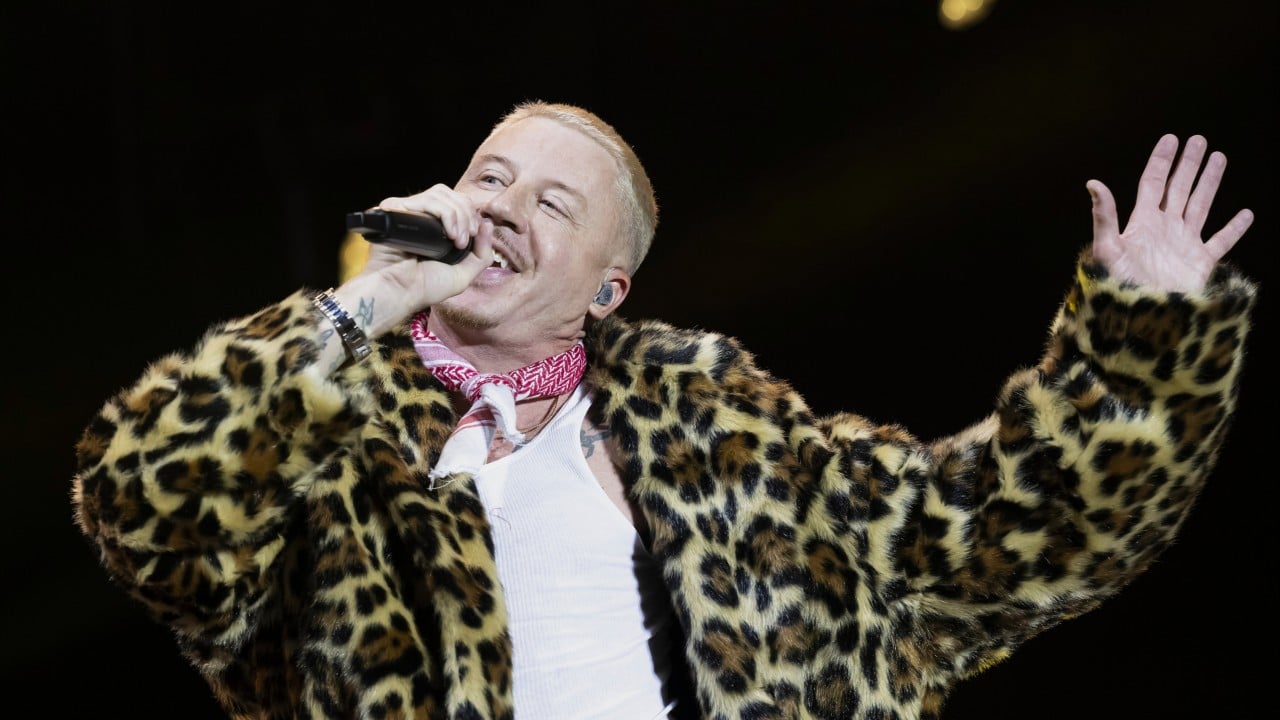
Entertainment tabloids love a petty schoolyard brawl. They see a headline about Macklemore launching a pro-Palestine tour in Ireland right after supposedly clashing with Ed Sheeran, and they immediately reach for the gossip playbook. They want you to believe this is about bruised egos, backstage tension, or a fading pop star trying to siphon clout off a stadium giant.
That narrative is lazy. It is also completely detached from how the modern live music business actually operates.
When an independent artist with a massive catalog books a strategic run through Dublin, Belfast, and Cork, they are not reacting to a tabloid rumor about a British singer-songwriter. They are executing a calculated geographic arbitrage play. They are targeting the single most receptive political and cultural market in the Western world for their specific message, bypassing the risk-averse corporate gatekeepers of the American touring circuit.
If you look at this through the lens of celebrity drama, you miss the real story. The real story is about how independent artists weaponize political alignment to guarantee ticket velocity in hostile economic climates.
The Myth of the "Ed Sheeran Rift"
Let us clear the air on the manufactured drama first. The music press thrives on pitting artists against each other because conflict drives clicks. When Ed Sheeran stays notoriously apolitical—sticking strictly to universal themes of heartbreak, pubs, and acoustic nostalgia—and Macklemore drops tracks like Hind’s Hall that explicitly call out the music industry’s silence on Gaza, the media invents a feud.
There is no blood feud here. There is simply a divergence in business models.
Ed Sheeran operates at the absolute apex of the corporate entertainment apparatus. His touring machine is built on maximum global saturation, corporate sponsorships, and zero friction. To play to eighty thousand people a night in every territory from London to Melbourne, you cannot alienate thirty percent of the room. Neutrality is not a moral failing for a mega-star; it is an insurance policy on a nine-figure gross.
Macklemore, operating independently without major-label overhead since the days of The Heist, plays by entirely different rules. He does not need eighty thousand neutral fans. He needs ten thousand zealots.
I have sat in enough touring strategy meetings over the last fifteen years to know how routing decisions actually get made. Nobody books a European leg, secures visas, rents freight, and locks in arena holds because they got mad at a guy with a loop pedal. Tours are planned six to twelve months in advance. Routing through Ireland is a financial and logistical decision driven by hard data, not petty spite.
Why Ireland Is the Ultimate Political Safe Haven for Touring
To understand why Macklemore chose Ireland as the launchpad for this specific tour, you have to understand the unique historical and cultural alignment of the Irish live music market.
In the United States, taking a hardline stance on Palestine carries immediate commercial blowback. Venues get nervous. Corporate sponsors pull out. Major promoters quietly deprioritize marketing budgets to avoid PR headaches. Even artists with massive streaming numbers find themselves facing sudden "logistical hurdles" when their politics clash with boardroom sensibilities.
Ireland is the exact opposite.
Due to its own centuries-long history of colonization, occupation, and partitioned borders, the Irish public holds an overwhelming, mainstream solidarity with the Palestinian cause. It is not a fringe campus movement in Dublin or Belfast. It is woven into the fabric of working-class identity, pub culture, and national politics.
When Macklemore steps onto a stage in Ireland and drapes a keffiyeh over the microphone stand, he is not taking a career risk. He is preaching to the choir in a cathedral built specifically for that sermon.
Look at the mechanics of live event promotion:
- Zero Customer Acquisition Cost on Messaging: In markets like London, Berlin, or New York, a politically charged tour requires careful PR framing to avoid protests or boycotts that scare away casual ticket buyers. In Ireland, the political stance is the marketing hook. Every local headline amplifies ticket sales rather than suppressing them.
- High Merchandising Per-Heads: Fans who attend a concert out of deep ideological alignment do not just buy a fifty-dollar ticket. They buy the t-shirt, the hoodie, and the vinyl because wearing the merch becomes a public badge of their own values. Per-head merchandise spending—the metric that actually keeps independent tours profitable—spikes dramatically when a show feels like a rally.
- Guaranteed Earned Media: By anchoring the tour in Ireland, Macklemore guarantees international press coverage. A standard mid-tier arena tour by a forty-something rapper barely registers on the global news cycle in 2026. Attach the "Free Palestine" banner to it in Dublin, and every major outlet from the BBC to Billboard covers the opening night for free.
The Independent Leverage Advantage
The tabloids always frame Macklemore as an artist "past his prime" trying to stay relevant. This reveals a fundamental misunderstanding of music industry economics.
In 2012, Macklemore and Ryan Lewis proved that an independent act could outsell major-label juggernauts without signing away their masters. Over a decade later, that exact same structural advantage allows him to make moves that artists signed to Universal, Sony, or Warner simply cannot make.
Let us run a quick thought experiment. Imagine a scenario where a major-label pop star—someone with the exact same streaming footprint as Macklemore—decides tomorrow to launch a explicitly political tour condemning Western foreign policy.
Within forty-eight hours, the calls start coming in. The label’s parent company has board members with ties to defense contractors, telecom giants, and institutional investors. The touring conglomerate handling the ticketing has corporate partners who refuse to be associated with geopolitical controversy. Suddenly, the artist’s album rollout gets delayed. Their playlist placement evaporates. Their tour advance gets frozen over "compliance reviews."
Macklemore owns his masters. He owns his publishing. He funds his own production.
When you own the equity in your own career, you do not have to ask permission from a twenty-eight-year-old brand manager in Los Angeles before you speak your mind on stage. You answer strictly to your audience. If your audience shows up and buys the tickets, the business works.
Dismantling the "Performative Activism" Critique
Every time a wealthy Western musician champions a geopolitical cause, the cynics crawl out of the woodwork to scream "performative activism." They point out that touring generates carbon emissions, that ticket prices are still high, and that singing songs in Dublin does not stop bombs from falling in the Middle East.
They are right about the mechanics, and completely wrong about the impact.
Of course a rap concert does not rewrite international treaties. Nobody buying a ticket to the 3Arena in Dublin thinks a bass drop is going to broker a ceasefire. That is a strawman argument invented by people who want artists to shut up and dribble.
What a high-profile tour actually does is shift the Overton window inside the entertainment industry itself.
For decades, the unwritten rule of mainstream Western pop music was simple: you can sing about vague concepts like "peace," "love," and "unity," or you can critique safe, domestic targets. You never name names. You never take a side in an active geopolitical conflict where the major powers are heavily invested.
By turning a major international tour into an explicit platform for Palestine, Macklemore breaks the containment field. He proves to younger, mid-tier artists—who are terrified that speaking out will permanently blacklist them from festival lineups and venue bookings—that there is a viable, profitable audience waiting on the other side of the fence.
He is taking the arrows first so smaller acts can see where the landmines are buried.
The Real Risk Nobody Is Talking About
If I am going to give you an honest breakdown of this strategy, I have to admit the massive downside that Macklemore is walking straight into. Contrarian moves always carry a tax, and this one is steep.
By tying his live show directly to a polarizing geopolitical conflict, Macklemore is permanently capping his ceiling in mainstream corporate markets.
You do not get invited back to perform at the NFL halftime show, the Grammys, or major corporate brand activations after you release songs explicitly criticizing the American government and the music industry’s institutional complicity. Those doors are welded shut. Once you become a "political act" in the eyes of the entertainment establishment, you are quarantined from the lucrative, friction-free corporate gigs that fund the retirement of most legacy hip-hop artists.
Furthermore, audience capture is a real trap. When your fanbase shows up specifically for your political activism, they stop caring about your musical evolution. Try playing an experimental club track or a lighthearted throwback hit to a crowd draped in protest flags. The energy drops immediately. You become a prisoner of your own righteousness, forced to deliver the exact same sermon every single night because the audience paid for a cathartic political release, not a nuanced artistic performance.
Macklemore is trading long-term institutional access for short-term cultural relevance and passionate niche loyalty. For an artist who already made his fortune and has nothing left to prove on the Billboard charts, that is a trade worth making. For an up-and-coming artist trying to build a foundational career, copying this blueprint would be commercial suicide.
What Musicians and Marketers Should Actually Learn From This
If you are watching this unfold from the sidelines—whether you manage talent, run an independent brand, or just pay attention to how culture moves—stop reading the gossip columns. Look at the underlying strategy.
Here is the real playbook Macklemore just executed:
- Own Your Infrastructure: You cannot take bold ideological stances if someone else signs your paychecks. Ownership of intellectual property and distribution channels is the only true form of free speech in modern media.
- Route Around Resistance: Never waste capital trying to force a polarizing message into a hostile market. Find the geographic or demographic pocket where your core message is already native, dominate that territory completely, and let the earned media ripple outward into the markets that tried to shut you out.
- Ignore the Manufactured Feuds: When the press tries to pit you against a mainstream giant like Ed Sheeran, let them talk. Do not clarify. Do not apologize. The algorithm rewards the contrast between the safe corporate titan and the rogue independent insurgent. Use their gravity to pull attention toward your own stage.
The music business has always been a brutal tug-of-war between art, commerce, and ego. Ed Sheeran is playing the game of universal scale, and he is winning. Macklemore is playing the game of tribal conviction, and in Ireland, the house is going to be packed.
Stop looking for backstage drama where there is only cold, calculated routing. Pick your lane, own your masters, and book the rooms where your people actually live.


