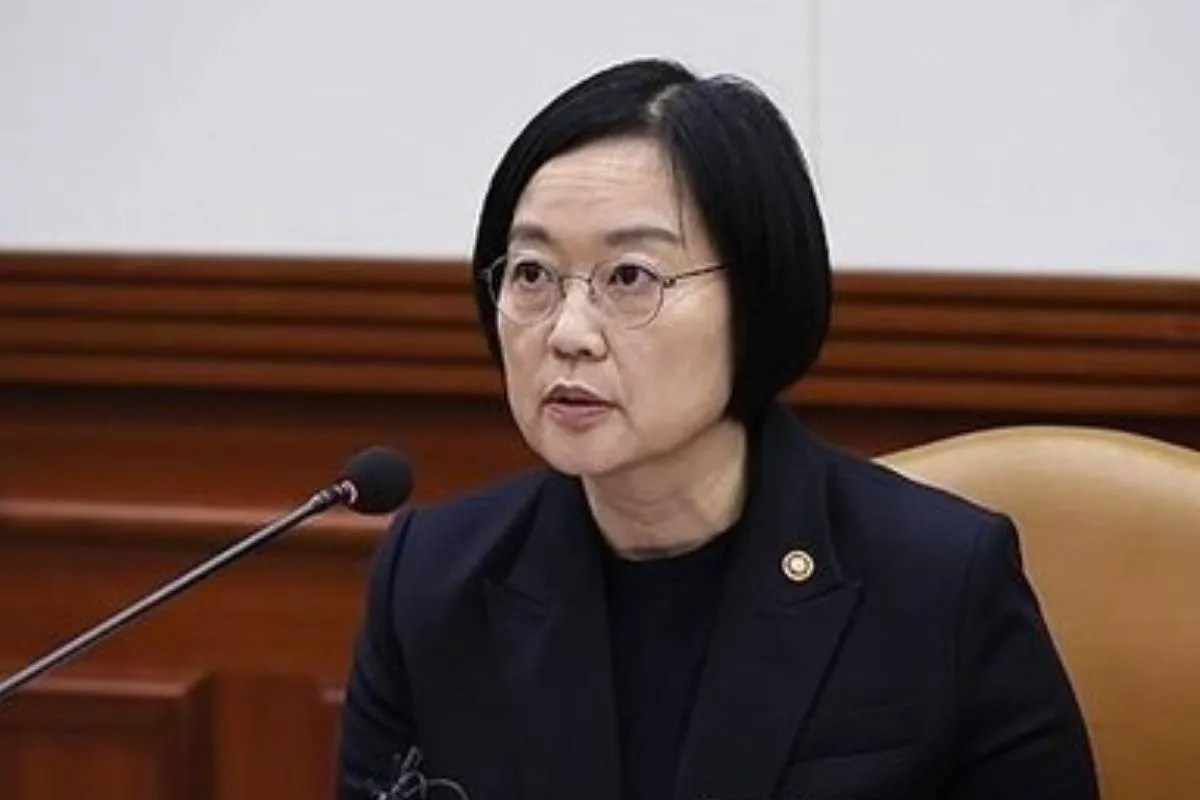
The appointment of Han Seong-sook as the 50th Prime Minister of South Korea marks a fundamental shift in the country's executive governance model. Nominated by President Lee Jae Myung and confirmed by the National Assembly on June 30, 2026, Han enters office under highly polarized political conditions. The confirmation passed with 166 votes in favor and one invalid vote out of 167 attending lawmakers, driven entirely by the ruling Democratic Party of Korea. The main opposition party, the People Power Party, boycotted the process, labeling her unqualified on bases of capability and morality.
This legislative transition marks two historical structural deviations. First, Han is the second female Prime Minister in South Korean history, following Han Myeong-sook who served from 2006 to 2007. Second, she is the first corporate business executive to assume the role. Understanding the implications of her tenure requires isolating the constitutional limits of her office, evaluating her private-sector operational record, and analyzing the economic directives assigned to her by the presidency.
The Constitutional Constraints of the Prime Minister Office
To accurately model Han's impact on South Korea's trajectory, one must evaluate the functional mechanics of the prime ministership within a hyper-presidential system. South Korea operates under a governing structure where executive power is concentrated heavily in the presidency.
The Prime Minister functions primarily as the principal executive assistant to the President, supervising administrative ministries rather than independently dictating state policy. The position carries two primary operational mandates:
- Administrative Oversight: Under Article 86 of the Constitution of the Republic of Korea, the Prime Minister supervises the ministries under the direction of the President. This is an operational role focused on policy implementation and bureaucratic alignment rather than policy origination.
- Succession Contingency: Under Article 71, if the President is unable to perform the duties of office due to disqualification, resignation, or death, the Prime Minister assumes the powers of the acting presidency.
Because the office lacks independent legislative or budgetary authority, Han's effectiveness depends on her alignment with President Lee Jae Myung's policy goals. Her appointment should not be interpreted as the arrival of a new political agenda, but as a strategic choice to improve how the executive branch executes its economic and industrial strategies.
The Operational Record: From Tech Executive to Cabinet Minister
Han’s advancement to the head of the cabinet is a direct result of her career management in both corporate governance and public administration. Her professional history shows a consistent focus on digital infrastructure and operational scaling.
The Naver Executive Tenure (2017–2021)
As the Chief Executive Officer of Naver Corporation, South Korea’s dominant internet portal, Han managed a large digital ecosystem. Her strategy focused on diversification and international market expansion. Her tenure was defined by three core operational results:
- Financial Ecosystem Integration: She oversaw the development and scaling of Naver Pay, moving the company from a search engine into a fintech competitor. This integrated payment system locked users into the platform's e-commerce architecture.
- Content Aggregation and Intellectual Property M&A: Han led the acquisition of Wattpad, a global web-novel platform, for an estimated $600 million. This acquisition broadened Naver’s content supply chain and reduced its reliance on the saturated domestic market.
- Global Structural Expansion: Following her departure from the domestic CEO role in 2021—precipitated by institutional scrutiny over internal corporate culture and workplace bullying—she shifted to leading Naver's market expansion strategies across Europe, focusing on cross-border e-commerce and technological infrastructure.
The Bureaucratic Proof of Concept (2025–2026)
In July 2025, President Lee appointed Han as the Minister of Small and Medium Enterprises (SMEs) and Startups. This served as her transition from corporate management to public administration.
In this role, her objective was to bridge the structural gap between South Korea’s dominant family-led conglomerates (chaebols) and its fragmented SME sector. Her ministry focused on automating logistics and expanding digital sales channels for smaller businesses, providing a blueprint for the broader economic transformation she is now tasked with executing at scale.
The Two Pillars of Executive Mandate
The presidential administration has stated that Han’s primary objective as Prime Minister is to lead the nation's technological transition while managing inclusive economic development. This mandate can be broken down into two distinct policy programs.
                  ┌────────────────────────────────────────┐
                  │      Prime Minister Han Seong-sook     │
                  │            Executive Mandate           │
                  └────────────────────┬───────────────────┘
                                       │
            ┌──────────────────────────┴──────────────────────────┐
            ▼                                                     ▼
┌───────────────────────┐                             ┌───────────────────────┐
│       Pillar I:       │                             │      Pillar II:       │
│  AI Transformation &  │                             │ Inclusive Economic    │
│   Industrial Policy   │                             │      Development      │
└───────────┬───────────┘                             └───────────┬───────────┘
            │                                                     │
            ├─ Sovereign AI Compute Infrastructure                ├─ SME Tech Integration
            ├─ Regulatory Sandboxes for Emerging Tech             └─ Labor Market Risk Management
            └─ Legacy Corporate Digital Modernization
1. Sovereign AI Infrastructure and Industrial Policy
South Korea faces intense competition from American and Chinese technology firms in the race for artificial intelligence supremacy. The presidential office expects Han to use her technology background to build out national AI capability. This structural deployment relies on three operational mechanisms:
- Sovereign AI Compute Infrastructure: Allocating state capital and offering tax incentives to construct domestic data centers. This ensures that South Korea’s public and financial sectors can run on native large language models rather than depending on foreign cloud providers.
- Regulatory Simplification: Creating regulatory sandboxes that let domestic firms test autonomous systems, machine learning models, and digital finance protocols without running afoul of the country's strict data privacy laws.
- Digital Modernization of Legacy Industries: Speeding up the adoption of automated software across older manufacturing, logistics, and supply-chain sectors to offset the productivity losses caused by South Korea's shrinking workforce.
2. Inclusive Economic Development
The second pillar seeks to address the structural imbalances in South Korea's dual economy, where high-productivity chaebols thrive while service sectors and SMEs face falling margins. Han's strategy relies on technological integration to lift smaller enterprises:
- SME Platform Access: Standardizing open API frameworks that let small businesses access advanced logistics, inventory forecasting, and cloud computing architectures at low cost.
- Mitigating Labor Market Ruptures: Managing the labor displacement caused by automation. As service jobs and administrative roles become automated, the state needs structural retraining programs to shift displaced workers into high-demand technical and care-economy roles.
Institutional Constraints and Policy Limitations
Despite her extensive operational background, Han's strategy faces significant limitations that could slow down her economic initiatives.
The first major limitation is her lack of a legislative base. Because she was confirmed through a unilateral vote by the Democratic Party, the opposition People Power Party views her appointment as partisan. This lack of consensus will make it difficult to pass any structural reforms that require new legislation or statutory adjustments. Her administrative directives will have to rely on executive decrees, which are vulnerable to legal challenges and reversal by future administrations.
The second limitation stems from the structural friction between her corporate background and the demands of public labor policy. Her exit from Naver's domestic operations highlighted the challenges of managing corporate culture in fast-growing tech companies. Organized labor groups and progressive factions will likely watch her handling of workplace protections, public sector union negotiations, and automation layoffs with skepticism. Any policy seen as favorising corporate efficiency over worker safety could trigger political backlash, stalling her broader economic goals.
Strategic Trajectory
Han Seong-sook’s administration will serve as a test of whether corporate operational experience can be effectively applied to state bureaucracy. Her performance will be measured by her ability to turn her high-level technology mandates into clear administrative outcomes.
The immediate test will be the upcoming budget allocations for the 2027 fiscal year. Observers should track capital commitments toward national computing infrastructure, digital transformation subsidies for small businesses, and structural retraining programs. If her office cannot secure legislative funding for these initiatives, her tenure will likely be confined to a standard administrative role, leaving the underlying structure of the South Korean economy unchanged.