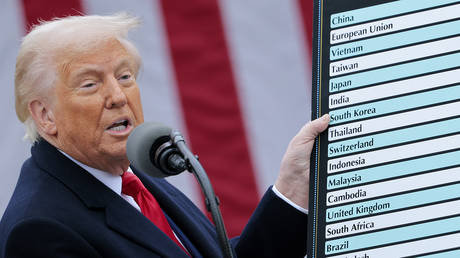
Universal import tariffs alter relative prices, force structural realignments across complex supply networks, and reallocate capital throughout the real economy. When public policy discourse evaluates broad-scale tariff implementations, analysis frequently deteriorates into political narrative rather than rigorous balance-sheet accounting. Evaluating the total economic friction of universal tariffs requires analyzing the exact structural mechanisms through which duties travel from border ports to end-consumer prices and corporate earnings statements.
A complete breakdown of tariff economics requires analyzing three primary transmission channels: price pass-through dynamics, intermediate input compounding, and capital expenditure suppression. Learn more on a related topic: this related article.
The Tri-Partite Transmission Framework
Tariffs function structurally as consumption and input taxes levied at the port of entry. The assumption that foreign exporting entities absorb the cost of border levies relies on an elasticity model that rarely holds in practice. Empirical trade data across multiple policy cycles demonstrates that import tariffs exhibit an immediate pass-through rate approaching 100 percent to domestic importing firms.
Once paid at the point of clearance, the financial duty enters a multi-layered absorption and forwarding chain. Additional analysis by Business Insider explores similar views on the subject.
[ Foreign Exporter ]
         │
         ▼ (Customs Boundary)
[ Direct Importer / Distributor ] ── Absorbs Margin OR Pass-Through
         │
         ▼ (Intermediate Tier)
[ Domestic Manufacturer / Assembler ] ── Encounters Compounding Cost
         │
         ▼ (Retail Channel)
[ End Consumer ] ── Bears Final Price Realignment
1. Direct Import Pass-Through and Elasticity Asymmetry
When a border duty is applied, the importing entity immediately faces a higher cost of goods sold (COGS). The degree to which this marginal cost reaches retail shelving depends on price elasticity of demand ($E_d$) relative to price elasticity of supply ($E_s$).
For non-discretionary consumer categories—pharmaceuticals, basic apparel, household electronics, and agricultural staples—demand remains highly inelastic ($|E_d| < 1$). Importers in these sectors maintain pricing power, transferring 80 to 100 percent of the tax burden directly into consumer price indices (CPI). Conversely, in discretionary categories where consumer substitution is viable, importers face a choice: margin compression or market share liquidation.
2. The Intermediate Input Compounding Effect
The most severe structural damage occurs not at the final point of retail purchase, but within intermediate domestic supply chains. Over half of modern cross-border imports consist of intermediate goods—raw metals, electronic components, chemical precursors, and sub-assemblies—used as inputs for domestic production.
When intermediate inputs are taxed at the border:
- Domestic manufacturers encounter elevated production costs relative to global competitors operating outside the tariff zone.
- Cost escalation compounds as components cross borders multiple times during multi-stage assembly processes (e.g., North American automotive production).
- Non-tariffed domestic producers of competing inputs raise their prices to match the inflated floor set by the taxed imports, creating broader industry price increases without generating federal tax receipts.
3. Capital Expenditure and Investment Postponement
Policy-driven cost increases introduce extreme capital allocation uncertainty. Firms operating under ambiguous trade regimes defer major capital expenditures, research programs, and hiring initiatives. The opportunity cost of capital increases because hurdle rates must compensate for sudden shifts in supply chain profitability. Long-term capital accumulation slows, lowering labor productivity growth and overall wage trajectory across the domestic economy.
Corporate Financial Mechanics: The Absorption Balance Sheet
To observe how tariffs erode corporate value, consider the direct income statement mechanics for a mid-market manufacturing firm operating with imported components.
Base Financial Structure (Pre-Tariff):
Gross Revenue:                 $100,000,000
Cost of Goods Sold (COGS):     $ 60,000,000  (Imported Components: $30,000,000)
Gross Profit:                  $ 40,000,000  (Gross Margin: 40.0%)
Operating Expenses (OpEx):     $ 25,000,000
EBITDA:                        $ 15,000,000  (EBITDA Margin: 15.0%)
If a 20 percent tariff is levied on all imported components, the imported COGS segment escalates from $30,000,000 to $36,000,000.
Scenario A: Zero Pass-Through (Full Corporate Absorption)
If market competition forces the firm to absorb the entire duty without raising end prices:
- Total COGS rises to $66,000,000.
- Gross Profit falls to $34,000,000 (Gross Margin collapses to 34.0%).
- EBITDA decreases from $15,000,000 to $9,000,000—a 40 percent drop in cash flow from a 20 percent targeted import tax.
Scenario B: Partial Pass-Through (Shared Friction)
If the firm passes 50 percent of the cost increase ($3,000,000) to customers via price hikes, while absorbing the remaining $3,000,000:
- Revenue increases to $103,000,000.
- COGS scales to $66,000,000.
- Gross Profit becomes $37,000,000.
- EBITDA lands at $12,000,000—representing a 20 percent structural drop in operating cash flow.
This mathematical reality highlights why widespread tariff implementation forces a immediate operational choice: compress corporate operating margins or trigger consumer price inflation.
Systemic Macroeconomic Feedback Loops
Tariffs cannot be evaluated as isolated revenue mechanisms. They trigger secondary economic distortions that alter sovereign debt, exchange rates, and international trade flows.
                     ┌───────────────────────────┐
                     │ Universal Tariff Applied  │
                     └─────────────┬─────────────┘
                                   │
         ┌─────────────────────────┴─────────────────────────┐
         ▼                                                   ▼
┌───────────────────────────┐                       ┌───────────────────────────┐
│ Inflationary Pressure     │                       │ Foreign Import Contraction│
└────────┬──────────────────┘                       └────────┬──────────────────┘
         │                                                   │
         ▼                                                   ▼
┌───────────────────────────┐                       ┌───────────────────────────┐
│ Federal Reserve Policy    │                       │ Dollar Appreciation /     │
│ Tightening (Higher Rates) │                       │ Reduced Capital Inflows   │
└────────┬──────────────────┘                       └────────┬──────────────────┘
         │                                                   │
         └─────────────────────────┬─────────────────────────┘
                                   ▼
                     ┌───────────────────────────┐
                     │ Decreased Real Output &   │
                     │ Capital Investment        │
                     └───────────────────────────┘
The Federal Reserve and Interest Rate Realignment
By increasing the entry cost of physical goods, tariffs introduce a cost-push inflationary shock. If inflation metrics rise above central bank targets, monetary policy is constrained. The central bank must maintain higher policy interest rates to anchor long-term inflation expectations, offsetting the expansionary fiscal effects of tariff revenue generation. Higher interest rates increase borrowing costs across the economy, depressing real estate activity, debt-financed corporate expansion, and municipal bond markets.
Capital Flows and Currency Valuation Dynamics
National accounting dictates that the current account balance and the capital account balance must sum to zero. When tariffs reduce national import volumes, foreign exporters accumulate fewer dollars. Consequently, foreign purchase of domestic financial assets—including Treasury debt and corporate equity—declines.
Simultaneously, currency markets often react to tariff announcements by bidding up the domestic currency in anticipation of reduced trade deficits. A stronger domestic currency makes un-tariffed domestic exports more expensive abroad, depressing export-dependent sectors such as agriculture, aerospace, and advanced machinery. The trade balance often fails to improve because reduced imports are matched by diminished export competitiveness.
International Retaliation Mechanics
Trading partners rarely absorb unilateral tariffs without responding. In-kind retaliatory duties target politically sensitive export industries, systematically closing foreign markets to domestic producers. The resulting double-sided tariff regime compresses margins on domestic production while simultaneously restricting global market access.
Corporate Mitigation Strategies
Operating in a high-tariff, protectionist environment requires shifting from single-source efficiency models to structural resilience. Executive teams must execute three specific strategic shifts to protect operating margins and preserve market share.
First, re-engineer product bill-of-materials (BOM) to eliminate components sourced from targeted jurisdictions. This involves redesigning products to utilize standardized components available from non-tariffed nations or domestic suppliers.
Second, exploit legal tariff engineering options, including bounded customs bonded warehouses, Duty Drawback programs, and Foreign Trade Zones (FTZs). Utilizing FTZs allows firms to defer duty payments until goods enter domestic commerce, process raw inputs into finished products inside the zone, and pay duties on the lower finished-product rate or re-export without duty exposure.
Third, restructure supply contracts to integrate conditional pricing clauses tied to policy changes. Supply chain management must shift from standard fixed-price purchasing orders to multi-vendor allocation models that dynamically route order volumes toward regions with the lowest total landed cost—factoring in transportation, duty rates, and currency movements.