Temperate rainforests—specifically the Atlantic hazel and oak woods known as Celtic rainforests—occupy less than 1% of their original global distribution. The restoration of these ecosystems is frequently framed in sentimental or purely ecological terms. This structural breakdown treats the regeneration of ancient rainforests as a complex capital allocation and land-management problem. To scale these initiatives from isolated conservation projects into self-sustaining ecological assets, operators must resolve three systemic bottlenecks: fragmentation externalities, high upfront labor capital expenditures, and the absence of standardized biodiversity credit metrics.
The Tri-Axiom Framework of Rainforest Degradation
Understanding the path to regeneration requires an objective look at why these ecosystems collapsed. Celtic rainforests are characterized by high humidity, low thermal fluctuation, and a hyper-abundance of bryophytes, lichens, and epiphytes. The decline of these habitats follows a predictable tripartite degradation loop.
1. The Fragmentation Matrix
The primary structural threat is not total clear-cutting, but geographic isolation. When a contiguous forest is broken into sub-hectare fragments by agriculture or infrastructure, the perimeter-to-area ratio increases exponentially. This exposes the interior canopy to microclimatic shifts, specifically a reduction in relative humidity and increased wind shear. Epiphytic communities require a minimum of 80% ambient humidity to maintain metabolic functions. Once a fragment falls below a critical geographic mass, the internal microclimate destabilizes, leading to localized extinctions of key flora.
2. Overgrazing and Regenerative Stagnation
The introduction of high-density livestock grazing disrupts the natural successional pipeline. Sheep and deer preferentially consume young saplings of climax species, such as Quercus petraea (Sessile Oak) and Corylus avellana (Hazel). This selective herbivory creates a demographic bottleneck. While the mature canopy remains intact, the understory is entirely depleted. When the older trees die from senescence or disease, there is no successional generation to replace them, converting the woodland into wood-pasture over a 150-year timeline.
3. Invasive Biomass Monopolies
The spread of non-native species, predominantly Rhododendron ponticum, alters the soil chemistry and light penetration levels. Rhododendron forms dense, evergreen thickets that reduce floor-level photosynthetically active radiation to near zero. Furthermore, the species deposits phenolic compounds into the soil, inhibiting the germination of native seeds. This creates a biological monopoly that prevents natural forest succession even if grazing pressures are removed.
The Capital and Operational Model for Ecological Rebounding
Reversing this degradation requires shifting from passive preservation to active intervention. The capital deployment model for a typical 1,000-hectare restoration zone follows a strict sequencing phase where upfront capital expenditure dictates the long-term successional yield.
[Phase 1: Biosecurity & Clearance] ──> [Phase 2: Hydrological Stabilization] ──> [Phase 3: Assisted Migration & Canopy Design]
Phase 1: Biosecurity and Invasive Eradication
Operators must achieve a zero-density baseline for invasive flora before attempting any replanting. The removal of Rhododendron ponticum requires a dual-mechanized approach. Mechanical flailing must be paired with micro-targeted stem injection of glyphosate to prevent vigorous resprouting from the root collar.
The labor budget for this phase is heavily front-loaded. Clearing dense infestations requires roughly 120 man-hours per hectare. Failure to eradicate the root systems results in a recolonization rate that doubles the operational costs within 36 months.
Phase 2: Hydrological Stabilization and Sphagnum Cultivation
Temperate rainforests function as giant hydrological sponges. Centuries of drainage ditch construction for agricultural expansion have lowered local water tables, drying out the forest floor.
- Ditch Blocking: Operators must install interlocking plastic or peat dams every 10 to 15 meters along historical drainage channels to raise the water table back to the root zone.
- Micro-Topography Restoration: Creating artificial hummocks and hollows mimics the natural root-wad topography of old-growth forests, creating micro-refugia for moisture-dependent mosses and liverworts.
Phase 3: Assisted Migration and Canopy Architecture
Relying entirely on natural regeneration is non-viable in highly fragmented landscapes due to seed dispersal limitations. Heavy-seeded species like oak and hazel rarely disperse more than 50 meters from the parent tree without animal vectors.
       [Fragment A: Source Canopy]
             │
             ├── (Maximum Natural Seed Dispersal: 50m) ──> [Barren Zone / Pasture]
             │
       [Target Zone: Assisted Migration Required]
Operators must implement an assisted migration framework, sourcing acorns and nuts from a diverse genetic pool within the same bioclimatic zone to maximize resilience against shifting climate vectors. Planting densities should target 1,100 to 1,600 stems per hectare, utilizing a matrix of pioneering species like Betula pubescens (Downy Birch) alongside climax species to establish a protective nursery canopy.
Quantification of Biodiversity and Asset Valuation
The primary economic barrier to large-scale rainforest restoration is the lack of fungible metrics. Unlike carbon sequestration, which can be reduced to a single metric ton of CO2 equivalent, biodiversity is multidimensional. To unlock institutional capital, developers must transition from subjective indicators to a verifiable asset framework.
The Rainforest Integrity Index (RII)
The implementation of a standardized Rainforest Integrity Index allows operators to commoditize ecological uplift. The index operates on a 0.0 to 1.0 scale, calculated using three distinct data streams:
- Acoustic Complexity Index (ACI): Continuous passive acoustic monitoring captures the biophony of the avian, insect, and amphibian populations. Higher structural diversity in the soundscape correlates directly with insect biomass and avian species richness.
- Environmental DNA (eDNA) Barcoding: Weekly or monthly soil and water sampling tracks the return of cryptic fungal and invertebrate species. The presence of specific indicator lichens and mycorrhizal networks serves as a proxy for ecosystem health.
- LiDAR Canopy Metrication: Airborne and terrestrial LiDAR flights quantify the three-dimensional structural complexity of the forest. This measures canopy roughness, understory density, and standing deadwood volume—the critical habitat for rare wood-boring beetles and bryophytes.
| Metric Component | Acquisition Method | Target Metric for Mature Rainforest |
|---|---|---|
| Canopy Rugosity | Terrestrial LiDAR | Structural variation index > 4.5 |
| Cryptogamic Biomass | Multispectral Imaging | > 35% surface coverage on branches |
| Soil Microbiome Ratio | Next-Gen eDNA Sequencing | Fungal-to-Bacterial biomass ratio > 5:1 |
Risk Assessment and Mitigation Vectors
Investors and land managers face substantial asset depreciation risks over the 30-to-50-year growth cycle.
The first risk is climatic volatility. While temperate rainforests are adapted to high rainfall, macro climate models indicate an increase in prolonged summer droughts. This risks desiccation of the bryophyte layer, which acts as the thermal regulator for the soil. To mitigate this, canopy design must prioritize high-shade species configurations on south-facing edges to minimize solar radiation penetration.
The second risk is the permanence liability. If a restored parcel is struck by a novel pathogen, such as Phytophthora ramorum (which devastates larch and oak species), the ecological capital collapses. Diversifying the canopy portfolio across a minimum of seven co-dominant tree species prevents the single-pathogen wipeout seen in monoculture forestry plantations.
Execution Framework for Scale
To move from speculative planning to execution, land managers must adopt an aggressive operational timeline that prioritizes macro-level structural interventions before fine-grained ecological tailoring.
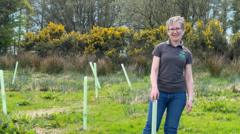
- Year 1: Perimeter Securitization. Erect continuous deer-proof fencing (minimum 1.8-meter height) across the entire perimeter. Establish legal covenants preventing domestic grazing access.
- Year 2–3: Biomass Recalibration. Execute the primary chemical and mechanical clearing of invasive species. Install hydrological dams to saturate the lower soil profiles.
- Year 4–7: High-Density Initial Planting. Deploy pioneering tree species grids to stabilize the microclimate. Begin continuous eDNA baselining.
- Year 10: Canopy Closure Transition. Introduce shade-tolerant climax species into the understory created by the pioneering birch and rowan trees. Begin issuing the first tranches of verified biodiversity credits based on the Rainforest Integrity Index uplift.
The ultimate viability of Celtic rainforest restoration depends entirely on transitioning from an intervention-dependent project to a self-regulating, high-integrity biological system. Once the canopy closes and the microclimatic feedback loop is established, the internal humidity remains locked. At this point, the operational maintenance cost drops toward zero, converting the site from a high-expense liability into a resilient ecological asset that generates predictable biodiversity yields for decades.