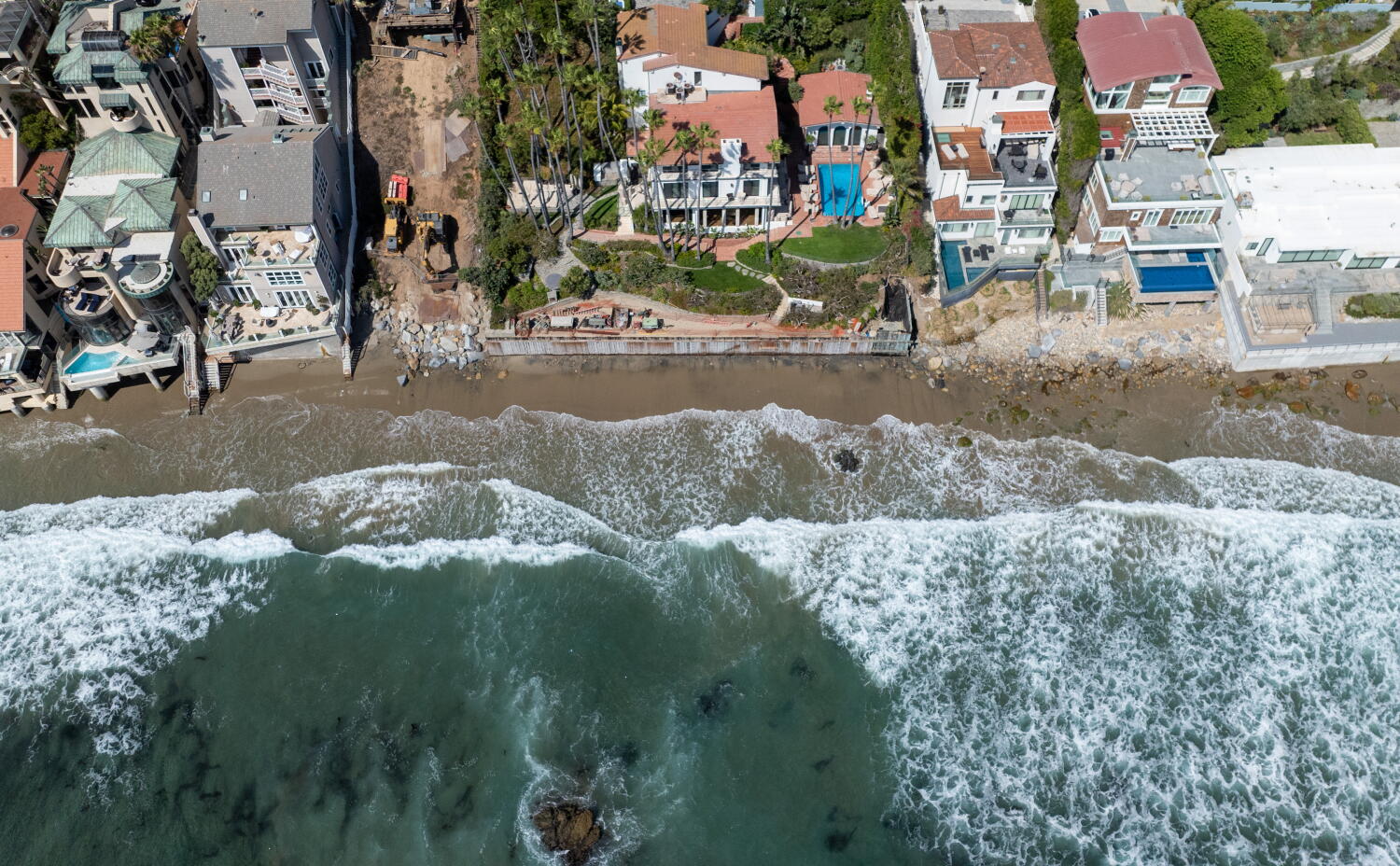
When billionaire financier Mark Attanasio rolled heavy excavators onto the pristine shores of Malibu's Broad Beach to siphon public sand directly into his private construction site, the public outcry focused entirely on audacious coastal theft. A private property owner weaponizing heavy machinery to carve out a personal buffer against the Pacific Ocean looks like standard ultra-wealthy impunity. Yet the subsequent settlement offers a masterclass in modern reputation laundering. By trading a slice of beachfront property back to public hands, the narrative neatly pivots from environmental pillaging to corporate philanthropy. Real journalism requires looking past the PR cleanup to examine the mechanical loopholes that made the initial heist possible under the watchful eye of California law.
Public outrage tends to fixate on the audacity of the shovel. The actual mechanics of coastal engineering in Southern California reveal a much dirtier reality regarding how land is manufactured, protected, and fought over. Broad Beach is not a static geological formation. It is an eroding, highly artificialized strip of coastline propped up by millions of dollars in imported sand and emergency riprap. Wealthy homeowners along this stretch have spent decades battling the sea, often through collective replenishment projects that cost tens of millions of dollars. When a property undergoes massive structural overhaul, the baseline elevation of the lot determines its vulnerability to storm surges. Moving sand from the wet-sand public zone to private dry land alters property boundaries by accretion.
The legal architecture governing the California coastline is supposed to be the strictest in the nation. The California Coastal Commission holds statutory authority to protect public access and marine environments from precisely this type of private encroachment. Yet enforcement operates on a reactive, complaint-driven model. Neighbors must catch billionaires in the act, document the heavy machinery, and finance private lawsuits just to force regulatory bodies to inspect a site. By the time civil penalties or stop-work orders are issued, the physical alterations have often already served their purpose. The calculus for a billionaire is straightforward. A five-figure fine for moving public earth is a rounding error compared to the structural gains of stabilizing a multi-million-dollar foundation against rising tides.
Trading a public beach access point or a slice of beachfront property to settle environmental litigation is becoming a standard playbook for coastal elites. It transforms an active violation of public trust into a charitable transaction. The public receives a narrow strip of sand they legally owned anyway, while the developer clears the legal docket, retains the structural modifications, and rehabilitates their public image. The exchange treats public coastline as a negotiable commodity rather than an inalienable public trust.
The intersection of private capital and public shoreline management exposes a widening chasm in coastal governance. When enforcement mechanisms rely on civil litigation between wealthy neighbors, ordinary citizens are entirely cut out of the initial defense of their own resources. The settlement terms may look like a victory on paper, but they establish a dangerous economic precedent. If the price of stealing public sand is merely trading a fraction of surplus dirt down the line, the coastline remains entirely open for annexation by the highest bidder.
The machinery has long since left Broad Beach, but the structural incentives that brought excavators onto the wet sand remain completely intact. Billionaires will continue to test the boundaries of public property as long as remediation costs less than lawful compliance. Next time an excavator fires up along the Pacific Coast Highway under the guise of emergency repairs, check which way the bucket is swinging before trusting the official permits.


