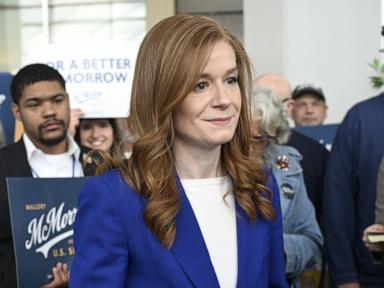
Money wins in politics until it forces a candidate to step aside. State Senator Mallory McMorrow found that out the hard way. On July 5, 2026, McMorrow threw a massive wrench into Michigan politics by suspending her campaign for the U.S. Senate. Her sudden departure, coming exactly one month before the August 4 primary, transforms a messy three-way scramble into a stark ideological showdown.
If you are wondering why she dropped out now, follow the money. A massive wave of outside spending broke the race wide open. Super PACs dumped over $35 million into the primary, effectively drowning out grass-roots operations. By stepping down, McMorrow forces Michigan Democrats to make an immediate, unfiltered choice. They must choose between establishment moderate Rep. Haley Stevens and progressive favorite Abdul El-Sayed. Discover more on a connected topic: this related article.
The stakes could not be higher. Incumbent Democratic Senator Gary Peters is leaving his seat open. Michigan remains a crucial swing state. If Democrats lose this seat to the likely Republican nominee, former Congressman Mike Rogers, their chances of controlling the Senate vanish.
The Millions That Drowned Out McMorrow
McMorrow built her campaign on a strict promise: zero corporate PAC dollars. That stance won her a passionate base of local volunteers. It did not, however, shield her from the reality of modern advertising blitzes. The American Israel Public Affairs Committee (AIPAC), operating through its United Democracy Project super PAC, injected more than $20 million into television ads. These ads boosted Stevens and hammered El-Sayed. Two other PACs added another $15.5 million to prop up Stevens. Further journalism by The Washington Post explores related perspectives on the subject.
Competing against a $35 million ad machine without big money backers is a losing battle. A source close to McMorrow confirmed that this avalanche of cash forced her hand. She started the year tied for the lead in February polls. By July, she had fallen to a distant third. She realized her path to victory was gone.
Instead of lingering as a spoiler, McMorrow exited cleanly. In a video posted to X, she focused on party unity. She promised to give her full support to whoever wins the August 4 primary.
A Binary Choice for Michigan Democrats
McMorrow's exit strips away the comfortable middle ground. The primary is now a pure ideological proxy war.
On one side stands Haley Stevens. She is a mainstream congresswoman with heavy institutional backing, including Senate Democratic Leader Chuck Schumer. Stevens positions herself as the practical moderate who can win over suburban swing voters in November. Moments after McMorrow dropped out, Michigan Attorney General Dana Nessel officially endorsed Stevens, signaling a rush by party insiders to lock down the nomination.
On the other side stands Abdul El-Sayed. The former public health official is riding a wave of progressive momentum. Backed by Senator Bernie Sanders and Representative Alexandria Ocasio-Cortez, El-Sayed has led recent primary polls. He wasted no time using McMorrow's departure to attack the party hierarchy. He publicly invited McMorrow's supporters to join his movement, arguing that party insiders are trying to bully their way to a coronation.
The Battle For McMorrow's Voters
Where do McMorrow's supporters go? That is the question that decides the primary.
Stevens offers a safe choice for voters who are terrified of losing to Republican Mike Rogers. El-Sayed offers an aggressive, anti-establishment platform for voters angry about the influence of super PAC cash. The upcoming televised debate gives both candidates an immediate chance to pitch directly to these newly available voters.
If you want to track where this race goes next, watch the local organizing groups in Oakland and Wayne counties. Absentee ballots are already in the hands of voters. The window to sway them is closing fast. Look at the fundraising numbers over the next week. See if El-Sayed can turn his anti-super PAC rhetoric into a surge of small-dollar donations, or if Stevens successfully consolidates the party establishment to build an unstoppable lead. The primary winner takes on Mike Rogers in November, and that race will determine the balance of power in Washington.