The Invisible Hand at the Grocery Store
The average morning in America doesn't start with a briefing on macroeconomics. It starts with the sharp hiss of a coffee maker and the sudden, stinging realization that a carton of eggs now costs more than a gallon of gas used to. Most people will never meet Kevin Warsh. They will never step foot inside the marble halls of the Federal Reserve or sit in the mahogany-paneled offices where Senator Thom Tillis weighs the fate of the global economy.
Yet, the decision currently unfolding in Washington is less about politics and more about the price of your survival.
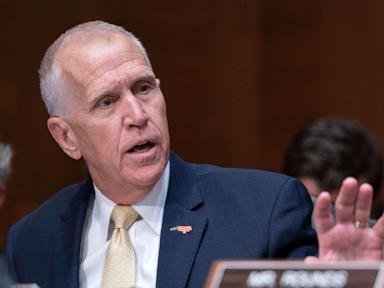
Senator Tillis recently signaled his readiness to move forward with the confirmation of Kevin Warsh as the next Chair of the Federal Reserve. To the casual observer, this is a bureaucratic shuffling of the deck. To the family sitting at their kitchen table trying to figure out if they can afford both a mortgage payment and a decent Christmas, it is the most important story in the country.
The Federal Reserve is often described as the "lender of last resort," but that is a dry, antiseptic way of saying they are the people who decide how much your money is actually worth. When the Fed moves, the world trembles. If they get the math wrong, your savings evaporate. If they get it right, you might finally be able to breathe.
A Senator Breaks the Silence
Thom Tillis isn't known for reckless gambles. When the North Carolina Senator stepped forward to back Warsh, he wasn't just checking a box for the incoming Trump administration. He was signaling a shift in the wind. The current economic atmosphere is heavy with the scent of old wood and stale ideas. There is a sense that the tools we used to fight the last war—the war against the 2008 crash—are no longer sharp enough for the modern struggle against persistent, grinding inflation.
Tillis’s support is the green light. It suggests that the path to confirmation will be less of a grueling climb and more of a focused march. Warsh is a known quantity, a veteran of the Fed who saw the gears grinding during the Great Recession and warned about the risks of keeping the engines running too hot for too long.
Consider a hypothetical small business owner named Elena. She runs a print shop in Charlotte. For three years, she has watched her overhead costs climb like a vine strangling a house. She wants to expand, to hire two more people, but the interest rates on a business loan are a wall she can't climb. When she hears about Kevin Warsh and Thom Tillis, she doesn't think about partisan loyalty. She thinks about the "prime rate." She thinks about whether the person at the helm of the central bank understands that her "small" business is her entire life.
The Warsh Doctrine
Kevin Warsh is not a man of the status quo. In the world of central banking, there are "hawks" who fear inflation and "doves" who prioritize employment. Warsh has often occupied the space of the skeptic. He is the person in the room asking if the models are actually reflecting the reality of the person buying milk in Raleigh or paying rent in Phoenix.
His background is a blend of Wall Street pragmatism and public service grit. He understands the plumbing of the financial system—the way money flows through banks and into the hands of the public. But more importantly, he has been a vocal critic of the Fed’s tendency to become a "black box," an institution that speaks in a language designed to be misunderstood.
The stakes are invisible until they aren't. We don't notice the Federal Reserve when things are working. We notice it when the cost of a car loan doubles in eighteen months. We notice it when the "American Dream" of homeownership starts to feel like a cruel joke played on a generation that did everything right. Warsh’s potential ascent represents a bet that a more disciplined, perhaps more traditional approach to the money supply can stop the bleeding.
The Architecture of Trust
Trust is the only true currency. You can print a trillion dollars, but if the people using those dollars don't believe in the stability of the system, that paper is just colorful kindling. Senator Tillis knows this. His readiness to move ahead with Warsh is an attempt to restore a sense of predictability to a market that has felt like a roller coaster for nearly half a decade.
The relationship between a President and a Fed Chair is notoriously fraught. It is a marriage of convenience where both parties often want different things. The President wants growth, excitement, and prosperity that shows up in time for the next election. The Fed Chair is supposed to be the "adult in the room," the one who takes away the punch bowl just as the party gets going.
By backing Warsh, Tillis is backing a candidate who has shown he isn't afraid to be the unpopular guest. This isn't just about Trump’s pick; it’s about whether the Senate is willing to install a captain who might actually turn the wheel, even if the turn is jarring.
The Ghost in the Machine
Money isn't real. It’s a collective hallucination we all agree to participate in so we don't have to barter chickens for internet service. But the value of that money is very real. It is the measure of your time, your sweat, and your sacrifices.
When inflation runs rampant, it is a thief that enters your home and steals an hour of your life every single day. You work the same hours, but you take home less. You do the same job, but your future gets smaller. This is the human element that gets lost in the "standard content" of financial reporting. We talk about "basis points" and "quantitative easing" because it's easier than talking about the quiet desperation of a father realizing he can't afford the braces his daughter needs.
Kevin Warsh is being positioned as the man to catch the thief. His critics argue he might be too aggressive, that his focus on stability might stifle the very growth we need to pay off our national debts. His supporters, led by voices like Tillis, argue that you can't build a house on a foundation of sand.
The Room Where It Happens
The confirmation process will be a spectacle of prepared statements and carefully hedged answers. But beneath the surface, a very different conversation will be happening. It is a conversation about the next decade of American life.
If Warsh takes the seat, he inherits a world of debt and digital transformation. He inherits a workforce that is changing faster than the laws can keep up with. He will have to decide how the Fed interacts with a world where "money" is increasingly a string of bits on a blockchain and "work" is something done via a laptop on a kitchen table.
Senator Tillis’s move is the first domino. It signals to the markets—and to the average citizen—that the era of "waiting and seeing" is over. The transition of power at the Federal Reserve is a moment of profound vulnerability and profound opportunity. It is the moment we decide if we are going to double down on the strategies of the past or if we are willing to let someone new try to fix the broken scales.
The Weight of the Gavel
Imagine the first day Kevin Warsh sits in that chair. He will look at a dashboard of indicators: unemployment, consumer price indices, housing starts. But those numbers are just proxies for people. Every percentage point shift is a million lives changed. It is a factory opening in Ohio or a family losing their farm in Iowa.
The weight of that responsibility is immense. Thom Tillis isn't just confirming a staffer; he is helping to choose the person who will dictate the economic weather for the foreseeable future. Whether it is sunny or a storm is brewing depends on the philosophy of the person holding the gavel.
The news will tell you this is about "central bank independence" or "executive appointments." Don't believe them. It is about the power to define the value of your labor. It is about whether your savings account is a fortress or a leaking bucket.
The silence from the Fed has been deafening for too long. With Tillis stepping forward, the noise is about to begin. The confirmation process will be the arena where we find out if the man with the keys to the kitchen table knows how to keep the lights on.
The sun sets over the Potomac, casting long, distorted shadows across the monuments of power. Inside those shadows, the deals are made, the votes are counted, and the future of your paycheck is decided by men in suits who speak in code. But the code is breaking. The reality of the grocery store is finally reaching the halls of the Senate.
There is a sense that the wind is finally changing direction, and for the millions of people who have been walking against it for years, any shift feels like hope. Kevin Warsh is no longer just a name on a shortlist; he is the face of a new gamble on the American dollar. The stakes couldn't be higher, and the margin for error has never been thinner.
We are all waiting to see if the new captain can find the North Star before the fuel runs out.