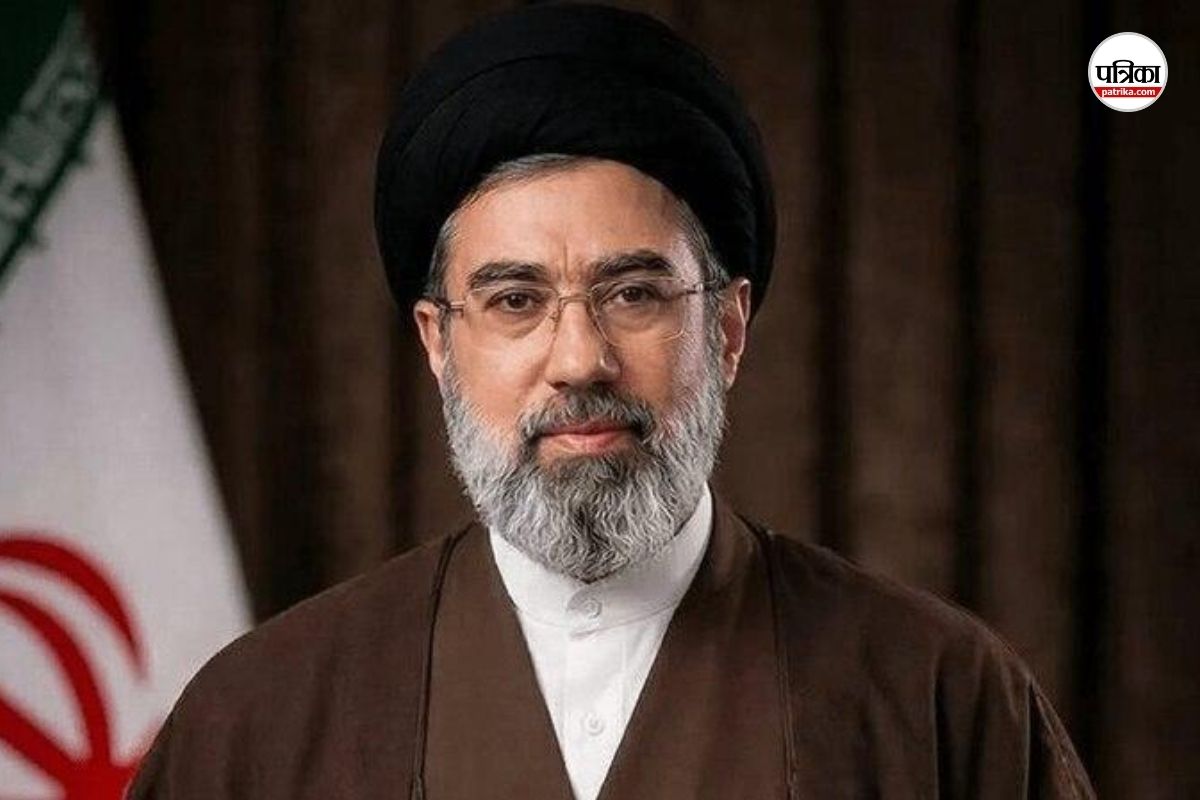
The streets of Tehran breathe with a heavy, rhythmic anxiety. It is a city of whispers, where the most consequential secrets aren't kept in vaults, but in the silence between people sipping tea in the shadow of the Alborz mountains. For years, the most persistent whisper has centered on a man few have seen up close and even fewer truly know.
Mojtaba Khamenei.
To the outside world, he is a ghost in a black turban. To the Iranian political establishment, he is the heir apparent, the second son of Supreme Leader Ali Khamenei, and the architect of a power structure that remains largely invisible to the naked eye. But recently, the veil has twitched. New reports have emerged, painting a picture of a man who is physically broken but mentally sharpened—a detail that changes the entire calculus of Middle Eastern succession.
The Scars of the Invisible Prince
Rumors about Mojtaba’s health have long been a staple of the Persian diaspora’s dinner conversations. Some said he was incapacitated. Others whispered of a debilitating stroke. The latest disclosures, however, offer a far more visceral reality. His face is described as "disfigured," his gait hampered by significant injuries to his legs.
Physical frailty in a leader often signals a loosening grip. History is littered with monarchs and dictators who fell the moment their bodies betrayed them. In the brutal theater of authoritarian politics, a limp can be a death sentence. But those who have seen Mojtaba recently suggest the opposite. They describe a man whose physical limitations have served to distill his focus.
Think of a grandmaster at a chessboard. He doesn't need to be able to run a marathon; he only needs the mental clarity to see twelve moves ahead. By all accounts, Mojtaba’s cognitive faculties are not just intact—they are operating at a high, cold frequency.
This creates a fascinating, terrifying paradox. We are looking at a potential future leader of a nuclear-aspirant nation who carries the physical marks of a struggle we aren't allowed to see, yet possesses a mind that remains a steel trap. The "disfigured" face becomes a mask of experience rather than a sign of weakness.
The Architecture of the Shadow
Succession in Iran isn't a simple matter of bloodlines. It is a labyrinth. The Assembly of Experts—a body of aging clerics—is technically responsible for choosing the next Supreme Leader. But technicalities are for textbooks. In reality, power is a currency traded in the backrooms of the Islamic Revolutionary Guard Corps (IRGC) and the intelligence apparatus.
Mojtaba has spent three decades mastered the art of being everywhere without being seen. He is the bridge between the clerical old guard and the militarized youth of the IRGC.
Consider a hypothetical mid-level commander in the Quds Force. He doesn't take his cues from the televised Friday prayers. He looks toward the "Office of the Supreme Leader," a sprawling bureaucracy where Mojtaba has spent years installing loyalists. For this commander, Mojtaba isn't just a son; he is the guarantor of the status quo. He is the one who ensures that the paychecks keep coming and the ideological purity remains unblemished.
The stakes are invisible because they are systemic. If Mojtaba takes the throne, it represents the final "Guard-ification" of Iran. It is the moment the revolution officially transitions from a theological project into a permanent security state.
The Weight of the Turban
There is a unique loneliness to being the chosen son in a revolutionary system. You are born into a legacy that you did not build but are expected to die for. Mojtaba’s life has been a long exercise in preparation. He has studied under the most hardline mujtahids, earning the religious credentials necessary to justify a climb to the top.
Yet, the religious elite are wary. They remember the 1979 revolution's promise: to end hereditary rule. To put another "son" on the throne feels, to some, like a betrayal of the very movement that ousted the Shah. This is the friction that keeps the Tehran elite awake at night.
Is the religious legitimacy of the state worth more than the stability promised by a known quantity?
The reports of his mental sharpness are likely a calculated leak. In a culture that prizes "Aql" or intellect, the message is clear: the body may be battered, but the will is absolute. It is a warning to rivals within the system. It says that despite the injuries to his legs, he is not falling.
The Silence of the Streets
Away from the marble halls of power, the average Iranian is living a different story. They are navigating a currency that loses value by the hour and a social atmosphere that feels increasingly pressurized. To the youth in the cafes of North Tehran or the workers in the factories of Karaj, the name Mojtaba Khamenei evokes a mix of dread and indifference.
To them, the physical state of the next leader is irrelevant compared to the state of their own lives. They don't care if the man behind the curtain has a scarred face or a steady gait. They care if the curtain will ever be pulled back.
But the tragedy of the Iranian people is that their voices are often the last to be heard in the succession drama. The decision will be made in the quiet, carpeted rooms where Mojtaba operates. It will be decided by men who value loyalty over popularity and survival over reform.
The revelation of Mojtaba’s health is a piece of a puzzle we are only beginning to see in full. It suggests a man who has endured something—perhaps an assassination attempt, perhaps a severe illness—and emerged with a singular, sharpened purpose.
Power in its purest form is often found in the person who has nothing left to lose but their influence. As the current Supreme Leader enters his twilight years, the shadow cast by his son grows longer. The disfigurement, the injured legs, the sharp mind—these aren't just medical notes. They are the components of a new, harder identity for the Iranian state.
The ghost is becoming flesh.
He stands in the wings, watching a stage that is being cleared just for him. He isn't rushing. He doesn't need to. He knows that in the game of shadows, the one who stays still longest is usually the one who wins. When the time comes, he will step forward, not as a vibrant young prince, but as a weathered survivor of a system that breaks everyone eventually.
And in that moment, the whispers in the tea houses will finally stop, replaced by a silence that is far more profound.



