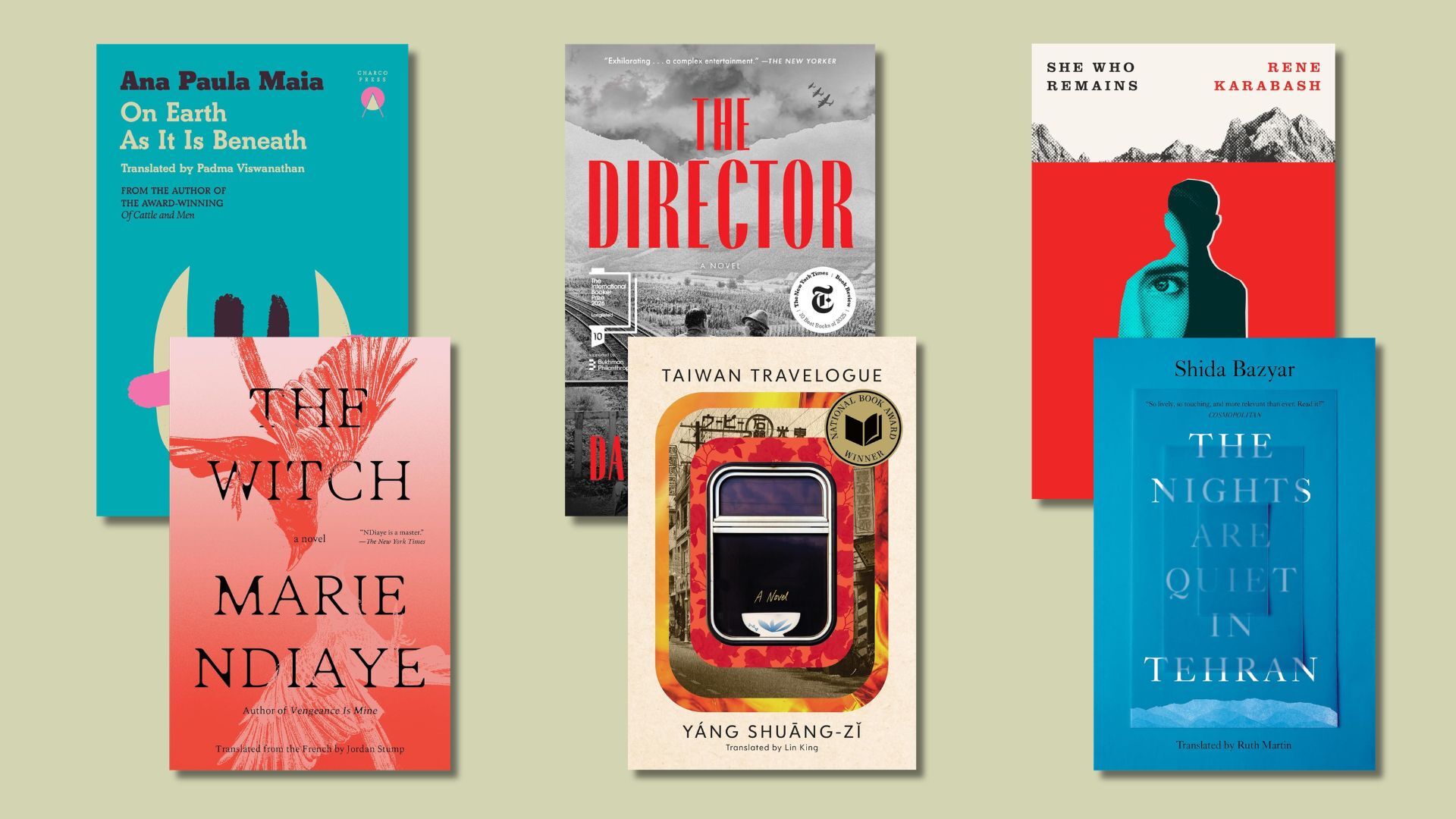
The room where they decide these things usually smells of old paper and anxiety. It is a quiet space in London, shielded from the roar of the city, where six books have just been plucked from a mountain of submissions to define the global soul of 2026. This is the International Booker Prize shortlist. On the surface, it looks like a press release. To the writers, it is a life-altering lightning strike. To the rest of us, it is a set of keys to houses we are normally forbidden from entering.
We live in a translation-starved world. Most of what we read is an echo of our own neighborhood. But these six books—culled from dozens of countries and languages—act as a collective defiance against the borders we’ve spent the last few years fortifying.
Think of a translator not as a bridge, but as a ghost. They have to inhabit the skin of the original author, feeling the pulse of a sentence in Spanish or Korean, and then recreate that exact heartbeat in English. It is a work of profound empathy. When the chair of the judges announced the 2026 finalists, they weren't just naming titles. They were acknowledging the ghosts who made these voices audible to us.
The Weight of the Unspoken
The first book on the list found its way here from a small independent press in Argentina. It doesn't scream for attention. It whispers. Set in a village that is slowly being reclaimed by the salt of a rising sea, the narrative follows a woman trying to remember the name of a flower that no longer grows.
The judges noted that this particular work captures the "slow-motion grief" of the modern era. You feel the grit of the salt on your own tongue. This is what the International Booker does best: it takes a global crisis—like the environment or the erosion of memory—and shrinks it down until it fits inside the palm of a single character’s hand.
Then there is the entry from South Korea, a sharp, jagged piece of fiction that reads like a fever dream. It’s about a man who wakes up to find that his reflection has begun to move three seconds slower than he does. At first, it’s a glitch. Then, it’s a haunting. The metaphor for our digital dissociation is almost too painful to acknowledge. We are all lagging behind our own curated images.
The Politics of the Dinner Table
One of the finalists takes us to a bustling kitchen in Cairo. Through the steam of boiling pots and the clatter of silverware, a family’s entire history is dissected over the course of a single evening. The stakes are invisible but absolute. If the son speaks his truth, the family structure collapses. If he stays silent, he vanishes.
The beauty of this selection lies in its rejection of the "grand historical narrative." It doesn't care about kings or presidents. It cares about the way a mother looks at her child when she knows she is losing them to a world she doesn't understand.
The judges highlighted the "vibrant, sensory prose" that makes the reader smell the cumin and the woodsmoke. You aren't a tourist in this Egypt; you are a guest who has stayed too long and heard too much. You are complicit.
Why We Should Care About the Prize Money
There is a practical side to this magic. The £50,000 prize is split equally between the author and the translator. This is a radical act of fairness.
Consider the translator’s life. It is often a solitary, low-wage existence fueled by a strange obsession with finding the right word for "melancholy" at 3:00 AM. By splitting the prize, the International Booker recognizes that the English version of a book is a new creation entirely. Without the translator, the story remains a locked room.
When the shortlist was announced, the financial impact was immediate. These six books, some of which had initial print runs of only a few hundred copies, are now being rushed to reprints. Libraries are clearing shelf space. This isn't just about prestige; it is about the survival of the mid-list author in an era of blockbusters.
The Hidden Map of the Human Condition
The final three books round out a map of human experience that spans from the frozen tundras of Northern Scandinavia to the humid, neon-lit streets of Tokyo.
The Scandinavian entry is a cold, clinical look at a community that has decided to stop speaking entirely. It is a book made of silences. The translator had to find a way to make the "white space" on the page feel heavy, like a snowdrift.
The Tokyo finalist is its polar opposite: a manic, hyper-connected journey through the gig economy, where the protagonist delivers packages to people who are too afraid to leave their apartments. It’s a thriller, but the monster isn't a ghost—it’s the algorithm.
And finally, a historical reimagining from Poland that challenges everything we thought we knew about the borders of Europe. It asks a terrifying question: What if the places we call home are just stories we told ourselves to keep from being afraid of the dark?
The Journey Ahead
The winner will be announced in late May, but the "winner" is a bit of a misnomer. The victory happened the moment these six books were plucked from the void.
Reading them is an act of travel without the carbon footprint. It is an exercise in realizing that a grandmother in Cairo and a delivery driver in Tokyo are mourning the same losses and chasing the same flickers of hope that you are.
We often talk about literature as a mirror. These six books are something better. They are windows. They don't show us ourselves; they show us the people we’ve been taught to ignore, or fear, or misunderstand.
The 2026 International Booker Prize finalists have handed us a map. All we have to do is start walking.
There is a specific kind of silence that follows the finishing of a truly great translated novel. It’s the silence of realizing that your world just got significantly larger, and your own problems just got a little bit smaller. You close the cover, look out the window, and for a split second, you see the street not as a familiar path, but as a place where a thousand different stories are happening in a thousand different languages, all of them waiting for someone to find the right words to bring them home.
The ink is dry on the shortlist. The books are waiting on the shelves. The only question left is which world you want to inhabit first.