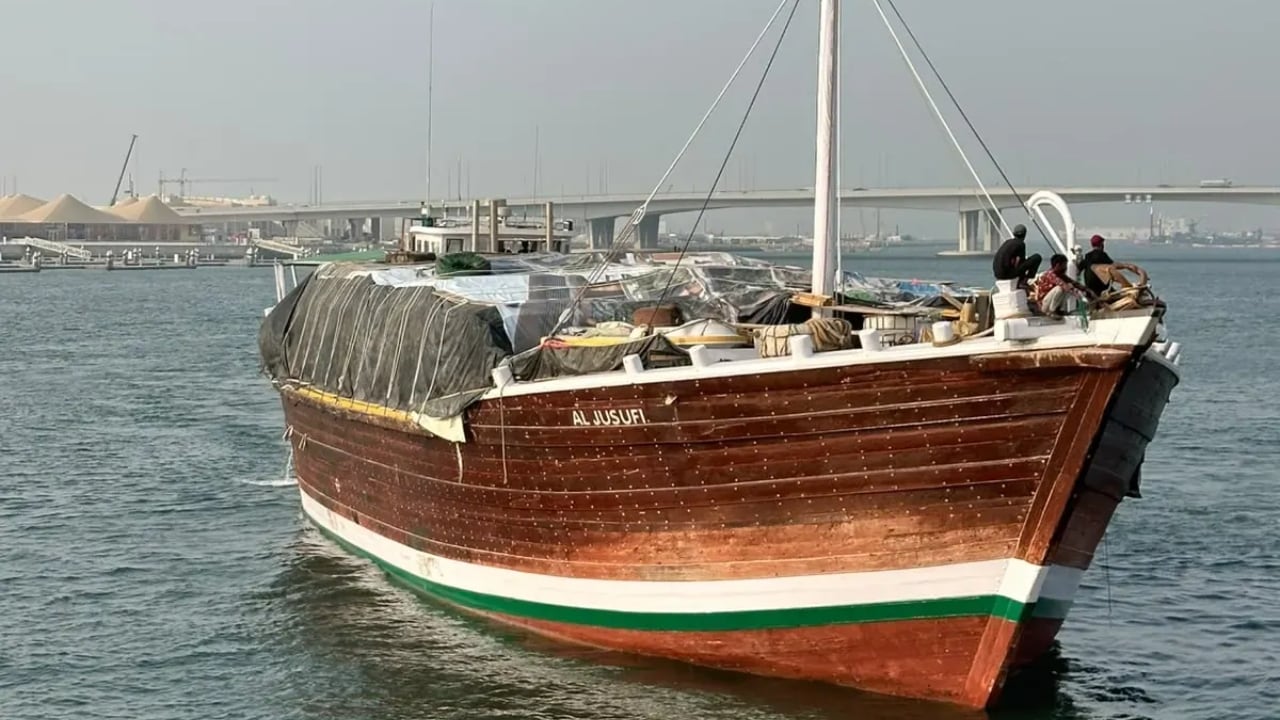
A fatal strike on a merchant ship near the Omani coast exposes how localized maritime violence translates into global freight repricing, crew labor strain, and insurance re-underwriting long before a single shipping lane formally closes. When an Indian sailor dies aboard a commercial vessel such as Al Jusufi in or adjacent to Arabian Sea and Gulf of Oman waters, standard breaking news treats the event as an isolated security incident. A rigorous strategic model treats it as a shock to a tightly coupled system linking maritime hull and war-risk insurance, crewing pipelines, vessel routing economics, and sovereign naval deterrence. Because no competitor article text or URL is supplied in the prompt and search is restricted, the analysis below is explicitly structured around known maritime risk mechanics and analytical frameworks rather than unverified incident specifics, separating established operational mechanisms from educated hypotheses.
The Structural Blind Spot in Incident Reporting
Conventional incident coverage centers on three surface elements: the vessel name, the nationality of a fallen seafarer, and the immediate geographic proximity to the Omani littoral. That framing captures human tragedy and immediate kinetic shock, yet it leaves out the transmission channels that determine whether an attack remains a tactical tragedy or becomes a structural market event.
Commercial shipping operates on thin margins and high asset utilization. A cargo vessel earns revenue only when moving goods between ports or waiting under charter terms that price time and risk explicitly. When a fatal attack occurs near a major transit corridor, market participants do not merely react to the physical damage to one hull. They reprice probability across an entire risk class.
The analytical failure in surface-level reporting stems from treating risk as a binary state—safe versus closed—rather than a continuous pricing function. Even when transit remains physically possible, risk premiums, crew refusal or wage demands, extended steaming times, and naval escort requirements alter the unit economics of every voyage.
Fact Versus Hypothesis in Maritime Security Analysis
Disciplined risk evaluation requires separating verified structural mechanics from unconfirmed event details. When a specific incident lacks verified operational records in the current context, conflating plausible scenarios with established facts corrupts downstream decisions.
- Established structural fact: Maritime war-risk insurance premiums, charter party clauses, and crewing risk assessments respond rapidly to kinetic incidents in or near high-risk transit zones.
- Established structural fact: South Asian seafarers—including Indian officers and ratings—represent a major share of global commercial vessel crews, meaning fatalities or injuries in regional waters directly affect labor supply elasticity and family/union risk perception.
- Educated hypothesis: A kinetic strike off the Omani coast reflects either asymmetric regional state/non-state maritime pressure or opportunistic/spillover threat activity tied to broader Persian Gulf and Arabian Sea tensions.
- Educated hypothesis: Shipowners operating older, lower-freeboard, or less hardened hulls face sharper insurance and chartering friction than operators with modern security protocols and flexible fleet deployment.
The Four Transmission Channels of a Maritime Attack
To understand why a single fatality off Oman matters beyond the immediate crew and vessel owner, map the shock across four interdependent mechanisms. Each channel amplifies or dampens the initial event depending on duration, follow-on strikes, and state response.
1. The War-Risk Insurance and Underwriting Channel
Commercial hull and machinery policies typically exclude or restrict coverage for war, strikes, riots, and civil commotion in designated high-risk areas. Operators must purchase additional war-risk coverage or pay breach-of-warranty premiums when entering listed zones.
A fatal attack on a cargo ship shifts underwriters' loss distribution assumptions. Even if physical hull damage is limited, a fatality introduces severe liability exposure, crew repatriation and compensation claims, potential cargo delay disputes, and reputational scrutiny. Underwriting reacts through higher premiums, shorter coverage notice windows, or stricter transit conditions.
The second limitation in insurance pricing is lag and unevenness. Spot voyage premiums can spike sharply for transits near affected coordinates, while long-term contracted fleets experience staggered renewals. Smaller operators without diversified balance sheets feel the squeeze first because they lack self-insurance capacity or broad banking leverage.
2. The Crewing and Human Capital Channel
Maritime logistics depends on specialized human labor operating in isolated, high-consequence environments. Unlike factory workers who can commute past a point of tension, seafarers live inside the risk zone for weeks or months at a time.
When an Indian sailor is killed in an attack off Oman, the shock travels through crewing agencies, maritime training institutes, seafarer unions, and households. Risk perception is non-linear: a single fatality involving a fellow national often carries greater psychological weight for a crew than abstract statistics about regional threat levels.
This creates a labor bottleneck on two fronts:
- Short-term operational friction: Crews already in theater may demand hazard pay, refuse specific leg assignments, or seek early sign-off at the next available port, forcing costly crew changes and delays.
- Medium-term recruitment elasticity: If families and cadets view Arabian Sea and Gulf of Oman routes as uniquely hazardous without commensurate compensation or protective measures, crewing pools tighten, raising wage costs across affected trades.
3. The Routing, Speed, and Inventory Channel
Every commercial route balances bunker fuel burn, voyage duration, charter hire rates, and cargo carrying value. When threat levels rise near a chokepoint approach such as the coast of Oman, operators evaluate rerouting, speed adjustments, convoying, or holding outside high-risk zones.
Rerouting around broader regional hazards or lengthening voyages increases ton-mile demand while reducing effective vessel supply over a given window. Higher steaming speeds raise fuel consumption roughly with the cube of speed (the propeller law relationship in naval architecture), so rushing through a perceived danger zone carries a steep bunker penalty. Conversely, slow steaming or waiting raises daily time-charter exposure and delays inventory arrival for industrial buyers and retailers.
4. The Sovereign Deterrence and Naval Escort Channel
Waters off Oman sit adjacent to one of the world's most strategically sensitive maritime arteries, linking Persian Gulf energy and trade flows with the wider Indian Ocean. Coastal states and international naval coalitions monitor these waters closely to preserve freedom of navigation and protect commercial lifelines.
A fatal strike tests deterrence credibility. If commercial vessels can be hit with lethal effect without immediate, visible mitigation, threat actors infer lower cost for future harassment or interdiction. Conversely, heightened naval patrols, intelligence sharing, and merchant advisories can deter casual or opportunistic attacks, though naval assets cannot physically shield every merchant hull at all times across vast sea space.
The Cost Function of Transit Under Threat
A strategy consultant models vessel transit not by headlines, but by total landed voyage cost per ton of cargo. For a cargo ship operating near a contested maritime corridor, total cost per voyage ($C_v$) can be expressed conceptually as:
$$C_v = C_{\text{base}} + \Delta C_{\text{ins}} + \Delta C_{\text{crew}} + \Delta C_{\text{route}} + \Delta C_{\text{sec}} + E[\text{Loss}]$$
In this cost function:
- $C_{\text{base}}$ represents normal baseline operating expenses (daily vessel opex, standard fuel burn, port charges).
- $\Delta C_{\text{ins}}$ captures incremental war-risk premiums and policy endorsements for entering the threatened zone.
- $\Delta C_{\text{crew}}$ reflects risk allowances, retention incentives, crew-change logistics, and potential repatriation or claim costs.
- $\Delta C_{\text{route}}$ measures added bunker fuel or lost time from detours, speed changes, or anchorage delays.
- $\Delta C_{\text{sec}}$ accounts for hardened security measures, enhanced lookout/watchkeeping protocols, or defensive equipment where permitted.
- $E[\text{Loss}]$ represents expected uncompensated or friction-heavy losses from hull damage, cargo claims, schedule penalties, and human casualties.
Notice what happens when a single attack raises perceived probability in $E[\text{Loss}]$. Even if $C_{\text{base}}$ is unchanged, the other terms shift upward. A cargo owner or charterer facing higher $C_v$ must either absorb margin compression, pass higher freight rates downstream into commodity and manufactured goods prices, or shift sourcing and modal transport where alternatives exist.
Why Standard Metrics Misread Maritime Risk
Most public commentary relies on flawed proxies to judge whether a maritime crisis is severe.
Metric 1: Number of ships sunk. Modern maritime threats frequently aim to disrupt, intimidate, coerce, or signal rather than sink large steel hulls outright. A ship can survive structurally while suffering a fatality, bridge or machinery damage, fire, or prolonged operational paralysis. Measuring severity solely by sinkings understates operational disruption.
Metric 2: Whether the strait or sea lane is officially closed. De facto disruption occurs well before a formal blockade or closure. Higher insurance rates, night-transit avoidance, delayed schedules, and nervous crews degrade throughput continuously even while ships keep moving.
Metric 3: Immediate one-day spot freight spikes. Freight markets often overreact initially and then partially retrace if no second strike occurs within days. Treating a brief pull-back as proof that risk has vanished mistakes noise for structural trend. True risk shifts show up in multi-week insurance terms, charterer vetting behavior, and crewing retention.
Cause-and-Effect Chains Conventional Coverage Misses
Competitor reporting typically stops at the immediate cause—an attack occurred off the Omani coast and an Indian sailor lost his life. Four downstream cause-and-effect chains explain why the ripple effects are harder to unwind than the kinetic event itself.
From Crew Fatality to Fleet Governance Friction
When a seafarer dies in an attack, ship managers face intense pressure from families, maritime administrations, insurers, and flag/port authorities. Investigations into bridge lighting, AIS (Automatic Identification System) transmission practices, routing choices, and watch standing often follow.
This creates a governance dilemma. Transmitting full AIS data aids navigation and safety, yet adversaries can use open tracking data to monitor commercial traffic patterns. Darkening AIS or altering routes can reduce predictable targeting, yet it may complicate search-and-rescue coordination or breach charterer/insurer expectations if mishandled. Operators without clear, pre-authorized protocols face paralysis during fast-moving crises.
From Regional Incident to Supply Chain Lead-Time Variance
Industrial supply chains built on just-in-time or lean buffer inventories are vulnerable not just to higher freight rates, but to lead-time variance. If a vessel faces inspection delays, anchorage holds, or rerouting near the Gulf of Oman and Arabian Sea, arrival windows widen.
Wide arrival windows force manufacturers and retailers to hold higher safety stock or expedite high-value components by air freight. Both responses raise working capital or logistics costs quietly across sectors far removed from maritime affairs.
From Isolated Strike to Asymmetric Escalation Dynamics
In contested maritime geographies, an attack on a commercial vessel rarely happens in a political vacuum. Even when attribution is initially disputed or unconfirmed in public reporting, maritime actors watch how commercial operators and naval forces respond.
If commercial traffic continues without hardened posture or clear de-escalation signals, further probing becomes cheaper for an aggressor. Conversely, heavy-handed or miscalculated military reactions risk widening kinetic conflict to additional vessels or ports. Commercial planners must therefore stress-test for step-change escalation, not just a static baseline threat.
Limitations of Defensive Countermeasures
No operational measure eliminates maritime threat completely. Armed guards face strict legal, jurisdictional, and flag-state rules regarding territorial waters, port entry, and rules of engagement. Evasive maneuvering works best against small-boat or predictable approaches, but faces severe physical limits against fast, long-range, or precision threats on large cargo hulls. Naval escorts are finite resources stretched across competing theaters. Any strategy that treats a single operational tweak as a silver bullet ignores physical and legal constraints.
Tactical Playbook for Maritime and Supply Chain Leaders
Decision-makers managing vessels, crews, insurance, or freight exposure in or near Omani coastal waters should execute a disciplined sequence rather than reactive ad-hoc moves.
- Audit Exposure by Vessel, Route, and Crew Nationality Profile. Map every active or planned voyage touching the Gulf of Oman, Sea of Oman, or northern Arabian Sea over the next 30 to 90 days. Flag vessels with high crew concentration from affected nationalities, older hull profiles, or tight delivery windows where delays trigger severe contractual penalties.
- Verify War-Risk Coverage Terms and Notification Triggers. Review exact war-risk policy wordings, listed area definitions, cancellation/notice periods, and requirements for prior notification or route adherence before a vessel enters the zone. Confirm claims documentation protocols for crew injury, fatality, repatriation, and hull/cargo incidents.
- Standardize Pre-Transit Security and Communication Protocols. Establish clear, pre-approved decision trees covering AIS posture, watch rotation intensity, bridge and engine-room protection measures, distress reporting lines, and coordination with naval maritime security centers. Avoid leaving tactical judgment calls improvising under fire.
- Communicate Transparently with Crews and Families. Provide crews with factual threat assessments, concrete protective measures in place, clear communication channels home, and transparent compensation/welfare terms. Credible operational support reduces panic and turnover better than vague reassurance.
- Re-Baseline Freight Contracts and Inventory Buffers. For cargo owners and logistics managers, model two scenarios over the next quarter: contained localized risk with elevated insurance/freight costs, and broadened regional disruption causing multi-week transit delays. Adjust safety stock on critical SKUs and diversify supplier/port optionality where economically viable.
Strategic Recommendation
Treat any fatal attack on a commercial cargo vessel off the Omani coast as an early-warning signal of rising structural friction in Arabian Sea and Gulf of Oman trade, even if shipping lanes remain open tomorrow. Shipowners and cargo leaders who price the full voyage cost function—including insurance repricing, crew risk premiums, and schedule variance—and lock in pre-authorized security and inventory contingencies before a second incident occurs will protect margins and human lives far better than those waiting for a formal shipping lane closure.