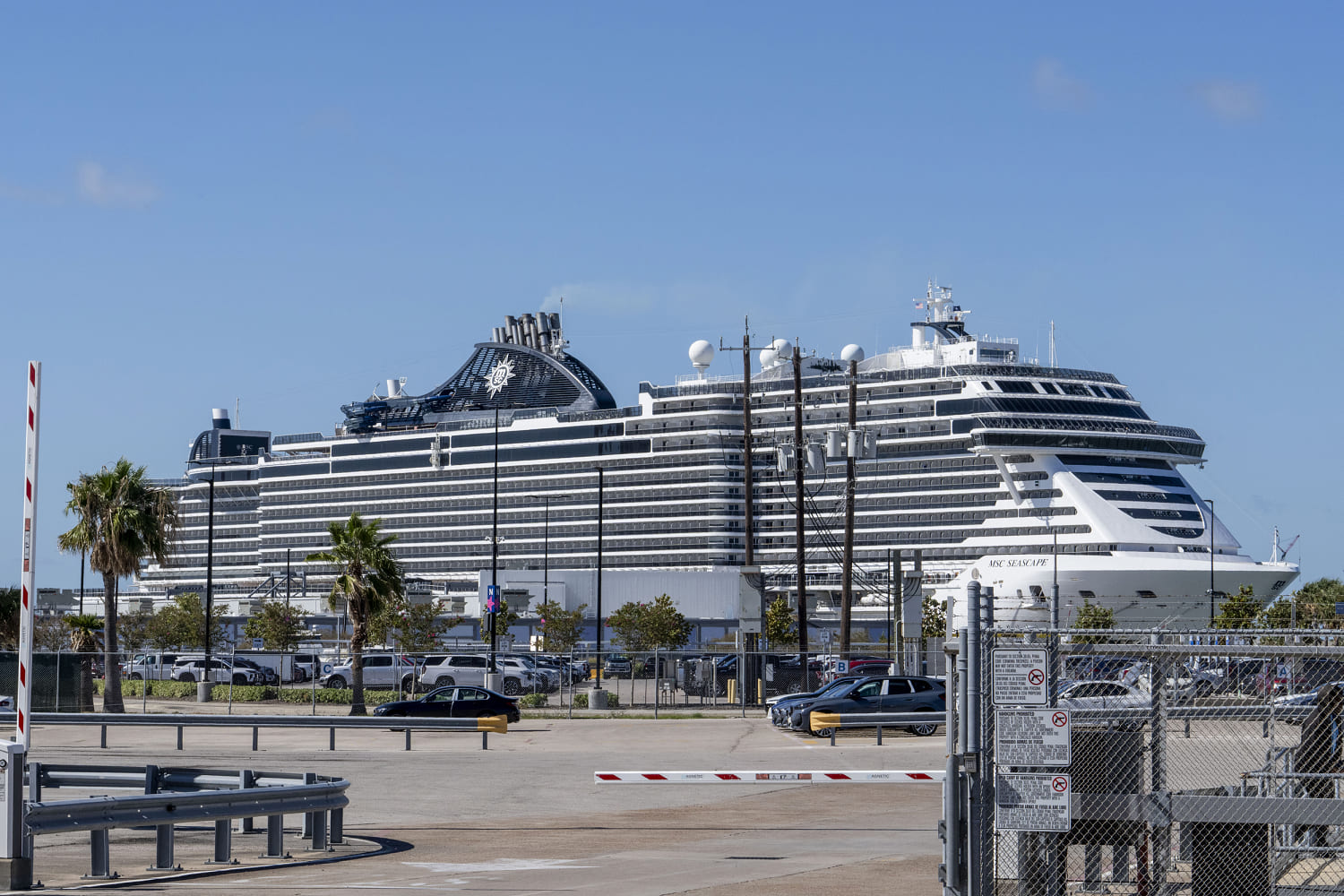
When a suspected homicide occurs aboard a mega-ship like the MSC Seascape, the ensuing investigation is governed by a rigid intersection of international maritime law, flag-state sovereignty, and federal statutory authority rather than standard municipal policing. Most media coverage reduces an FBI maritime inquiry to sensationalist headlines, obscuring the operational bottlenecks that dictate whether a suspect is prosecuted or released. Understanding why the Federal Bureau of Investigation assumes jurisdiction over a foreign-flagged vessel—and how evidence degrades between a stateroom and a federal courtroom—requires dissecting the legal and logistical frameworks of high-seas criminal procedure.
The Jurisdictional Trigger Framework
A cruise ship operating in international waters is not a lawless void, nor is it automatically subject to American policing. Jurisdiction over a violent crime at sea is determined by a hierarchy of four overlapping legal variables.
- Flag-State Sovereignty (UNCLOS Article 92): Under the United Nations Convention on the Law of the Sea, a vessel on the high seas falls under the exclusive jurisdiction of the nation where it is registered. The MSC Seascape sails under the flag of Malta. Legally, an incident aboard the ship occurs on Maltese territory, granting Maltese authorities primary theoretical jurisdiction.
- The Special Maritime and Territorial Jurisdiction (18 U.S.C. § 7): The United States pierces flag-state exclusivity through federal statute. Under 18 U.S.C. § 7(8), the U.S. asserts criminal jurisdiction over any foreign vessel during a voyage having a scheduled departure from or arrival in the United States, provided the offense is committed by or against a U.S. national. Because the MSC Seascape operates regular itineraries out of U.S. homeports such as Miami and Galveston, any incident involving an American citizen triggers immediate federal nexus.
- Coastal State Territorial Waters (UNCLOS Article 27): If the incident occurs within 12 nautical miles of a sovereign coastline, the coastal nation holds concurrent jurisdiction to arrest and investigate, provided the crime disturbs the peace of the country or the good order of the territorial sea.
- The Cruise Vessel Security and Safety Act (CVSSA) of 2010: This federal mandate requires all passenger vessels embarking or disembarking in the United States to report serious felonies—including homicide, suspicious deaths, missing U.S. nationals, and sexual assaults—directly to the nearest FBI field office and the U.S. Coast Guard immediately upon discovery.
The FBI does not deploy to a ship like the MSC Seascape out of routine protocol; it deploys because a specific statutory tripwire—usually the citizenship of the victim or suspect combined with a U.S. port of call—has activated federal investigative authority.
The Operational Bottleneck of Shipboard Evidence
In a land-based homicide, detectives secure a static crime scene within minutes, control the perimeter indefinitely, and transport biological evidence directly to a state crime laboratory. Aboard a vessel carrying over 5,000 passengers and 1,600 crew members, every element of forensic preservation faces structural degradation.
The First-Responder Deficit
Shipboard security officers are private corporate employees, not sworn law enforcement officers. Their primary training focuses on crowd management, access control, and regulatory compliance, not forensic crime scene reconstruction. During the critical initial hours after a body is discovered in a cabin or a suspicious death is reported, ship security must seal the compartment, detain a person of interest in the vessel's brig, and collect preliminary statements. Without specialized forensic training, inadvertent cross-contamination of trace evidence, improper handling of digital keycard logs, or legally flawed custodial questioning can occur before federal agents ever step aboard.
Environmental and Mechanical Interference
A modern cruise ship is a continuously vibrating, humid, climate-controlled industrial plant. High-efficiency HVAC systems circulate air across zones, accelerating the desiccation of biological fluids and altering the dissipation rates of volatile organic compounds. Constant hull vibration can disturb fragile physical trace evidence, while ocean transit delays physical access by forensic specialists.
The Chain-of-Custody Handoff
When the FBI Maritime Liaison Agent and Evidence Response Team (ERT) board the vessel—either via Coast Guard cutter at sea or immediately upon docking at a U.S. port—they inherit a secondary crime scene. Agents must reconstruct the timeline using three primary data streams:
- Electronic Access Logs: Radio-frequency identification (RFID) wrist-band and keycard swipes that track entry into staterooms and restricted crew areas.
- Closed-Circuit Television (CCTV): Thousands of camera feeds covering public corridors, embarkation gangways, and open decks, though never inside private staterooms.
- Point-of-Sale and Biometric Data: Bar receipts, casino transactions, and boarding photographs that establish behavioral baselines and intoxication levels prior to the incident.
Distinguishing Verified Facts from Analytical Hypotheses
In active maritime investigations involving vessels like the MSC Seascape, public reporting frequently conflates corporate press releases with federal indictments. Maintaining analytical rigor requires separating confirmed procedural realities from unverified speculation.
Confirmed Operational Realities
- The FBI only confirms an investigation into a shipboard death when federal jurisdictional criteria under 18 U.S.C. § 7 or the CVSSA are met.
- When a vessel docks at a U.S. port following a reported suspicious death, Customs and Border Protection (CBP), the U.S. Coast Guard, and the FBI establish a joint boarding protocol before general passenger disembarkation begins.
- The local county Medical Examiner at the port of disembarkation—not the ship's physician—holds statutory authority to conduct the forensic autopsy that determines whether the manner of death is homicide, suicide, accident, or natural causes.
Analytical Hypotheses Requiring Verification
- Manner of Death vs. Criminal Intent: An FBI boarding does not automatically prove a premeditated murder occurred. Under CVSSA reporting rules, any death with ambiguous trauma or unexplained circumstances must be treated as a potential homicide until the Medical Examiner rules otherwise. A fatal domestic altercation, an accidental fall exacerbated by acute intoxication, and a calculated homicide trigger the exact same initial federal deployment.
- Extradition and Prosecution Venue: If the suspect is a foreign national and the victim is an American citizen, prosecution in U.S. District Court is legally viable under passive personality jurisdiction, provided the suspect is physically brought into U.S. territory when the ship docks. If the vessel diverts to a foreign port before reaching the United States, the investigation enters a complex diplomatic track involving Mutual Legal Assistance Treaties (MLATs) with Malta and the port state.
The Structural Limitations of Cruise Ship Security
The recurring pattern of high-profile FBI investigations aboard mega-ships exposes fundamental limitations in the cruise industry's security architecture. No operational policy eliminates violent crime within a closed population of 7,000 people, and three structural constraints prevent complete risk mitigation.
First, privacy boundaries create blind spots. While public decks and corridors on ships like the MSC Seascape feature near-total CCTV coverage, private staterooms and balconies remain unmonitored. Because the majority of interpersonal violence occurs between acquaintances or domestic partners behind closed doors, cameras can only establish who entered or exited a corridor—never what transpired inside the cabin.
Second, alcohol monetization conflicts with behavioral risk management. Cruise line revenue models rely heavily on all-inclusive beverage packages. High-volume alcohol consumption lowers impulse control and increases the probability of domestic disputes, physical altercations, and accidental overboard falls, creating a continuous operational burden for shipboard security teams.
Third, jurisdictional friction slows cross-border evidence sharing. Even when the FBI leads the investigation, obtaining corporate records, crew personnel files, or maintenance logs from a European-headquartered operator like MSC Cruises (based in Switzerland) for a ship registered in Malta requires formal legal process. Defense attorneys routinely challenge the admissibility of evidence collected by private ship security prior to the arrival of sworn federal agents, arguing Fourth Amendment or Miranda violations during shipboard detention.
Strategic Protocol for Maritime Risk and Legal Exposure
For maritime operators, legal counsel, and travelers evaluating safety protocols aboard mega-ships, mitigating the fallout of severe shipboard incidents requires moving beyond standard corporate compliance toward hard operational controls.
- Standardize Forensic First-Responder Kits and Protocols: Cruise lines must equip senior security officers with standardized forensic preservation protocols—specifically body-worn cameras activated upon arrival at any medical or security emergency, tamper-evident evidence bags, and strict non-interrogation rules once a compartment is sealed. Recording the exact state of a cabin before medical intervention prevents defense challenges regarding scene contamination.
- Automate Digital Telemetry Preservation: Vessel IT architectures should automatically lock and hash-verify all RFID door logs, CCTV footage, and POS records associated with a flagged stateroom the moment a medical emergency or security alert is logged, eliminating the risk of routine data overwrites during multi-day ocean transits.
- Establish Pre-Cleared Flag-State Waivers: To prevent diplomatic delays when a vessel is operating on U.S.-based itineraries, operators should maintain standing protocols with flag-state registries (such as the Malta Maritime Directorate) authorizing immediate FBI Evidence Response Team access upon U.S. port arrival, ensuring federal prosecutors retain an unbroken chain of custody from the gangway to the grand jury.