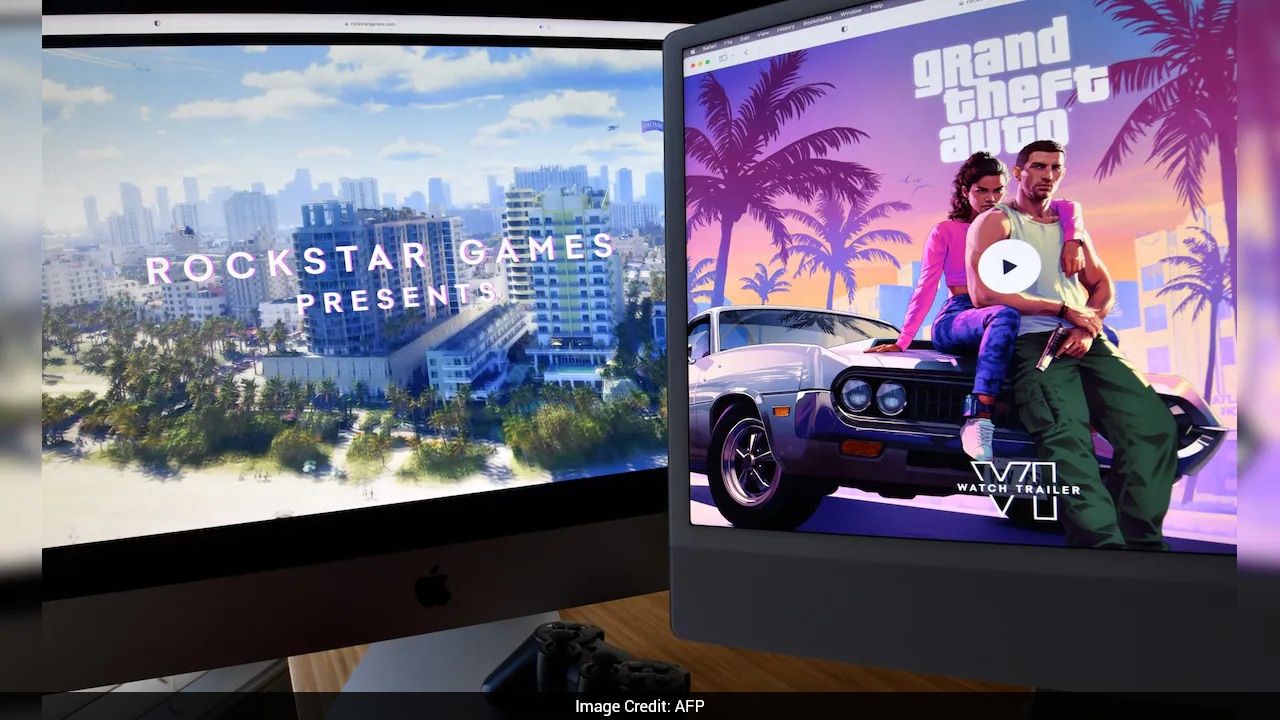
Every entertainment outlet on the internet is running the exact same victory lap for Rockstar Games right now. You have read the script a dozen times. They gush over the dual-protagonist dynamic between Lucia and Jason. They dissect the nostalgia-soaked radio tracks from Vice City. They point to broken YouTube viewership records as proof that Grand Theft Auto VI is an unstoppable cultural juggernaut destined to print billions before the disc even spins up.
That consensus is lazy. Worse, it is blind to the actual mechanics of modern game design, live-service economics, and cultural satire.
Most coverage treats GTA VI like a victory parade rather than what it actually is—the most dangerous high-wire act in entertainment history. When you spend over a decade building expectations to a fever pitch, the hype stops acting as free marketing and starts functioning as a structural liability. Look closer at the characters, the soundtrack, and the audience expectations, and you will see a massive set of traps that nobody in the press wants to talk about.
The Bonnie and Clyde Trap
Entertainment writers love comparing Lucia and Jason to Bonnie and Clyde. It makes for an easy headline. A romantic criminal duo tearing through Leonida sounds cinematic, grounded, and emotionally rich compared to the cartoonish chaos of Trevor Philips in Los Santos.
Here is the problem with that theory. Romance and open-world agency actively fight each other.
In traditional linear storytelling, a writer controls the pacing of a relationship. In a massive sandbox built around player freedom, tone fractures the second the cutscene ends. I have watched narrative teams spend millions trying to force emotional intimacy into systems designed for mayhem, and the friction almost always breaks immersion. When a game asks you to care deeply about a grounded, desperate struggle for survival in one mission, and then lets you launch a stolen hypercar off a bridge into a crowd of pedestrians thirty seconds later, the narrative snaps. This is classic ludonarrative dissonance—the collision between what a game's story tells you to feel and what its mechanics reward you for doing.
Rockstar managed to sidestep this in Grand Theft Auto V by making Michael, Franklin, and Trevor different flavors of sociopath or opportunist. Their cynicism matched the player's worst impulses. Red Dead Redemption 2 solved it through an honor system and a slow, deliberate pace that punished reckless arcade behavior.
Lucia and Jason represent a much trickier gamble. To make their partnership work, Rockstar has to bind two playable characters together emotionally without stripping away the solitary, chaotic freedom that made Grand Theft Auto famous in the first place. If the bond feels forced, the story rings hollow. If the game restricts player chaos to protect the romance, the sandbox feels like a cage.
Nostalgia Is a Crutch, Not a Soundtrack
Turn on any breakdown of the trailers and you will find breathless praise for the music. Hearing Tom Petty's "Love Is a Long Road" or Anita Ward's "Ring My Bell" immediately triggers a dopamine hit for anyone who spent their youth cruising down Ocean Drive in 2002.
Everyone assumes Rockstar will simply curate another legendary radio dial and call it a day. That assumption ignores how drastically music licensing and consumption have mutated since 2013.
In the era of Grand Theft Auto V, the in-game radio was a primary discovery engine for millions of players. Today, audiences have algorithmic playlists, Twitch copyright strikes, and live-service audio feeds. More importantly, music licensing has become a financial minefield. Record labels and publishing houses know the exact revenue numbers behind Grand Theft Auto Online. They do not negotiate flat-fee buyouts the way they did twenty years ago. Every iconic track attached to a billion-dollar franchise now comes with astronomical renewal costs and territorial restrictions that routinely force developers to patch songs out of older games years after release.
Beyond the legal balance sheet sits a creative danger. Leaning too heavily on 1980s Vice City nostalgia turns a forward-looking satire into a museum exhibit. Vice City worked in 2002 because the 1980s were close enough to mock sharply without feeling like ancient history. Set in the modern social media era of Leonida, a soundtrack anchored in boomer and Gen-X classics risks creating a bizarre cultural disconnect.
If Rockstar wants the audio of GTA VI to actually matter, the radio cannot just be a greatest-hits jukebox. It has to reflect the fractured, hyper-local, algorithm-driven soundscape of modern Florida—from underground Latin trap and Miami bass to bizarre talk radio hosts screaming into the void of short-form video culture. Nostalgia sells trailers, but contemporary relevance keeps a world alive for ten years.
Why Parody Is Dead in Leonida
The biggest blind spot in mainstream coverage is the belief that Rockstar's signature brand of American satire will effortlessly translate to the present day.
Dan Houser, the longtime creative force and lead writer behind the franchise's sharpest scripts, left Rockstar Games in 2020. That departure alone changes the DNA of the studio's voice. Even more critical is the simple reality that reality outpaced satire years ago.
How do you parody Florida? You cannot exaggerate a state where real-world headlines routinely read like rejected Weazel News broadcasts. When the trailer recreated real viral clips—alligators walking into convenience stores, people twerking on moving cars, eccentric criminals mugging for courtroom cameras—the internet cheered the accuracy.
Look closer at what happened in those frames. Rockstar was not inventing sharp cultural commentary. They were animating TikTok feeds.
There is a massive difference between satire and reference. Satire exposes the underlying absurdity of power, media, and consumerism by stretching them until they break. Reference just points at a meme you already saw on your phone six months ago and asks you to clap because you recognize it.
If GTA VI settles for being an interactive recreation of internet viral moments, the humor will age like milk within eighteen months of launch. Internet jokes die in weeks. A Rockstar game has to hold up for a decade. Without Dan Houser's biting, cynical worldview steering the ship, the writing team faces the brutal task of finding genuine critique in an era where nothing shocks anyone anymore.
The Live-Service Albatross
Every analyst loves throwing around massive sales projections. They talk about launch-week revenue shattering every record in entertainment, outperforming blockbuster movies and major sports leagues combined.
They rarely ask the question that actually keeps Take-Two Interactive executives awake at night. How do you migrate a massive, entrenched player base from one ecosystem to another without triggering a revolt?
Grand Theft Auto Online is not just a multiplayer mode. It is an economy where millions of players have invested thousands of hours and real money building digital empires over more than a decade. In the games industry, convincing players to abandon a sunk-cost ecosystem for a blank slate is one of the hardest maneuvers in business. Look at what happened when Bungie transitioned from Destiny to Destiny 2, or how Overwatch 2 struggled under the weight of its predecessor's legacy.
Imagine a scenario where GTA VI launches with a breathtaking single-player campaign, followed by a stripped-down multiplayer world that lacks ten years' worth of heists, vehicles, businesses, and properties. Players who spent a decade grinding for flying motorcycles and underground bunkers will suddenly find themselves driving basic sedans and robbing convenience stores again.
That reset is necessary for game balance, yet it creates massive friction. Rockstar cannot simply copy-paste the bloated, sci-fi chaos of modern Los Santos into a grounded Leonida crime drama without ruining the tone on day one. At the same time, offering less content than the game players already own invites immediate backlash.
The Questions Nobody Is Asking
When gamers search for news about GTA VI, they usually ask predictable questions about map size, graphics, and release windows. Those questions completely miss what determines whether this game succeeds or stumbles.
Will the map be bigger than Grand Theft Auto V?
Map size is a vanity metric that fools amateur critics every single time. Square mileage means nothing if the space between landmarks is empty filler. Red Dead Redemption 2 proved that density, verticality, and systemic interactivity matter infinitely more than raw acreage. A smaller map packed with enterable buildings, dynamic NPC schedules, and persistent environmental consequences beats a sprawling, hollow coastline every day of the week.
Can the graphics live up to the trailers?
Rockstar has a spotless track record of shipping games that match or exceed their pre-release footage because they render trailers in-engine rather than using outsourced CGI. The real question is not visual fidelity—it is frame pacing and simulation depth. Pushing dense crowds, complex weather systems, and high-speed vehicle physics simultaneously pushes console hardware to its absolute limit. Pretty lighting means very little if the world feels static under the hood.
Will GTA VI ruin other open-world games?
Only for studios lazy enough to copy the formula without understanding the budget behind it. Nobody else can spend hundreds of millions of dollars and eight years of development time animating individual strands of hair and custom vehicle interiors. Smart developers stopped trying to out-Rockstar Rockstar years ago.
How to Actually Judge GTA VI
To be completely fair, betting against Rockstar's technical craftsmanship is a losing game. Nobody on earth builds more reactive, tactile open worlds, and the sheer scale of their engineering talent virtually guarantees a commercial juggernaut regardless of narrative missteps. Even a flawed Rockstar release still laps ninety percent of the industry in raw polish.
Still, if you want to separate genuine innovation from marketing noise, stop measuring the game by trailer views and celebrity voice rumors. Watch three specific pressure points instead:
- Systemic Freedom Over Scripted Spectacle: Pay attention to whether missions allow creative problem-solving or fail you the moment you step ten feet off the yellow GPS line. Rockstar's rigid mission design was already showing its age in 2018.
- Economic Pacing: Watch how aggressively the multiplayer economy pushes microtransactions in its opening months. Aggressive monetization early on will poison community goodwill faster than any bug.
- Tonal Discipline: Look at whether Lucia and Jason's story holds its emotional weight outside of cutscenes, or if the character switching feels like a gimmick bolted onto a standard crime spree.
Hype is cheap. Trailers are edited to perfection. Billion-dollar marketing campaigns are designed to make you forget that great games are built on hard trade-offs, not magic. When the loading screen finally fades out on Leonida, the nostalgia, the view counts, and the breathless headlines disappear with it—leaving nothing behind except the mechanics on your screen.