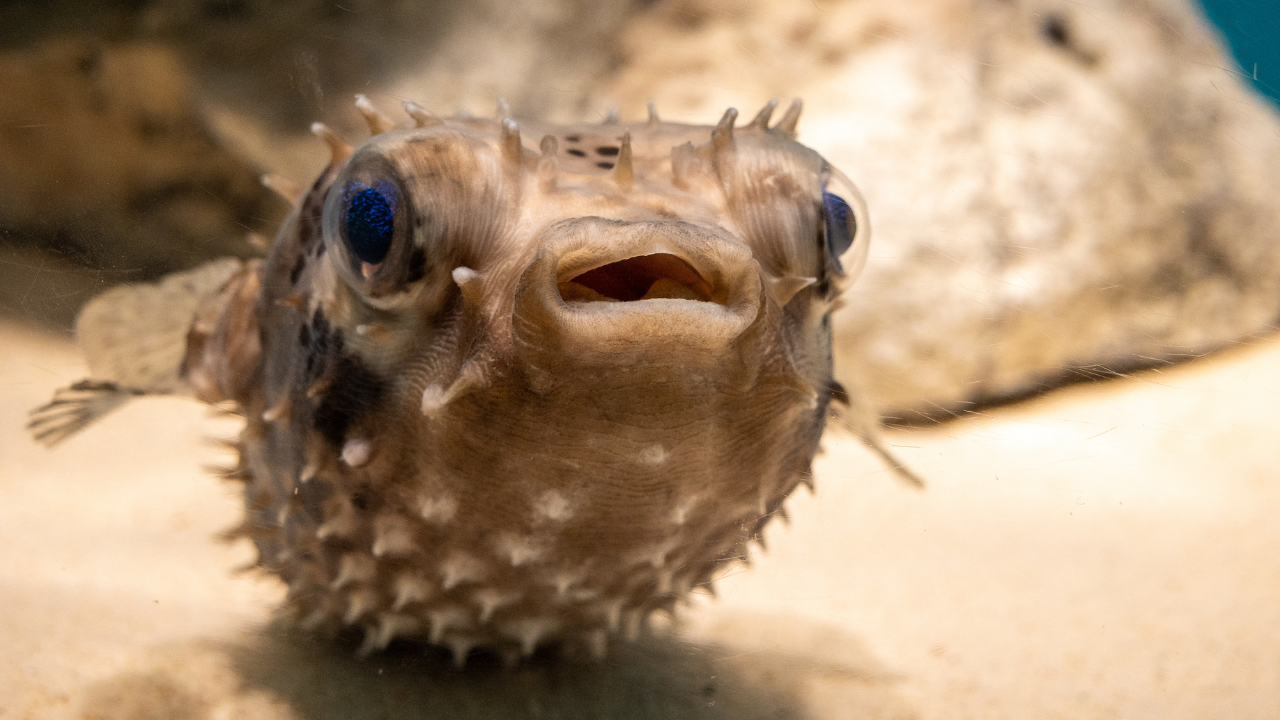
Marine evolutionary biology frequently mischaracterizes maternal toxin provisioning as a binary survival switch, assuming mothers simply arm offspring with adult-grade chemical defenses. In reality, female pufferfish (family Tetraodontidae) provision their eggs with low-toxicity biosynthetic precursors—specifically 5,6,11-trideoxytetrodotoxin—rather than high-potency tetrodotoxin (TTX). This strategic biochemical allocation solves a critical thermodynamic and physiological bottleneck: protecting vulnerable pelagic larvae from generalist predators without triggering autotoxicity or incurring prohibitive metabolic transport costs during oogenesis.
Understanding this mechanism requires separating popular assumptions about pufferfish toxicity from the actual pharmacokinetics of guanidinium alkaloids. Adult pufferfish accumulate massive concentrations of TTX in their skin, liver, and ovaries, utilizing a potent neurotoxin that blocks voltage-gated sodium channels ($Na_v$) in predators. Yet developing embryos lack the fully differentiated cellular sequestration architecture—such as specialized TTX-binding proteins in the plasma and localized epidermal secretory glands—required to safely house peak concentrations of mature TTX. By transferring 5,6,11-trideoxytetrodotoxin, which exhibits a binding affinity to sodium channels orders of magnitude lower than TTX itself, the maternal organism establishes a chemically stable, non-lethal defense perimeter around the developing zygote.
The Biochemical Architecture of Maternal Provisioning
To evaluate why natural selection favored precursor transfer over direct toxin loading, we must examine the molecular differences within the TTX analogue family. Tetrodotoxin is not a single isolated compound in marine ecosystems; it exists alongside a suite of structurally related analogues, including 4-epiTTX, 4,9-anhydroTTX, and various deoxy derivatives.
Pharmacokinetic Divergence Between TTX and 5,6,11-Trideoxytetrodotoxin
The lethal potency of mature TTX stems from its precise stereochemical fit within the outer pore of voltage-gated sodium channels. The hydroxyl groups at the C-6 and C-11 positions, alongside the guanidinium moiety, form critical hydrogen bonds with amino acid residues in the channel's selectivity filter.
5,6,11-trideoxytetrodotoxin lacks the hydroxyl groups at carbons 5, 6, and 11. This structural omission fundamentally alters its biological activity:
- Receptor Binding Reduction: Without the C-6 and C-11 hydroxyl groups, the molecule cannot stabilize its bond within the $Na_v$ channel pore. Its paralytic toxicity drops by more than two orders of magnitude compared to parent TTX, rendering it functionally nearly non-toxic in standard mammalian and piscine bioassays.
- Membrane Permeability Shifts: The absence of three polar hydroxyl groups decreases the molecule's overall hydrophilicity. This altered partition coefficient facilitates passive or carrier-mediated transport across maternal ovarian membranes and into the lipid-rich yolk sac of developing oocytes.
- Metabolic Stability: Deoxy analogues resist enzymatic degradation during the rapid cellular division phases of embryogenesis, ensuring the chemical payload remains intact until the larva hatches and transitions to exogenous feeding.
The Oogenesis Transport Bottleneck
Female pufferfish do not synthesize TTX de novo; they acquire it through the marine food web via endosymbiotic and diet-derived bacteria (such as Vibrio, Pseudomonas, and Pseudoalteromonas species) or through trophic accumulation from toxic prey like flatworms and ribbon worms. Once ingested, TTX is transported via the bloodstream—bound to specialized carrier proteins like pufferfish saxitoxin and tetrodotoxin binding protein (PSTBP)—and sequestered in the skin and ovaries.
During vitellogenesis, the maternal liver synthesizes yolk precursors that are transported to the developing oocytes. Loading pure TTX into oocytes at concentrations sufficient to deter predators presents a high-risk failure mode. If free TTX leaks from the yolk into the embryonic cytoplasm before the embryo expresses its own mutated, TTX-resistant sodium channels, the toxin will disrupt the bioelectric signaling required for early cardiac and neural development. Transferring 5,6,11-trideoxytetrodotoxin bypasses this developmental hazard entirely. The embryo receives a high-volume chemical payload with minimal risk of self-poisoning.
Ecological Function of a Nearly Non-Toxic Payload
If 5,6,11-trideoxytetrodotoxin does not paralyze or kill predators at larval concentrations, its evolutionary retention demands a functional explanation beyond acute lethality. In marine larval ecology, chemical defenses rarely operate through lethal toxicity; a predator that dies after consuming a 2-millimeter larva still eliminates the genetic lineage of that larva. Instead, maternal chemical provisioning operates through sensory deterrence and behavioral conditioning.
Gustatory Deterrence Over Acute Lethality
Larval pufferfish (such as Takifugu alboplumbeus and Takifugu rubripes) hatch into the pelagic zone, where they face intense predation from planktivorous fish and invertebrates. At this life stage, survival depends on immediate rejection upon capture rather than post-ingestion toxicity.
- Chemoreceptor Activation: Teleost fish possess highly sensitive gustatory receptors on their lips, gill arches, and oral cavities capable of detecting guanidinium alkaloids at nanomolar concentrations.
- Aversive Reflex Triggering: Research on juvenile and larval Takifugu demonstrates that predators recognize the chemical signature of TTX analogues instantly upon mouthing the larva. Even though 5,6,11-trideoxytetrodotoxin lacks systemic paralytic potency, its intact guanidinium ring structure triggers the same aversive gustatory response as mature TTX.
- Non-Lethal Ejection: Because larval pufferfish possess a resilient dermal layer relative to their size, rapid spitting by a predator frequently leaves the larva unharmed. The nearly non-toxic analogue acts as a chemical warning label—an aposematic taste signal—that mimics the presence of lethal adult toxin without requiring the metabolic expenditure of high-potency toxin loading.
The Ontogenetic Shift to Exogenous TTX Accumulation
Maternal provisioning is strictly a temporary bridge. As the yolk sac is absorbed and the larva transitions into a free-swimming juvenile, the maternally derived 5,6,11-trideoxytetrodotoxin dilutes rapidly due to somatic growth and metabolic clearance.
At this inflection point, the juvenile pufferfish undergoes a critical physiological transition:
- Epidermal Gland Maturation: The skin develops specialized basal cells and mucous glands capable of housing high concentrations of mature TTX.
- Trophic Acquisition: Juveniles begin actively foraging on benthic invertebrates, ingesting TTX-bearing organisms and establishing their own gut microbiome.
- Biosynthetic Oxidation (Hypothesized Mechanism): A persistent question in marine toxinology is whether pufferfish possess endogenous cytochrome P450 enzymes capable of oxidizing 5,6,11-trideoxytetrodotoxin into mature TTX by adding hydroxyl groups sequentially (via 5,11-dideoxyTTX and 11-deoxyTTX intermediates). While the exact enzymatic pathway remains unconfirmed in vivo, the co-occurrence of these specific deoxy analogues in wild pufferfish tissues strongly points toward a stepwise oxidation network—either driven by the host liver or mediated by symbiotic bacteria—that converts the safe maternal precursor into a lethal adult weapon once the juvenile's sequestration organs are fully online.
Evaluating the Analytical Limitations and Hypotheses
When translating these biochemical findings into broader ecological models or aquaculture applications, researchers must account for significant empirical constraints. The study of TTX analogues in larval fish operates at the edge of current analytical sensitivity, introducing variables that prevent definitive conclusions across all Tetraodontidae species.
Known Facts vs. Unverified Mechanisms
To maintain analytical rigor, we must separate confirmed empirical observations from prevailing scientific hypotheses:
- Confirmed Fact: Female pufferfish selectively accumulate 5,6,11-trideoxytetrodotoxin in their ovaries and transfer it to their eggs, resulting in larvae that contain measurable quantities of the deoxy analogue alongside trace amounts of mature TTX.
- Confirmed Fact: 5,6,11-trideoxytetrodotoxin exhibits drastically reduced toxicity compared to TTX, yet elicits aversive feeding behavior in predatory fish.
- Unverified Hypothesis: The precise enzymatic mechanism responsible for converting 5,6,11-trideoxytetrodotoxin to TTX within the pufferfish remains unproven. Isotope-labeling studies have struggled to demonstrate consistent endogenous hydroxylation in sterile, lab-reared pufferfish, leaving open the possibility that the conversion is entirely dependent on environmental microbial symbionts rather than host genetics.
- Unverified Hypothesis: The universality of this strategy across all ~200 species of Tetraodontidae is assumed rather than proven. Most granular data derives from commercially relevant Takifugu species; freshwater pufferfish (such as Pao and Dichotomyctere genera), which often utilize saxitoxin (STX) instead of TTX, may rely on entirely different maternal provisioning kinetics.
Structural Constraints in Laboratory Modeling
Extrapolating wild survival rates from laboratory predation assays introduces systematic bias. In controlled tank experiments, predators are typically naive or conditioned on uniform pellet diets, making them hyper-sensitive to novel chemical cues like 5,6,11-trideoxytetrodotoxin. In complex reef or pelagic ecosystems, generalist predators encounter a continuous background of marine alkaloids, potentially raising their gustatory rejection thresholds. Furthermore, wild larvae are exposed to variable water temperatures and nutrient regimes that directly alter yolk absorption rates, compressing or extending the window during which maternal chemical defenses remain effective.
Operationalizing Chemical Ecology for Aquaculture and Conservation
For marine biologists, aquaculture operators, and conservation strategists managing Takifugu stocks, the mechanics of maternal precursor transfer dictate specific operational interventions. Historically, commercial pufferfish farming has focused on producing non-toxic fish by raising them in isolated net pens on TTX-free artificial diets. While this eliminates food safety risks for human consumers, it creates severe mortality bottlenecks when hatchery-reared juveniles are released into the wild for stock enhancement programs.
Hatchery-raised pufferfish bred from TTX-free broodstock lack both maternal 5,6,11-trideoxytetrodotoxin provisioning and acquired epidermal TTX. Upon release into coastal waters, these immunologically and chemically naive juveniles suffer catastrophic predation rates compared to wild cohorts.
To solve this survival deficit without compromising downstream food safety protocols, stock enhancement programs must restructure their broodstock conditioning:
- Targeted Precursor Supplementation: Formulate specialized broodstock diets enriched with purified 5,6,11-trideoxytetrodotoxin rather than raw TTX. This allows hatchery managers to safely arm the resulting larvae with natural gustatory deterrents while minimizing occupational handling hazards and preventing broodstock autotoxicity.
- Microbiome Inoculation Prior to Release: Introduce verified, non-pathogenic TTX-producing bacterial strains into juvenile rearing tanks 14 days prior to wild release. This primes the juvenile gut and skin architecture to begin exogenous toxin accumulation immediately upon entering natural trophic webs.
- Biomarker Screening for Stocking Readiness: Replace standard length-and-weight release metrics with liquid chromatography-tandem mass spectrometry (LC-MS/MS) screening of skin mucus swabs. Juveniles should only be cleared for coastal release once baseline concentrations of guanidinium alkaloids reach the threshold required to trigger predator gustatory rejection.
By shifting focus from lethal adult toxins to non-lethal maternal precursors, marine researchers and aquaculture engineers can replicate the exact evolutionary risk-management system that allows pufferfish to survive their most vulnerable pelagic phase.

