Two a.m. in Atlanta smells like cold rain on hot asphalt and stale coffee.
If you have ever stood inside a county tabulation center in Georgia after midnight, you know the specific, hollow silence that settles over the room once the precinct managers finish hauling in the orange memory cards. Outside, the streetlights hum over empty strip malls from Marietta to Macon. Inside, tired election workers rub their eyes under fluorescent tubes while attorneys for both major parties lean over clipboards, squinting at spreadsheets that refuse to sit still. Recently making headlines lately: The Quiet Shift on Georgia Avenue (And Why Washington’s Next Chapter Starts There).
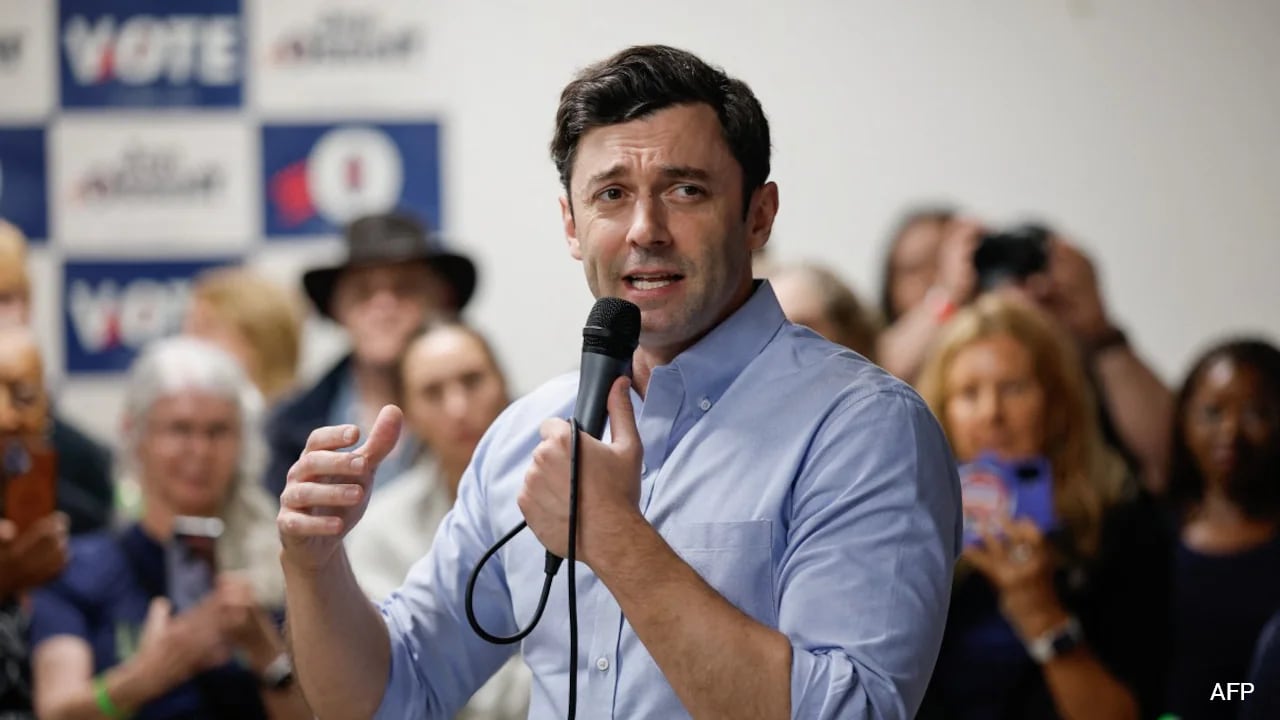
For years, political observers treated Georgia’s shift toward competitive, razor-thin elections as a fluke—a lightning strike caused by one chaotic news cycle or one unusually high-turnout winter runoff. Then came November 2026. When the dust finally settled across 159 counties, Democratic Senator Jon Ossoff—who first entered the upper chamber in 2021 at age 33 as the youngest member of the United States Senate—had secured a second six-year term.
That sentence looks tidy on a wire service ticker. It reads like a box score. Additional information regarding the matter are covered by The Guardian.
Yet box scores lie by omission. A headline announcing that an incumbent won re-election hides the sheer gravitational pull required to keep a Senate seat in a state where control of the chamber often hangs by a fraction of a percentage point. To understand what actually happened in Georgia, you have to step away from the cable news maps and look at the kitchen-table arithmetic that governs the lives of the people who cast those ballots.
The Weight of Six Years in a Divided Room
Consider a composite voter—let us call her Elena, a hypothetical 42-year-old physical therapist living in Gwinnett County, thirty miles northeast of downtown Atlanta. Elena is not a party activist. She does not watch Sunday morning talk shows, and she couldn't tell you which committee chairs sit on the Senate Judiciary panel. What she knows is the price of groceries on Pleasant Hill Road, the wait time at her parents' clinic, and the fact that her property tax assessment jumped twice in four years.
In 2020, when Ossoff first ran against Republican incumbent David Perdue, the race went to a January 2021 runoff that shattered fundraising records and drew national television trucks to every diner in the state. Back then, Ossoff was a former investigative journalist and documentary filmmaker whose pitch rested heavily on promise and generational change. Voters took a chance on a newcomer during a period of acute national upheaval.
Six years later, a newcomer’s shield is gone. You no longer run on what you might do; you run on the receipts in your pocket.
By the time the 2026 midterm cycle arrived, Ossoff was 39—still among the youngest senators in Washington, though no longer the lone millennial trying to find the quickest stairwell between the Russell Senate Office Building and the Capitol subway. More importantly, he carried a voting record forged in a narrowly divided Congress. Every vote on federal spending, clean-energy tax credits, border enforcement, and judicial confirmations gave critics in Georgia specific ammunition.
Republicans across the state made a straightforward, formidable argument to voters like Elena. They pointed to inflation that had squeezed household budgets over the preceding years, arguing that Democratic spending bills had poured fuel on rising costs. They criticized federal regulatory policies and argued that Georgia needed a conservative voice in Washington aligned with the state's Republican-led government in Atlanta. In rural counties from the Blue Ridge Mountains down to the wiregrass plains near Valdosta, that message resonated deeply.
So how did a Democrat survive a midterm environment where historical patterns almost always punish the party in power or force incumbents onto the defensive?
The Architecture of a Modern Southern Coalition
To answer that, think of a Georgia statewide campaign not as a single speech delivered from a podium, but as a suspension bridge held up by four entirely different cables. If any one cable snaps—or even stretches too far—the deck drops into the river.
The first cable is the urban core. Fulton and DeKalb counties form the traditional engine of Democratic turnout in Georgia. Here, the political conversation centers on voting access, healthcare affordability, civil rights, and infrastructure investment. Yet high margins in Atlanta alone have never been enough to win statewide; Democratic nominees have known that hard truth since the 1990s.
The second cable is the suburban crescent. Counties like Gwinnett, Cobb, Henry, and Forsyth—places that anchored the Republican Party for decades—have transformed into sprawling, economically diverse hubs of logistics, healthcare, and tech. Voters here tend to be pragmatic, skeptical of ideological extremes, and fiercely attentive to local economic stability. During his first term, Ossoff leaned heavily into constituent services and federal infrastructure funding—pointing to upgrades at the Port of Savannah, broadband expansion, and manufacturing investments tied to electric vehicle and solar supply chains across the state. Supporters viewed these projects as tangible proof that his seat in Washington delivered jobs back home; Republican critics countered that subsidies distorted the free market and added to the national debt.
The third cable is the Black Belt and middle Georgia. From Augusta across to Columbus and down to Albany, Black voters remain the foundational backbone of the Georgia Democratic coalition. Yet political analysts and local organizers alike noted throughout the 2024 and 2026 cycles that turnout in these communities could never be taken for granted. Economic frustration—especially among younger Black men—forced campaigns to earn every conversation in barbershops, churches, and union halls rather than relying on automatic loyalty.
The fourth cable is margin management in red territory. You do not win a statewide race in Georgia by carrying rural north Georgia. You win by losing those counties by 45 points instead of 58 points. Every town hall in a conservative county, every appearance at a local Chamber of Commerce breakfast, shaves a few hundred votes off a challenger’s advantage. Across 159 counties, a few hundred votes here and there becomes the entire margin of victory.
What Voters Actually Asked Behind Closed Doors
If you spend enough time covering Southern politics, you notice a sharp divide between what gets shouted on social media and what gets whispered at community forums.
Online, politics looks like a blood sport played by people who treat elections as moral crusades. Offline, in gymnasiums in Savannah or community centers in Athens, the questions are quieter and far more anxious. People ask whether Medicare will remain solvent by the time they retire. Small business owners ask why commercial insurance rates keep climbing. Young couples ask how they are supposed to save a down payment for a starter home in Decatur or Roswell when interest rates and housing inventory both work against them.
I remember watching a retiree in central Georgia fold a campaign flyer neatly into fourths and tuck it into his shirt pocket after a town hall, muttering that he didn't care much for either party's slogans—he just wanted to know if his prescription cap would stay intact next January. That moment captures the real tension of modern Georgia elections. Voters are exhausted by perpetual campaign season. Since 2020, Georgians have endured presidential races, twin Senate runoffs, a razor-thin 2022 Senate battle between Raphael Warnock and Herschel Walker, and another intense cycle in 2026.
Fatigue is a real political force. When people feel battered by endless advertisements on their phones and televisions, they do not reward the loudest voice in the room. They look for steadiness.
Ossoff’s campaign bet heavily on presenting him as a workhorse legislator rather than a cable-news firebrand—highlighting bipartisan oversight hearings on prison conditions, military housing, and federal agency accountability alongside his core Democratic priorities. His Republican opponents, meanwhile, argued that his Senate votes tracked closely with national Democratic leadership and did not reflect Georgia’s conservative traditions. Both portraits contained pieces of the truth, leaving voters to weigh which version mattered more to their daily lives.
The Youth Factor and the Illusion of Permanence
When Ossoff took the oath of office in January 2021, commentators made much of his age. Born in Atlanta in 1987, he was the first millennial elected to the U.S. Senate and the youngest senator since Joe Biden took office in 1973.
Age in politics cuts both ways. Early on, youth signals energy, fluency in modern communication, and distance from decades-old partisan grievances. By a first re-election bid, however, youth can become a vulnerability if opponents frame an incumbent as inexperienced for turbulent times.
Surviving a first re-election in a swing state changes a senator’s standing inside the Capitol. In Washington, seniority is currency, and electoral durability is power. Colleagues look differently at a lawmaker who has proven they can win twice in one of the most fiercely contested battlegrounds in the country. Committee assignments become firmer. Legislative leverage grows.
Still, anyone who treats Ossoff’s re-election as proof that Georgia has permanently turned blue misunderstands the state entirely.
Georgia is not California, and it is not Alabama. It is a true purple state where statewide offices regularly split between both parties. Republican Governor Brian Kemp demonstrated twice that a disciplined conservative message focused on economic growth commands deep loyalty across the state. Voters in Georgia have shown a consistent willingness to split their tickets, rewarding individual candidates they trust while punishing those they view as out of step.
That unpredictability is what makes every election night in Atlanta feel like walking a tightrope in a crosswind. Nobody gets a safe seat. Every six years, the lease comes up for renewal, and the landlords—more than five million registered Georgia voters—inspect the property down to the floorboards.
Why This Race Echoes Far Beyond the Chattahoochee
It is tempting, especially if you live outside the South, to view a Senate race in Georgia as regional theater—peaches, pine trees, and polite disagreements over sweet tea.
That would be a mistake.
Because the United States Senate gives every state two seats regardless of population, a narrow victory in Georgia carries the exact same constitutional weight as a landslide in New York or Texas. One seat determines which party controls the Senate floor, which bills receive a vote, which federal judges sit on appellate benches for life, and which nominees lead cabinet agencies.
When Elena, our hypothetical physical therapist in Gwinnett County, stepped behind the privacy screen at her local precinct on a crisp November Tuesday, she was not thinking about constitutional architecture or Senate committee gavels. She was thinking about her clinic, her family, and whether the person representing her state in Washington actually understood the ground she walked on.
Outside the tabulation centers in Atlanta, the rain eventually stopped just before dawn. Poll workers locked the doors, climbed into their cars, and merged onto Interstate 285 alongside early-shift nurses, warehouse drivers, and teachers heading toward morning bell—another six-year clock already ticking down to zero.


