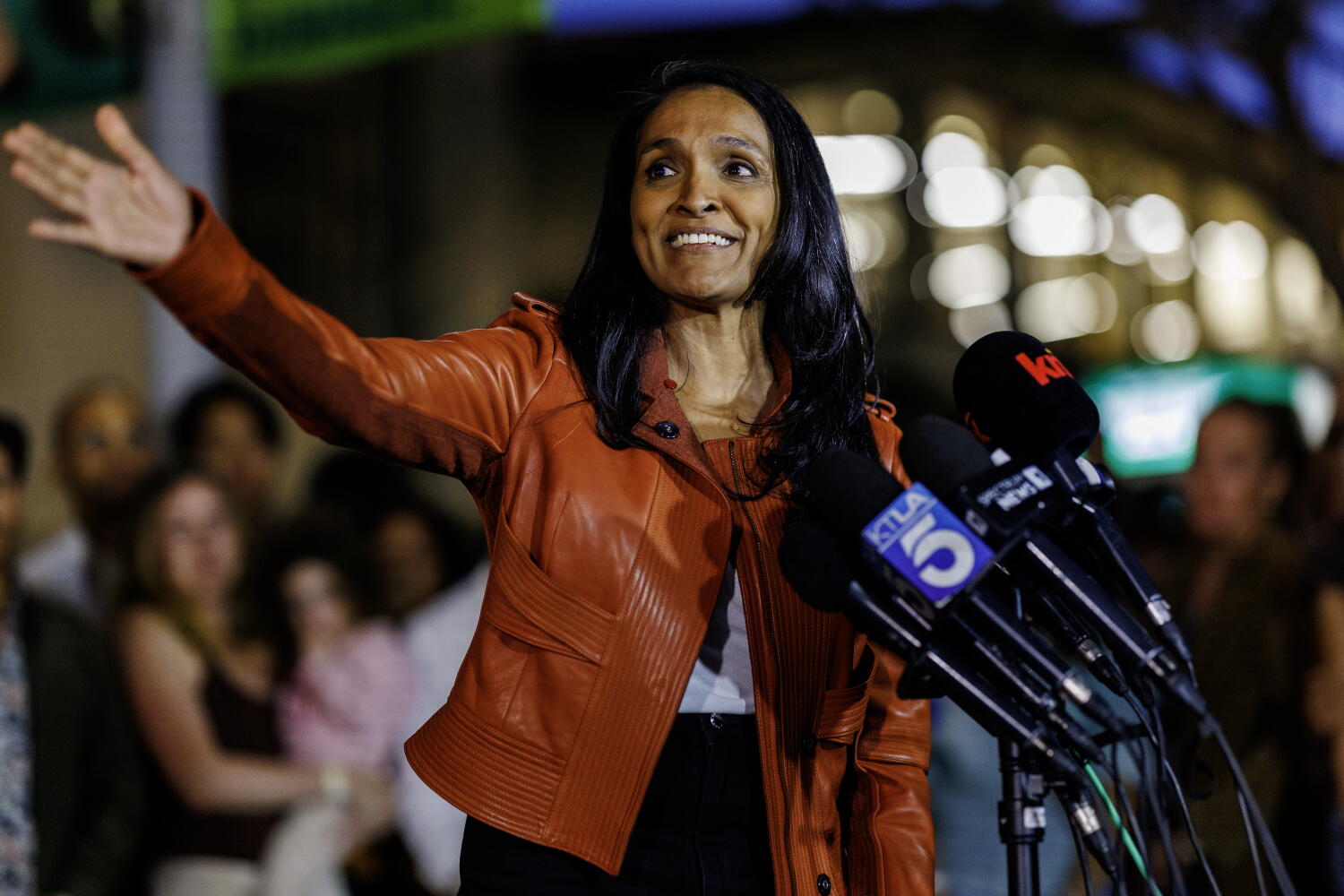
When Nithya Raman won the Los Angeles mayoral race in November 2026, she triggered a massive political headache for her old neighborhood. Someone has to take over Council District 4, and the L.A. City Council holds all the cards on how that happens.
Right now, Raman isn't waiting around for backroom deals at City Hall. She's pushing hard for a special election so the voters of District 4 can pick their own next representative instead of letting the council appoint a caretaker.
It sounds simple on paper. In Los Angeles politics, nothing ever is.
The Power Struggle Over Council District 4
Under the Los Angeles City Charter, a vacancy on the 15-member City Council doesn't automatically go to the ballot box. When a sitting councilmember steps down to become mayor, the remaining councilmembers have two choices. They can call a special election to let residents vote, or they can appoint someone to fill the seat until the next regularly scheduled election cycle.
Raman has made her stance completely clear. She wants the voters in District 4—which stretches from Silver Lake and Los Feliz up through Sherman Oaks and parts of the Hollywood Hills—to decide who represents them at City Hall.
Why does she care so much? Because appointments in Los Angeles have a messy track record.
Over the past decade, City Hall has been rocked by corruption scandals, federal indictments, and leaked audio tapes that exposed how council districts get carved up and managed behind closed doors. Whenever the council chooses to appoint an interim member rather than calling an election, critics argue it deprives hundreds of thousands of residents of actual representation. Even worse, an appointed official often gains massive name recognition and institutional backing if they decide to run for the seat permanently later on, or conversely, a "caretaker" with no voting accountability leaves a district drifting during major budget and zoning battles.
By calling for a special election right out of the gate, Raman is putting public pressure on her soon-to-be former colleagues. She's framing this around basic democratic accountability, making it politically expensive for councilmembers to quietly install a temporary ally.
What Makes District 4 Such a High-Stakes Seat
You can't understand the urgency around this special election without looking at the map of Council District 4 itself. It's one of the most politically active, geographically sprawling, and ideologically divided districts in Southern California.
First elected in 2020 after unseating an incumbent, Raman built her political base on tenant protections, aggressive homelessness outreach, and progressive urban planning. Her district includes dense, renter-heavy neighborhoods in the basin alongside wealthy, single-family hillside communities in the San Fernando Valley. Those two groups rarely agree on housing density, street safety projects, or shelter placements.
Leaving a district that complex without an elected voice for months—or handing it over to a council-appointed placeholder—creates real problems on the ground.
Think about what a councilmember actually does every day. They control discretionary funds for neighborhood cleanups, approve or stall local real estate developments, negotiate shelter locations, and respond to constituent emergencies. When a seat sits empty or gets handed to a caretaker who doesn't answer to voters, local projects freeze. Neighborhood councils get ignored. Permit approvals slow to a crawl.
For residents living in Hollywood, Miracle Mile, Toluca Lake, or Sherman Oaks, the difference between an elected representative and an appointed placeholder isn't theoretical. It shows up in whether a crosswalk gets painted, how encampments get managed on commercial corridors, and who shows up to contentious zoning hearings.
The Real Cost and Timeline of a Special Election in L.A.
Of course, opponents of special elections always bring up the exact same two arguments. Money and turnout.
Running a standalone municipal special election in Los Angeles isn't cheap. Depending on whether the race requires a primary and a runoff, the Los Angeles City Clerk and Los Angeles County Registrar-Recorder have to print ballots, staff vote centers, verify signatures, and manage mail-in ballot drop boxes across a massive geographic footprint. Past single-district special elections in L.A. have cost the city's general fund millions of dollars.
Then there's the turnout problem. Off-cycle special elections notoriously draw a fraction of the voters who show up during a presidential or gubernatorial election. That means a tiny, hyper-motivated slice of the electorate—often skewed older, wealthier, and more conservative than the district as a whole—can end up deciding the outcome.
Here's why that doesn't hold up as an excuse to skip an election.
- Budget context matters. Los Angeles operates on a multi-billion-dollar annual budget. Spending a few million dollars to ensure roughly 260,000 residents have a democratically elected representative is a rounding error compared to citywide liability payouts or administrative overhead.
- Appointments have hidden costs. When the council appoints a caretaker, they still have to fund a full council office staff, legislative deputies, and field operations—all without the person in charge having a mandate from the people paying their salaries.
- Vote-by-mail changes the game. Since California moved to universal mail-in ballots, participation in special elections has become far easier than it was a decade ago. Every registered voter in District 4 gets a ballot sent straight to their mailbox weeks before election day.
If the City Council votes to call a special election once Raman formally vacates her seat, the calendar moves fast. Under the City Charter, the council sets the election date, typically aiming for a window roughly 110 to 130 days after the vacancy is declared, though they can align it with other scheduled county or state election dates if one falls within a reasonable timeframe. If no candidate wins more than 50 percent of the vote in the initial round, the top two finishers head to a runoff election a few months later.
Why the City Council Might Hesitate
Even though Raman is heading into the mayor's office with fresh political capital, she doesn't have a vote on the City Council once she steps down. The decision rests entirely with the remaining councilmembers.
And let's be honest—plenty of councilmembers have reasons to dislike special elections.
First, a special election introduces an unpredictable wildcard into City Hall's ideological balance. Raman has been a leading voice in the council's progressive bloc, frequently clashing with more moderate or business-aligned members over policing budgets, tenant ordinances, and housing mandates. A wide-open special election in District 4 could bring in another staunch progressive, or it could flip the seat to a moderate backed by real estate and public safety groups. An appointment gives the existing council majority way more control over who sits in that chair for the next year or two.
Second, councilmembers often prefer appointing a retired city official, a former staffer, or an elder statesman as a "non-voting" or non-candidate caretaker with the explicit understanding that the appointee won't run in the next regular election. They pitch this as a fair compromise that avoids giving anyone an incumbency advantage while saving taxpayer money.
The problem with the caretaker model is that it treats representation like a clerical job. A placeholder who isn't running for reelection has zero incentive to take tough political votes, fight the mayor's office on budget allocations, or push ambitious neighborhood initiatives. They keep the lights on and answer constituent emails, while the rest of the council steamrolls the district on major citywide votes.
How District 4 Residents Can Influence What Happens Next
Right now, the battle over the District 4 special election isn't happening in a voting booth. It's happening in council committee meetings and public comment periods at City Hall.
If you live in Council District 4 or care about how Los Angeles handles political vacancies, don't assume a special election is guaranteed just because the mayor-elect asked for one. Watch the City Council agenda closely over the coming weeks as Raman prepares to take the oath of office.
When the council schedules the formal motion regarding the District 4 vacancy, show up or call in during public comment. Councilmembers pay sharp attention when residents from an affected district organize around representation—especially in a neighborhood as politically loud as District 4. Contact the Council President's office directly, check with your local Neighborhood Council from Los Feliz to Sherman Oaks to see if they're passing resolutions demanding an election, and verify your voter registration address with the L.A. County Registrar now so you're ready the moment a ballot date hits the calendar.