California is hyperventilating again. Another case of measles pops up, and the media cycle retreats to its favorite corner: a frantic, surface-level debate about "protection" that ignores the actual math of public health. The mainstream narrative treats these outbreaks like unpredictable lightning strikes. They aren't. They are the predictable outcome of a system that has traded granular data for broad-brush moralizing.
The standard advice is a broken record. Wash your hands. Check your records. Blame the unvaccinated. While those points aren't technically wrong, they are intellectually lazy. They fail to address the systemic rot that makes a single case of a decades-old virus feel like a looming apocalypse in one of the wealthiest states on earth.
The Herd Immunity Myth is Rotting Your Strategy
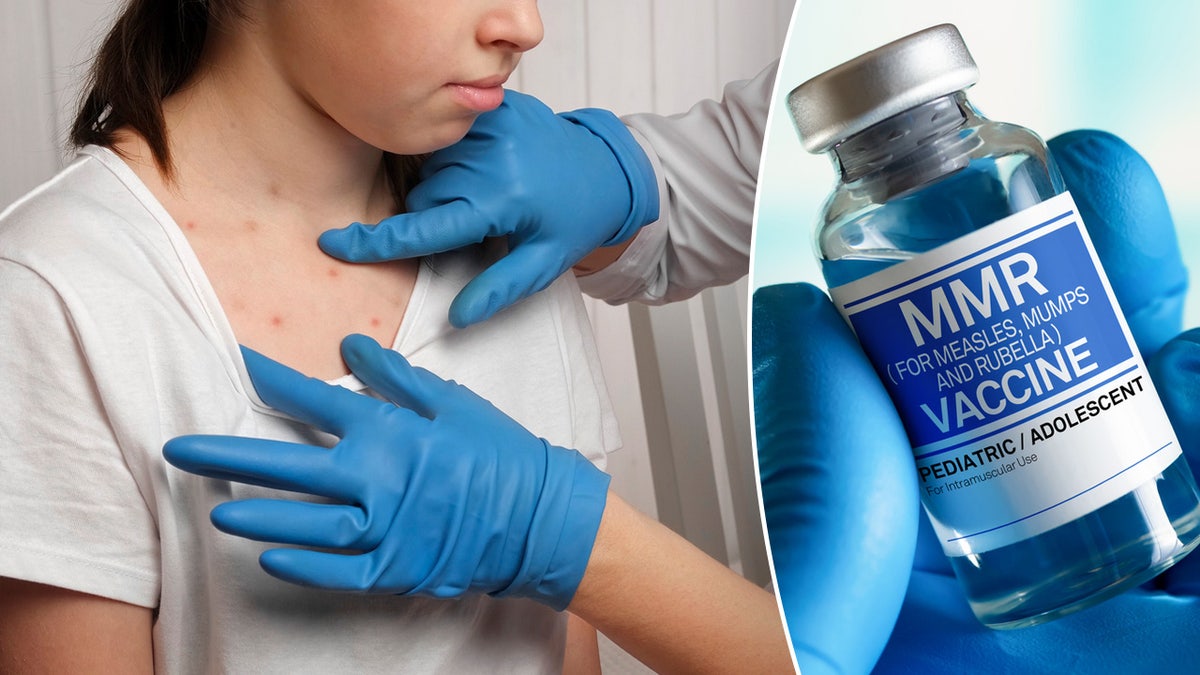
Public health officials love to throw around the number 95%. They claim that if we hit 95% vaccination coverage for the MMR (measles, mumps, and rubella) vaccine, the "herd" is safe. This is a gross oversimplification that creates a false sense of security.
Herd immunity isn't a magical force field that activates once you click a checkbox. It is a calculation of probability based on the basic reproduction number, $R_0$. For measles, the $R_0$ is notoriously high—often cited between 12 and 18. This means in a totally susceptible population, one person infects 12 to 18 others.
The math for the critical immunity threshold is defined as:
$$H_c = 1 - \frac{1}{R_0}$$
If we use an $R_0$ of 15, we get $1 - (1/15) \approx 93.3%$.
But here is the catch that the "Another California Baby" headlines miss: Averages are a lie. You can have 95% coverage across the state of California and still have massive, vulnerable "pockets" in specific neighborhoods or private schools where the rate is 60%. These clusters act as super-conductors for the virus. If you are sitting in a pocket of 70% coverage, the state’s 95% average won't save your kid.
We don't have a "California measles problem." We have a "ZIP code clustering problem" that the state is too politically timid to map with precision.
The Failure of the One Size Fits All Timeline
We are obsessed with the schedule, but we ignore the biology of the individual. Most kids get their first MMR dose between 12 and 15 months. Why? Because maternal antibodies—the ones passed from mother to baby during pregnancy—can actually neutralize the vaccine if given too early.
The "lazy consensus" says wait until 12 months. But if you are in a high-risk travel hub like Los Angeles or San Francisco, that gap between 6 months (when maternal antibodies often fade) and 12 months (the first dose) is a massive window of vulnerability.
The CDC actually recommends an "early dose" for infants 6 through 11 months who are traveling internationally. If we know the virus is circulating in California’s international hubs, why is the conversation still centered on "checking records" rather than aggressive, localized early dosing strategies for high-traffic zones? Because the system prefers a standard routine over an adaptive response.
Why Hand Washing is a Distraction
Every time an article suggests "hand washing" as a primary defense against measles, a virologist loses their mind. Measles is one of the most contagious respiratory viruses known to man. It is airborne. It stays suspended in the air for up to two hours after an infected person has left the room.
If you are in a doctor's waiting room and an infected person coughed there ninety minutes ago, you are breathing it in. Scrubbing your fingernails won't do a thing. By framing this as a "hygiene" issue, health departments shift the burden of failure onto the individual. This isn't a soap problem. This is a ventilation and triage problem.
I’ve seen healthcare facilities spend thousands on hand sanitizer stations while their HVAC systems lack the MERV-13 filters or UVGI (ultraviolet germicidal irradiation) systems necessary to actually scrub the air of $Morbillivirus$. We are fighting a 21st-century airborne threat with 19th-century "wash your hands" logic.
The "Protect the Kids" Fallacy
The media loves the "protect the babies" angle because it's emotional. But the real vulnerability in the American "herd" might actually be the adults born between 1963 and 1989.
Earlier versions of the vaccine weren't as effective, and many people only received one dose before the two-dose recommendation became standard in the late 80s. We have an entire generation of tech workers and parents who think they are immune because they got a shot in 1974, but their titers might be non-existent.
If you want to protect the kids, stop looking at the nurseries and start testing the parents. A child’s safety is entirely dependent on the "ring" of adults around them. If that ring is full of 45-year-olds with waning immunity who haven't had a booster in three decades, the baby is a sitting duck.
Stop Asking "How Can Kids Be Protected?"
It’s the wrong question. It implies the solution is defensive and individualistic. The real question is: "Why is our public health infrastructure so fragile that one case causes a systemic meltdown?"
- Data Obfuscation: California hides behind privacy laws to avoid publishing real-time, granular vaccination maps. If parents knew their specific daycare was a 70% outlier, they would move. Transparency would create market pressure for compliance.
- Triage Incompetence: We still allow potentially infectious patients to sit in general waiting rooms. In a world of "digital transformation," why is "park in the lot and wait for a text" not the mandatory protocol for every febrile rash?
- The Immunity Gap: We ignore the fact that the MMR vaccine is not 100% effective. Even with two doses, about 3% of people don't develop immunity. In a population of millions, that’s a lot of "vaccine failures." These people rely on everyone else being a dead end for the virus.
The Brutal Reality of Risk
We have sanitized the conversation around measles so much that we’ve forgotten what it actually is. It’s not just a "rash and a fever." It is "immune amnesia."
Research published in Science (Mina et al., 2015) shows that measles can wipe out 20% to 70% of a person’s pre-existing antibodies to other diseases. It resets your immune system’s memory. You don't just get measles; you become vulnerable to everything you were previously immune to for years afterward.
When a parent "does their own research" and decides to skip the MMR, they aren't just making a choice for their child. They are introducing a biological "delete key" into the community.
The Unconventional Playbook
If you actually want to protect your family in a state that refuses to manage the "pockets," you have to stop following the standard advice and start acting like an insider.
- Demand a Titer Test: Don't guess. Don't assume your 1990 records are enough. Get your IgG levels checked. If you’re low, get a booster. You are the shield for the kids who can't get vaccinated yet.
- Audit Your Environment: Ask your pediatrician’s office point-blank: "What is your protocol for a suspected measles case?" If they say "they wait in the lobby," find a new doctor.
- Pressure the School Board: Forget the broad "vaccines are good" talk. Demand the specific vaccination percentage for your child’s specific classroom. Averages kill. Specifics save.
The "Another California Baby" story isn't a tragedy of science; it's a tragedy of administrative cowardice. We have the tools to make measles a footnote in history. We just lack the spine to point out exactly where the gaps are and who is leaving the door open.
Stop washing your hands and start fixing the air. Stop looking at the state average and start looking at your neighbor. The virus doesn't care about your "thoughts and prayers" or your "freedom." It only cares about the math. And right now, the math in California is trending toward a zero-sum game.
The status quo is a slow-motion wreck. If you keep following the "lazy consensus," don't be surprised when you're the next headline.