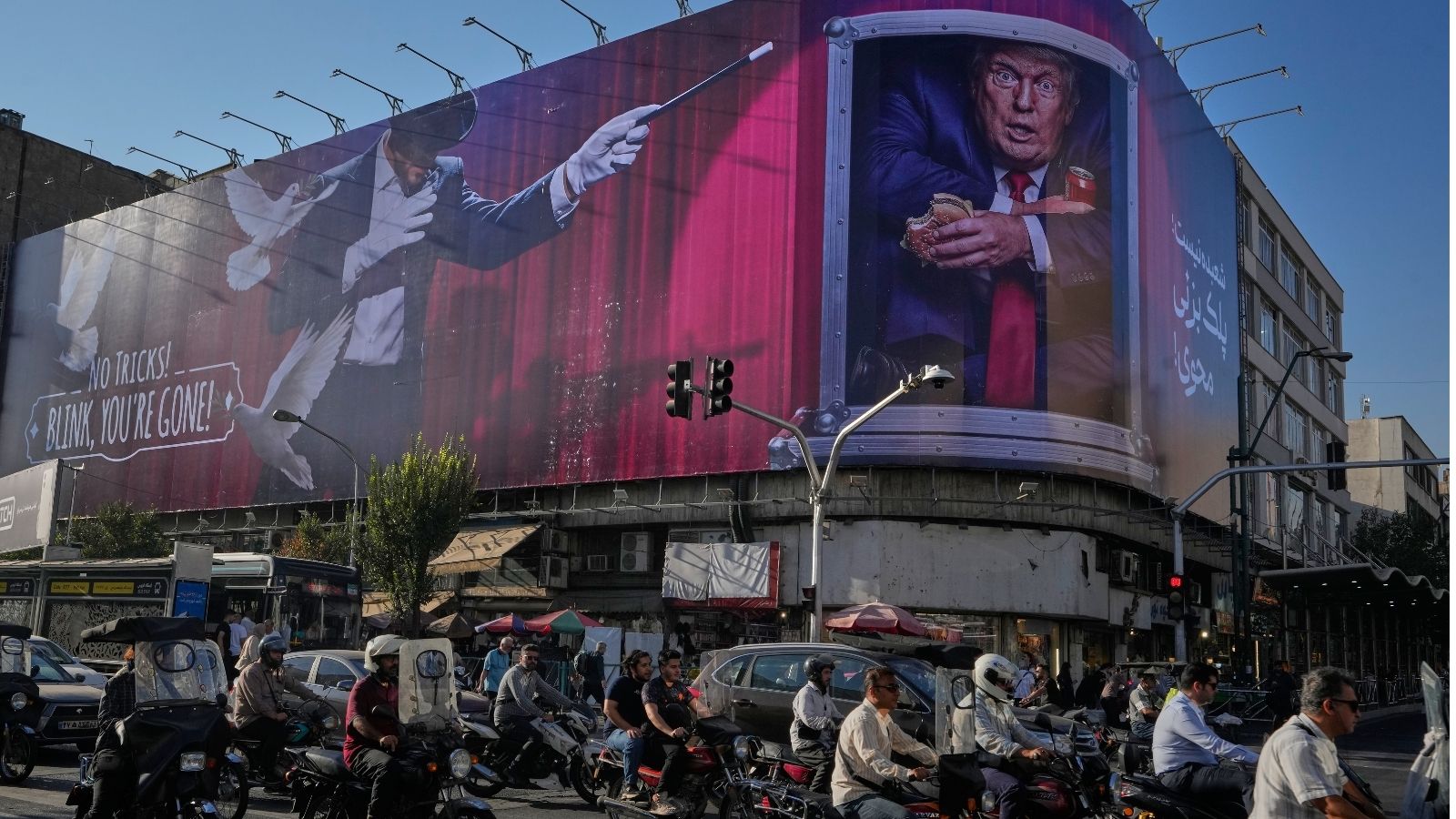
Geoeconomic containment relies on closing liquidity channels before physical trade routes completely collapse. When the United States Department of Treasury implements structural financial isolation campaigns against state actors, the objective is the systematic degradation of central bank reserves, correspondent banking access, and shadow trade networks. The recent convergence of secondary penalties, naval enforcement actions, and domestic fiscal contractions inside Iran demonstrates the exact mechanisms through which modern financial warfare alters sovereign cost functions.
The Iranian state faces a compressed operational horizon. Annual inflation metrics reached sixty-six percent, while external trade volumes contracted by twenty-five to thirty-five percent due to restricted maritime access and port blockades. Rather than interpreting these figures through isolated news updates, a structural deconstruction reveals how targeted financial strangulation forces systemic internal adjustments.
The Three Vectors of Financial Attrition
Financial isolation campaigns operate across distinct operational layers. Understanding how these layers interact explains why broad political declarations of resilience often conflict with internal economic data.
The primary vector involves correspondent banking excision. Modern trade requires multi-jurisdictional clearing mechanisms, predominantly denominated in United States dollars. By targeting regional financial intermediaries—exemplified by actions against institutions like Banque Misr UAE for processing billions in transactions via shadow banking fronts—the enforcement architecture severs the regime's access to foreign currency. Without clean clearing routes, state-backed entities cannot easily settle international procurement costs for critical imports, ranging from refined petroleum products to industrial machinery.
The secondary vector focuses on shadow fleet disruption and energy export suppression. Tehran relies on multi-layered maritime obfuscation, utilizing unflagged tankers, ship-to-ship transfers, and decentralized exchange houses in jurisdictions like Hong Kong to monetize hydrocarbons. When naval blockades restrict physical port throughput and secondary compliance risks deter major independent buyers, the volume of petrodollar generation drops precipitously. Even brief periods of permitted sales under temporary diplomatic memorandums fail to offset long-term liquidity drains.
The tertiary vector targets domestic fiscal subsidy structures. As external revenue shrinks, governments maintain internal spending through currency depreciation and deficit monetization. This dynamic directly fuels hyperinflation. The Iranian administration's internal debate over raising tiered fuel quotas—shifting consumer prices upward to manage domestic consumption shortfalls—illustrates the painful microeconomic trade-offs forced by macro-level external pressure.
The Structural Cost Function of Sovereign Resistance
State resilience under sanctions is governed by a strict equation of resource extraction versus political survival costs. When external trade collapses, political authorities typically attempt to substitute lost global revenue with domestic austerity or increased regional integration. However, each compensatory mechanism incurs secondary liabilities.
External Sanctions -> Loss of Petrodollars -> Currency Depreciation -> Domestic Inflation Surge -> Fiscal Subsidy Reform -> Social Friction
When trade inflows contract by a third, the state must either contract its apparatus or print domestic currency to cover budget deficits. Printing money accelerates inflation, eroding household purchasing power and triggering urban labor friction. Conversely, reducing domestic subsidies—such as cheap fuel quotas—alleviates fiscal deficits but directly spikes the cost of living for working-class populations.
State leadership manages this dilemma by framing economic hardship as an unavoidable wartime condition, pairing domestic belt-tightening with a dual-track strategy of military posturing and selective diplomatic engagement. Defense and diplomacy are treated by Tehran as coordinated instruments designed to deter direct kinetic escalation while attempting to fracture the enforcement coalition.
The Geopolitical Enforcement Bottleneck
The efficacy of maximum pressure strategies depends heavily on the compliance velocity of third-party trade partners. Global economic interconnectivity creates natural friction points for enforcers. If primary importers of discounted crude—such as major refiners in Asia—are subjected to aggressive secondary sanctions, global energy supply curves shift, creating inflationary ripples across Western economies.
Consequently, enforcement agencies maintain a tiered approach. They target financial facilitators, shadow banks, and regional clearing hubs while holding broad secondary penalties on major sovereign buyers in reserve. This selective targeting minimizes domestic blowback in Western energy markets while maximizing administrative drag on the target state's balance sheet.
The strategic trajectory points toward prolonged, low-intensity financial attrition. As long as shadow networks adapt by shifting jurisdictions faster than regulators map them, the Iranian economy will operate in a permanent state of contraction—neither collapsing immediately nor regaining sustainable macroeconomic stability. The leadership's path forward relies on wringing efficiencies from domestic production and securing bilateral workarounds with non-aligned states, while internal actors absorb the structural cost of diminished global integration.