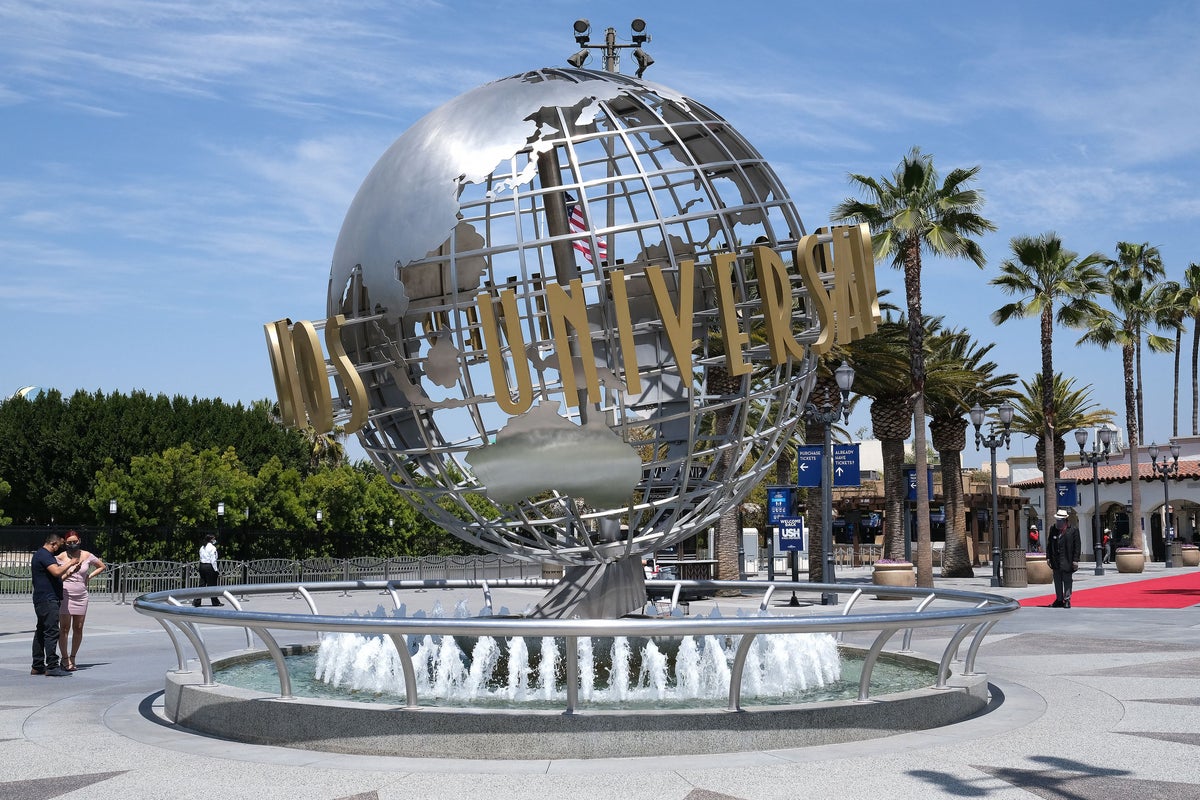
Theme parks operate as hyper-dense socio-spatial environments where high throughput passenger queuing intersects with enclosed environmental staging, creating optimal transmission vectors for airborne pathogens. When an infectious individual spent eleven hours traversing Universal Studios Hollywood on July 26, local public health surveillance units triggered an exposure containment protocol. Analyzing this event requires mapping human mixing patterns against viral persistence metrics to understand the true operational risk of large-scale leisure destinations.
The Transmission Mechanics Of Enclosed Spaces
Measles functions as one of the most efficient biological transmission agents known, driven by a reproduction number that regularly exceeds twelve in unmitigated populations. The viral particles remain suspended in ambient air currents for up to two hours after an infected host vacates a physical volume. In a theme park architecture, this characteristic transforms standard facility elements into secondary contamination nodes. For a more detailed analysis into this area, we recommend: this related article.
Queue lines designed for maximum guest capacity per square meter inherently compress spatial distance below the safe ventilation threshold. When an infected visitor breathes, talks, or coughs across an eleven-hour operational window spanning from ten in the morning to nine at night, the aerosolized viral load accumulates within indoor queue houses, simulation pre-show rooms, and dining pavilions.
[Infected Host] ---> Aerosol Shedding (11 Hours) ---> Suspended Air / Surfaces (2-Hour Persistence) ---> Secondary Susceptible Exposure
The mathematical probability of infection for a susceptible person crossing that path is a function of exposure duration multiplied by local viral concentration. Theme parks inherently maximize both variables by design, relying on continuous queue accumulation to manage guest flow. For additional information on the matter, detailed reporting is available at Medical News Today.
Immunological Baselines And Population Susceptibility
Containment efficacy depends entirely on herd immunity distribution within the visiting cohort. Two doses of the measles-mumps-rubella vaccine confer roughly ninety-seven percent protection, insulating the broader ecosystem against catastrophic outbreaks. However, structural vulnerabilities persist due to shifting demographic vaccination rates and the presence of infants under twelve months alongside immunocompromised individuals who cannot receive the inoculation.
Unvaccinated or immunologically naive visitors entering high-density entertainment infrastructure face a near-certain infection probability if exposed to direct aerosols. Public health advisories establishing monitoring windows through August sixteenth reflect the biological incubation timeline, which ranges from seven to twenty-one days post-exposure. During the initial phase, infected individuals remain asymptomatic while potentially seeding further transmission chains during return travel or local community interactions.
Operational Containment Protocols In Public Health Surveillance
When municipal health departments identify a confirmed exposure window, containment operates through backward and forward contact tracing models. Because individual tracking inside commercial theme parks is impossible without explicit registry data, public health agencies rely on broad temporal warnings. Anyone present at Universal Studios Hollywood during the specified eleven-hour bracket is classified as potentially exposed, shifting the burden of risk assessment to individual self-monitoring.
The containment strategy relies on three strict behavioral gates for identified contacts:
- Immediate self-isolation upon presentation of prodromal indicators such as high fever, cough, coryza, or conjunctivitis.
- Proactive telephonic coordination with healthcare providers prior to physical arrival at medical facilities to prevent emergency room cross-contamination.
- Verification of vaccination status to separate immune cohorts from high-risk vulnerable populations within households.
Deploying these containment steps prevents localized theme park exposures from converting into exponential municipal outbreaks, though the success metric remains tied to the baseline immunity of the surrounding populace.
Isolate any symptomatic individuals immediately, verify personal vaccination records against municipal health registries, and restrict public transit usage if prodromal indicators emerge during the surveillance monitoring window.
Teen with measles visited Southern California tourist spots including Disneyland, Universal Studios
This archival report details a historical precedent where a measles-infected visitor traversed Southern California theme parks, illustrating the exact public health tracking and exposure containment challenges municipal agencies face during large-scale venue outbreaks.