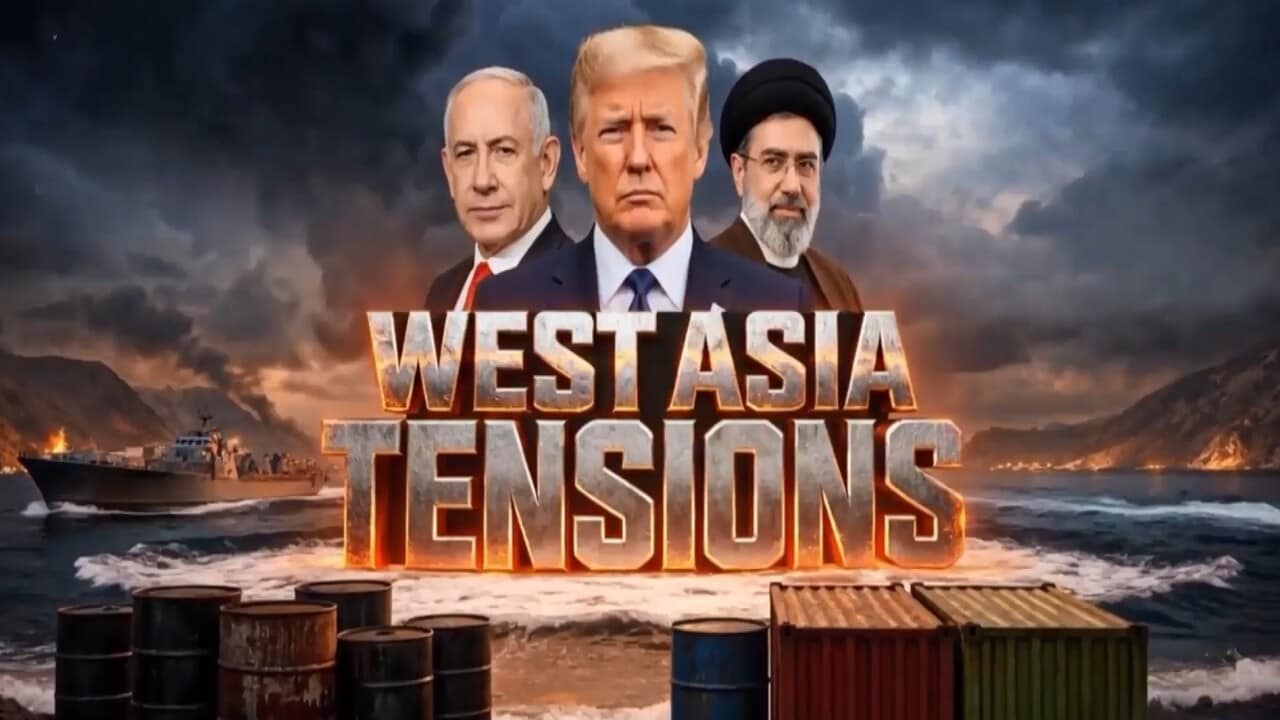
The current deadlock in United States-Iran relations is not a product of diplomatic failure but a reflection of a fundamental misalignment in the cost-benefit functions of both regimes. While public discourse often frames the situation through the lens of "winning" or "losing" a deal, a structural analysis reveals a shift in the bargaining power parity. The United States currently operates from a position of diminished leverage, dictated by a strategic bottleneck where its primary tool—economic sanctions—has reached a point of diminishing marginal returns. Conversely, Iran has successfully decoupled its domestic survival from Western integration, creating an asymmetric advantage where the status quo is more sustainable for Tehran than it is for Washington’s regional objectives.
The Decay of Sanctions as a Primary Leverage Tool
The effectiveness of economic coercion depends on the target's integration into the global financial system and the existence of a credible "off-ramp." For over a decade, the U.S. strategy has relied on the Maximum Pressure model, assuming that a sufficient level of economic pain would force a behavioral shift. However, this logic fails to account for the Sanctions Adaptation Curve.
Iran has restructured its economy through three specific mechanisms:
- Parallel Financial Architecture: By utilizing non-SWIFT payment systems and regional currency swaps, particularly with China and Russia, Iran has institutionalized a "resistance economy." This reduces the friction of sanctions by bypassing the U.S. dollar-denominated global trade environment.
- Commodity Obfuscation: The transition from official state-to-state oil exports to a fragmented, grey-market network involving private intermediaries and ship-to-ship transfers has stabilized Iranian revenue. When a commodity can be sold at a discount that offsets the risk for the buyer, the "sanctions tax" becomes a manageable operational expense rather than a terminal threat.
- Diversification of Domestic Industry: Long-term isolation has forced the development of internal supply chains in the manufacturing and technology sectors. While this has lowered the standard of living, it has increased the regime's resilience against external shocks.
Because the U.S. has already deployed its most severe financial weapons, it lacks additional "escalation rungs" in the economic sphere. When a negotiator has already played their strongest card, they move from a position of demand to a position of petition.
The Nuclear Escalation Ladder and Time-Value of Diplomacy
The Joint Comprehensive Plan of Action (JCPOA) established a baseline for nuclear breakout times. The collapse of this framework shifted the "time-value" of the negotiation. In any high-stakes bargaining, the party that benefits from the passage of time holds the upper hand.
Iran’s nuclear program now functions as a dynamic variable rather than a static bargaining chip. Each month of stalled negotiations allows for:
- Increased enrichment percentages (from 3.67% to 60%+).
- The accumulation of advanced IR-6 centrifuge technology.
- The hardening of physical facilities, making a kinetic (military) solution increasingly complex and risky.
The U.S. finds itself in a "Pleading Trap" because its objective is to revert to a state of play that no longer exists. Negotiating for the return to 2015-era constraints ignores the irreversible gains in technical knowledge Iran has acquired. You cannot un-learn the physics of advanced enrichment. Consequently, the U.S. is forced to offer increasingly larger concessions just to freeze the current status, while Iran can demand these concessions simply to stay at the table.
The Geopolitical Multi-Polarity Buffer
The era of unipolar pressure is over. The strategic partnership between Tehran, Beijing, and Moscow has created a "Multi-Polarity Buffer" that absorbs Western diplomatic strikes.
- The China-Iran 25-Year Agreement: This provides a long-term capital influx and a guaranteed market for Iranian energy, effectively neutering the threat of total economic collapse.
- Security Integration with Russia: The exchange of military technology and drone capabilities has integrated Iran into a broader security bloc. This means any U.S. action against Iran is no longer a localized event but one that impacts the broader theater of the Eurasian power struggle.
This shift has changed Iran's internal calculation. The cost of capitulating to U.S. demands—which would likely include dismantling regional proxy networks and ballistic missile programs—is now viewed as higher than the cost of remaining a sanctioned, yet integrated, member of the Eastern bloc.
Internal Political Constraints and the Credibility Gap
A significant bottleneck in the current standoff is the Credibility Gap inherent in the U.S. political system. International agreements are only as strong as their durability across administrations. The 2018 withdrawal from the JCPOA demonstrated that a U.S. signature is a temporary commitment, subject to a four-year electoral cycle.
For the Iranian leadership, the risk-adjusted value of any deal offered by the current U.S. administration is low. They must discount the value of any sanctions relief by the probability of its reversal in the next election cycle. This leads to a demand for "guarantees" that the U.S. executive branch is constitutionally unable to provide. When one side cannot guarantee its performance of the contract, the other side will naturally demand an upfront premium—in this case, immediate, unverifiable sanctions lifting or the retention of nuclear infrastructure—which the U.S. cannot politically afford to give.
The Strategic Miscalculation of Proxy Management
The U.S. frequently attempts to link nuclear negotiations with "Regional Behavior," specifically the funding and direction of proxy groups. This is a category error in strategic planning. To the Iranian security apparatus, these groups are not "bargaining chips"; they are Forward Defense Assets.
The cost of maintaining these groups is relatively low compared to the cost of a conventional standing army or the potential cost of a direct invasion. By utilizing an asymmetric "Grey Zone" strategy, Iran creates a security perimeter that extends far beyond its borders. The U.S. enters the room asking Iran to trade its national security architecture for economic promises that may be revoked in 24 months. The logic is fundamentally asymmetrical and, therefore, non-starters for the Iranian side.
The Shift from Strategic Patience to Strategic Encirclement
We are witnessing a transition where the U.S. is no longer the "Architect" of the regional order but a "Manager" of its decline. The recent rapprochement between Iran and Saudi Arabia, mediated by China, signals a regional pivot toward stability through local accommodation rather than Western-led containment.
As regional powers begin to hedge their bets, the U.S. isolation strategy loses its multilateral teeth. If the regional neighbors are no longer interested in a policy of total confrontation, the U.S. "Maximum Pressure" becomes a unilateral burden.
The U.S. position is characterized by three distinct failures in strategic logic:
- Overestimation of Economic Sensitivity: Assuming the Iranian elite are as sensitive to GDP fluctuations as Western democratic leaders.
- Underestimation of Technical Irreversibility: Failing to realize that nuclear progress is an R&D milestone, not just a stockpile of material.
- Diplomatic Path Dependency: Continuing to use the 2015 JCPOA as the only viable template, despite the total transformation of the global geopolitical landscape.
Strategic Realignment: The Necessary Pivot
The current trajectory indicates that the U.S. will continue to yield ground unless it moves away from the binary of "Deal vs. No Deal." The following shifts in framework are the only way to exit the "Pleading" cycle:
- Acceptance of the "Nuclear Threshold" State: Strategy must shift from prevention to containment. Attempting to roll back enrichment to 2015 levels is a sunk-cost fallacy. The focus must move toward intrusive monitoring and the establishment of "red lines" regarding weaponization rather than enrichment.
- Decoupling Nuclear and Regional Issues: Attempting to solve every grievance in a single "Grand Bargain" ensures failure. A modular approach—small, transactional agreements on specific maritime or regional issues—builds the "performance history" necessary to bridge the credibility gap.
- The Development of Non-Financial Leverage: Since sanctions have plateaued, the U.S. must develop new forms of leverage, potentially in the realms of cyber-deterrence or technological export controls that target Iran's emerging tech and drone industries, rather than the broad-based economy which has already hardened.
The United States must stop negotiating for a return to the past and start negotiating for a manageable future. Failure to recognize that the leverage has shifted from the "Provider of Global Access" to the "Holder of Regional Stability" will result in a permanent state of reactive diplomacy, where Washington is perpetually forced to pay more for less. The play is no longer to win the deal, but to redefine the terms of the standoff before the current U.S. influence evaporates entirely.