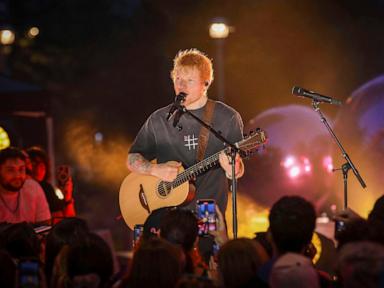
Modern stadium-scale touring operations function as complex logistical networks designed to minimize operational friction and maximize audience capture. When a high-equity artist attempts to maintain strict political agnosticism within a polarized public sphere, the strategy inevitably creates structural vulnerabilities. The recent crisis surrounding Ed Sheeran's tour illustrates how poorly managed stakeholder alignments and delayed crisis communication can convert an artistic platform into an operational liability. The breakdown did not stem merely from conflicting viewpoints, but from a failure of crisis architecture.
The anatomy of this crisis reveals three distinct failure modes in modern tour management: stakeholder misalignment, delayed narrative control, and the illusion of corporate neutrality.
Stakeholder Misalignment and the Support Act Vector
Touring artists operate at the center of an ecosystem involving promoters, venue operators, ticketing conglomerates, and supporting acts. Each node in this network carries its own reputational risk profile. When supporting acts are integrated into a tour, their individual sociopolitical positions are implicitly or explicitly underwritten by the headliner's brand umbrella.
The friction began when tour partnerships faced external pressure regarding geopolitical stances, leading to sudden roster adjustments. In high-stakes enterprise management, failing to vet or insulate the operational dependencies of a supply chain—in this case, opening acts—creates an immediate contagion risk. When pressure mounted, the lack of a pre-established protocol for managing ideological friction among tour personnel forced an ad-hoc response. Ad-hoc responses in high-visibility environments uniformly project instability.
The Cost Function of Delayed Narrative Ownership
When controversy erupts around a major cultural figure, the market demands immediate clarification. The primary error in this sequence was the temporal gap between the initial disruption and the eventual stage statement. In crisis management, information vacuums are automatically filled by external actors, shifting the locus of control from the artist's management team to social media mobs and organized protest groups.
By the time the artist addressed the audience directly in Philadelphia, public sentiment had already hardened. The subsequent emotional delivery on stage, while humanizing to some segments of the audience, highlighted a reactive posture rather than a strategic one. Operational frameworks dictate that proactive containment must precede emotional expression. Attempting to balance a condemnation of historical violence against Jewish communities with a critique of military action in Gaza through a live-stage address guaranteed polarization: it alienated factions on both sides of the discourse who viewed the statement either as a defensive concession or as an insufficient capitulation.
The Fallacy of Apolitical Artistry in Global Markets
The baseline assumption that global pop music can remain divorced from geopolitics is economically obsolete. Mega-tours generate capital across diverse sovereign jurisdictions with deep historical and contemporary grievances. Treating a tour as a closed entertainment system ignores the permeability of modern digital publics.
When artists declare an intent to focus purely on "unity," they misjudge the mechanics of contemporary audience engagement. Audiences no longer accept passive consumerism; they demand value alignment. The attempt to straddle opposing ideological demands resulted in tactical whiplash—canceling partnerships under duress, delaying concert start times, and facing physical demonstrations outside the venue perimeter.
To eliminate these vulnerabilities in future large-scale cultural deployments, management entities must implement rigorous risk-hedging protocols for all supporting personnel, establish rapid-response communication loops that bypass emotional stagecraft, and abandon the untenable premise that massive global footprints can exist without explicit ethical governance.