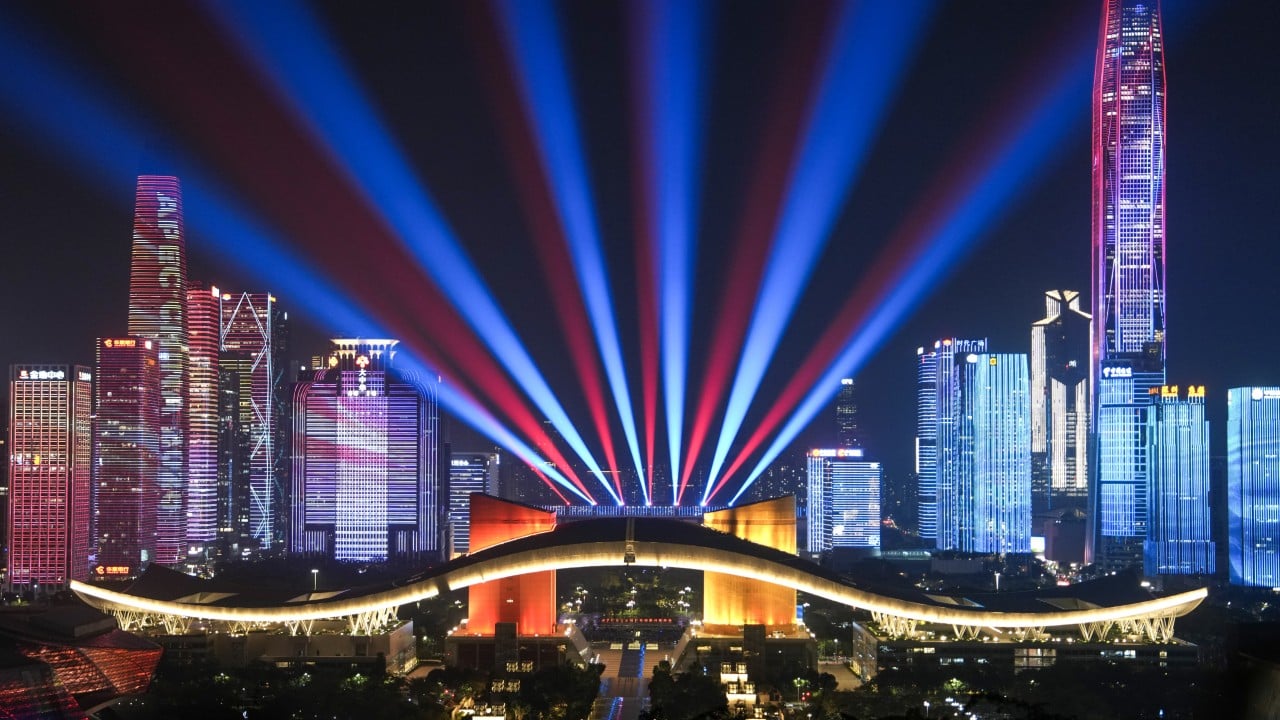
Global bay economies operate as isolated liquidity pools separated by incompatible regulatory regimes, mismatched capital controls, and divergent intellectual property standards. When Hong Kong Financial Secretary Paul Chan proposes positioning the city as a connector between the Guangdong-Hong Kong-Macao Greater Bay Area (GBA) and international bay economies—specifically the San Francisco Bay Area, the Tokyo Bay Area, and the New York metropolitan region—the underlying thesis is not diplomatic goodwill. The thesis is structural arbitrage. Hong Kong functions as an institutional adapter that translates capital, legal risk, and commercialized research between closed or semi-closed mainland Chinese systems and open Western or Japanese markets.
Standard economic commentary treats bay areas as interchangeable clusters of coastal GDP. That framing misses the operational friction that prevents these regions from trading directly at scale. Each major bay economy possesses a distinct factor endowment and a corresponding structural deficit. Understanding how Hong Kong extracts value requires mapping the exact mechanisms of friction between these nodes and isolating where an intermediary reduces transaction costs below the threshold of direct bilateral engagement.
The Structural Asymmetry of Global Bay Economies
To evaluate Hong Kong's routing function, we must first disaggregate the four primary bay economies by their core economic engines and regulatory constraints. A bay economy is defined not merely by maritime geography, but by high-density agglomeration effects: the co-location of deep capital markets, research universities, specialized supply chains, and port infrastructure within a single commuter shed.
- The Guangdong-Hong Kong-Macao Greater Bay Area (GBA): Combines Shenzhen’s hardware prototyping and commercial iteration speed with Guangzhou’s heavy manufacturing base and Hong Kong’s common-law financial architecture. Its primary constraint is the capital account boundary between the mainland (operating under Renminbi controls and civil law) and the Special Administrative Regions (operating under pegged or freely convertible currencies and common law or Portuguese-derived civil law).
- The San Francisco Bay Area: Dominated by foundational software engineering, frontier artificial intelligence, and early-stage venture capital. Its structural bottleneck is physical scaling. High labor costs, strict environmental permitting, and the offshoring of precision tooling prevent rapid hardware iteration within the region itself.
- The Tokyo Bay Area: Anchored by advanced materials science, precision robotics, industrial conglomerates, and aging domestic demographics. Its constraint is risk-averse capital allocation and slow cross-border corporate integration, which traps high-grade intellectual property inside domestic keiretsu structures.
- The New York Metropolitan Region: Functions as the primary global clearinghouse for institutional debt, secondary equity liquidity, and corporate law. It lacks an integrated physical manufacturing supply chain, relying entirely on financial engineering and distribution networks.
Direct capital or technology flows between Shenzhen and San Francisco, or between Guangzhou and Tokyo, encounter immediate regulatory impedance. A Silicon Valley venture fund cannot easily deploy US dollars directly into an early-stage hardware startup in Dongguan without navigating complex Variable Interest Entity (VIE) structures, foreign exchange registration with the State Administration of Foreign Exchange (SAFE), and cross-border data transfer audits. Conversely, a mainland industrial enterprise seeking institutional liquidity in New York faces severe auditing reconciliation hurdles and geopolitical scrutiny.
Hong Kong’s value proposition rests on its status as a jurisdictional buffer. Under the "One Country, Two Systems" framework, the city maintains a separate customs territory, an independent judiciary based on English common law, zero capital gains tax, and full currency convertibility via the Linked Exchange Rate System (pegging the Hong Kong Dollar to the US Dollar). These features allow it to act as an interface layer.
The Three Mechanisms of the Routing Function
An intermediary only survives in global trade if the cost of routing through the hub is lower than the cost of overcoming bilateral friction directly. Hong Kong’s utility to global bay areas operates through three specific institutional mechanisms.
1. Jurisdictional and Currency Translation
Capital requires legal predictability to price risk. Institutional investors in New York and Tokyo underwrite deals based on common-law precedent, enforceable shareholder agreements, and transparent bankruptcy courts. Mainland Chinese commercial courts operate under a statutory civil-law system where judicial outcomes can be influenced by administrative policy objectives.
When a GBA technology firm incorporates a holding structure in Hong Kong, it converts mainland operational assets into common-law equity instruments. International limited partners can then invest in US dollars or Hong Kong dollars under familiar contractual protections. For southbound capital—mainland enterprises expanding into Tokyo or San Francisco—Hong Kong serves as a treasury management center. Through mechanisms like the Cross-Boundary Wealth Management Connect and Qualified Domestic Institutional Investor (QDII) quotas, mainland entities aggregate Renminbi liquidity in Hong Kong, convert it into foreign currency, and deploy it into offshore acquisitions or joint ventures without destabilizing the mainland's domestic capital account.
2. Intellectual Property Valuation and Commercialization
The Tokyo Bay Area and the San Francisco Bay Area generate massive volumes of upstream intellectual property, yet both face commercialization bottlenecks. Japanese universities and industrial labs hold deep patent portfolios in solid-state batteries, semiconductor materials, and biomedical devices that often remain under-monetized due to domestic corporate conservatism. Meanwhile, US tech firms face escalating compliance costs when licensing technology into Asian supply chains.
Hong Kong addresses this through specialized intellectual property trading and protection frameworks, alongside targeted public-private co-investment vehicles such as the Hong Kong Investment Corporation (HKIC). By establishing research and development centers in the Hong Kong Science Park or the Lok Ma Chau Loop (the Hetao Shenzhen-Hong Kong Science and Technology Innovation Co-operation Zone), foreign firms can ring-fence their core IP under Hong Kong’s strict patent enforcement regime while utilizing Shenzhen’s engineering workforce for downstream productization.
The cause-and-effect chain is direct:
- Foreign IP enters Hong Kong under common-law protection.
- Clinical trials or hardware prototyping occur across the border in the GBA, utilizing lower-cost clinical populations or rapid-turnaround CNC machining.
- Data flows are governed by bilateral cross-border data transfer agreements specific to the GBA, bypassing broader national data localization blocks.
- The resulting commercial product is exported globally through Hong Kong’s free port, where zero tariffs apply.
3. Supply Chain Finance and Risk Underwriting
Physical goods moving between bay areas require trade finance, marine insurance, and dispute resolution. When a manufacturer in the Pearl River Delta ships components to an assembly plant in the Tokyo Bay Area or a distribution hub in New Jersey, letters of credit and performance bonds must be underwritten by institutions capable of verifying creditworthiness on both sides of the transaction.
Hong Kong hosts the highest concentration of international banking headquarters in Asia outside Tokyo, alongside specialized arbitration centers like the Hong Kong International Arbitration Centre (HKIAC). Arbitral awards issued by the HKIAC are enforceable in both mainland China (under the Arrangement Concerning Mutual Enforcement of Arbitral Awards) and in over 170 jurisdictions globally under the New York Convention. This dual enforceability is unique. Neither Singapore, London, nor New York possesses automatic mutual enforcement mechanisms with mainland Chinese courts for interim measures such as asset freezes. For a Tokyo or New York counterparty contracting with a GBA supplier, stipulating HKIAC arbitration in Hong Kong significantly reduces counterparty default risk.
The Cost Function and Structural Vulnerabilities
Treating Hong Kong’s connector role as automatic ignores severe operational headwinds. A rigorous strategy must account for the friction costs that degrade the city's routing efficiency.
Geopolitical Tariff and Export Control Leakage: The primary threat to any trade and technology router is decoupling enforcement. The United States has progressively narrowed the distinction between mainland China and Hong Kong regarding export controls on advanced semiconductors, quantum computing, and artificial intelligence. If a San Francisco firm uses a Hong Kong subsidiary to co-develop dual-use technologies with a Shenzhen partner, US Bureau of Industry and Security (BIS) Entity List restrictions and outbound investment screening rules (such as the US Treasury's outbound investment security program) still apply. Hong Kong’s legal autonomy does not shield foreign entities from extraterritorial US sanctions. Consequently, the router function is increasingly restricted to non-sensitive sectors: green finance, consumer electronics, biomedical devices, logistics, and traditional enterprise software.
Cost Structure Inflation: Hong Kong suffers from one of the highest commercial real estate and executive compensation cost structures globally. For early-stage startups from the San Francisco or Tokyo bay areas, establishing a physical footprint in Central or Admiralty burns venture capital at an unsustainable rate compared to establishing operations in Singapore, Kuala Lumpur, or directly in Shenzhen's Qianhai district. Unless the yield from jurisdictional arbitrage exceeds the overhead penalty, firms will bypass the hub.
Talent Asymmetry: While Hong Kong possesses deep pools of legal, accounting, and investment banking talent, it lacks the dense engineering and product-management ecosystems of Shenzhen or San Francisco. The city's top universities produce world-class research, particularly in medicine and computer science, yet local graduates historically gravitate toward finance and real estate due to compensation differentials. Bridging the gap between academic output and industrial commercialization requires importing mid-career technical operators, a process complicated by housing costs and regional competition for STEM talent.
Operationalizing the Cross-Bay Connection
For corporate strategists, institutional investors, and policymakers attempting to capture value from cross-bay integration, broad diplomatic summits yield zero return. Execution requires structuring operations around specific regulatory arbitrage opportunities while insulating against geopolitical compliance failures.
For Institutional Investors and Venture Funds
Do not treat the GBA as a single investment jurisdiction. Structure funds using Hong Kong’s Limited Partnership Fund (LPF) regime to eliminate carried interest tax friction and streamline regulatory registration with the Securities and Futures Commission (SFC).
Deploy capital using a bifurcated operational model:
- Upstream R&D and IP Holding: Domicile the parent entity and core patent holdings in Hong Kong to maintain clean cap tables eligible for eventual exits on the Hong Kong Stock Exchange (HKEX) or international exchanges.
- Downstream Execution: Fund wholly foreign-owned enterprises (WFOEs) in Shenzhen, Dongguan, or Guangzhou strictly for engineering, supply chain management, and mainland domestic market sales. Maintain strict data-firewall protocols between the mainland subsidiary and the Hong Kong parent to satisfy both mainland Personal Information Protection Law (PIPL) audits and Western data security requirements.
For Enterprise Supply Chain and Hardware Operators
Firms based in the San Francisco or Tokyo bay areas seeking to utilize GBA manufacturing capacity without exposing their balance sheets to mainland legal risk should restructure their procurement contracts.
- Re-domicile Procurement: Shift purchasing agreements from direct contracts with mainland factories to Hong Kong trading subsidiaries established by those suppliers.
- Mandate Dual-Enforceable Arbitration: Replace standard jurisdiction clauses with HKIAC arbitration clauses, specifically incorporating the right to apply for interim asset preservation orders in mainland courts.
- Utilize Bonded Logistics: Route high-value components through the Qianhai-Hong Kong bonded logistics network to defer customs duties and streamline quality-control inspections before final export to North America or Japan.
For Public-Sector Capital Allocators
If Hong Kong's administration intends to convert Paul Chan’s rhetoric into measurable GDP contribution, public capital deployment via the HKIC and the Innovation and Technology Fund must shift away from broad real-estate-heavy science parks toward subsidizing operational bottlenecks.
Specifically, public co-investment should underwrite the high fixed costs of cross-border clinical trials and regulatory approvals. By funding mutual recognition frameworks where clinical data generated in GBA hospitals is formatted to meet both US Food and Drug Administration (FDA) and Japanese Pharmaceuticals and Medical Devices Agency (PMDA) standards, Hong Kong can reduce drug development timelines for foreign biotech firms by 18 to 24 months.
The Strategic Trajectory
Global bay areas will not integrate into a frictionless free-trade zone; macroeconomic nationalism and divergent regulatory architectures prevent direct convergence. Instead, cross-bay commerce will increasingly rely on specialized institutional gateways capable of translating legal, financial, and technical standards across geopolitical fault lines. Hong Kong’s survival as a premier economic hub depends entirely on its ability to keep its transaction and compliance costs lower than the friction of bilateral trade—operating not as a conventional manufacturing or consumer market, but as a high-efficiency clearinghouse for asymmetric global capital.