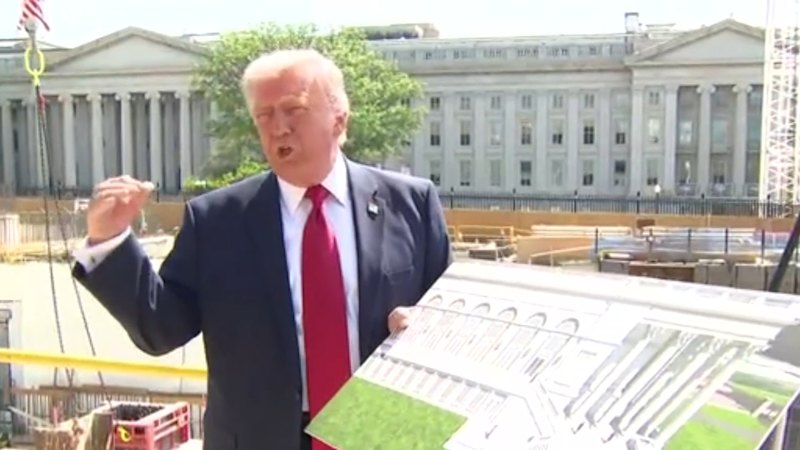
The strategic refusal to expedite a diplomatic settlement with the Islamic Republic of Iran represents a deliberate application of intertemporal bargaining theory rather than simple political recalcitrance. By explicitly signaling that the United States will not rush into a peace deal, the executive branch alters the reservation price of its counterparty. In high-stakes geopolitical negotiations, time is not a neutral backdrop; it is a structural variable that dictates leverage. When one party establishes that its deadline is indefinite, it shifts the burden of time-discounted costs entirely onto the adversary.
Understanding this diplomatic posture requires moving beyond surface-level political rhetoric and examining the underlying economic, military, and structural variables that govern US-Iran relations. The decision to prolong the pre-negotiation phase functions as a risk-mitigation strategy designed to optimize the terms of any future binding agreement. This analysis deconstructs the structural mechanisms of this delayed bargaining model, quantifies the leverage asymmetries between both nations, and maps the strategic bottlenecks that dictate the viability of a sustainable accord. In other updates, take a look at: The Empty Chairs of Balochistan.
The Tripartite Leverage Framework in Asymmetric Negotiations
The US position relies on a tripartite framework of leverage that compounds in efficacy the longer a definitive agreement is deferred. This framework operates across three distinct vectors: macroeconomic strangulation, regional containment asymmetry, and the credibility of the military threshold.
                          [Time Extension]
                                 │
         ┌───────────────────────┼───────────────────────┐
         ▼                       ▼                       ▼
[Macroeconomic Attrition] [Regional Containment] [Military Credibility]
         │                       │                       │
         └───────────────────────┼───────────────────────┘
                                 ▼
                     [Adversary Concessions]
Macroeconomic Attrition and Capital Flight
The primary mechanism of the US strategy is the compounding effect of secondary sanctions. These measures function as an economic blockade that increases the domestic capital cost within Iran over time. The structural weakness of an economy heavily reliant on hydrocarbon exports is exacerbated when access to international clearing systems remains restricted. TIME has also covered this critical subject in extensive detail.
- Currency Depreciation Cascades: Prolonged exclusion from global markets drives systemic inflation and devalues the domestic currency. This erodes the purchasing power of the state apparatus, forcing difficult budgetary trade-offs between domestic subsidies and external proxy funding.
- Investment Stagnation: International firms face binary choices regarding market access. The threat of exclusion from the US financial system ensures that capital flight from the adversary's domestic markets remains permanent, preventing the modernization of critical energy infrastructure.
- Asymmetric Time Costs: While the US economy experiences negligible macroeconomic feedback from these localized restrictions, the counterparty faces an escalating cost function. Every month without a deal increases the structural damage to Iran's domestic industrial base.
Regional Containment Asymmetry
The second vector involves the stabilization of regional security architectures independent of a formal treaty. By delaying a centralized bilateral deal, the United States permits regional alliances to mature. This creates a multipolar containment web that reduces the necessity of relying solely on a Washington-Tehran text to guarantee stability.
The normalization of diplomatic and security ties between Israel and Gulf Cooperation Council (GCC) states illustrates this mechanism. This integration creates a collective security paradigm that pools intelligence, early-warning capabilities, and missile defense architectures. Consequently, the strategic utility of Iran’s conventional missile deterrence diminishes as regional integration thickens, lowering the net value of concessions the US needs to make at the bargaining table.
Credibility of the Military Threshold
Time flexibility enhances the credibility of a military option. A state rushing toward a deadline signals a high cost of conflict or domestic political vulnerability, which invites the counterparty to engage in brinkmanship. Conversely, a measured, non-urgent approach signals that the status quo is acceptable and sustainable. This positioning communicates that the military threshold remains a calculated, viable policy instrument rather than a panicked last resort, forcing the adversary to factor the permanent risk of kinetic escalation into their baseline assumptions.
The Information Bottleneck and Signal Verification
A fundamental obstacle to any accelerated peace agreement is the acute information asymmetry regarding compliance verification. In game-theoretic models of disarmament, the risk of defecting from an agreement creates a structural barrier to cooperation. A rushed timeline compresses the window required to construct infallible verification protocols, resulting in an unstable equilibrium.
Nuclear Breakout Timelines vs. Verification Latency
The core technical variable in these negotiations is the ratio between the adversary's nuclear breakout timeline and the international community's verification latency. Breakout timeline refers to the period required to produce sufficient weapons-grade fissile material for a single nuclear device. Verification latency is the time elapsed between an illicit operational shift and its definitive detection by inspectors.
Breakout Timeline (Compressing via advanced centrifuges)
[████████████████████░░░░░░░░]
Verification Latency (Fixed by bureaucratic/physical protocols)
[████████████████████████████]
Critical Risk Zone: When Breakout Timeline ≤ Verification Latency
If the breakout timeline is shortened through the deployment of advanced centrifuges (such as IR-6 or IR-8 models), the verification latency must be reduced proportionally. A rushed negotiation frequently yields ambiguous language regarding "anywhere, anytime" access to military facilities. Without intrusive, real-time telemetry on centrifuge manufacturing pipelines and uranium enrichment levels, the risk of a covert breakout remains unacceptably high for US strategic planners.
The Problem of Reversible Concessions
A structural imbalance exists in the physical nature of the concessions exchanged in a standard diplomatic deal. This asymmetry creates an inherent enforcement bottleneck:
- US Concessions (Structural and Sticky): Sanctions relief, asset unfreezing, and the normalization of banking access require complex regulatory adjustments, legislative coordination, and private-sector compliance shifts. Once granted, these actions immediately inject billions of dollars of highly liquid capital into the adversary's economy. Re-imposing these sanctions after a violation involves significant diplomatic friction and economic lag.
- Iranian Concessions (Operational and Reversible): Operational adjustments—such as blending down enriched uranium stockpiles, disconnecting surveillance cameras, or mothballing centrifuge cascades—can be reversed rapidly. Fissile material can be re-enriched, and stored centrifuges can be re-installed within weeks.
Because the financial front-loading of a deal provides immediate, irreversible liquidity while the security guarantees remain highly reversible, a rapid agreement exposes the US to severe compliance evasion. Extending the pre-negotiation timeline allows the US to demand phased, irreversible physical dismantling of enrichment infrastructure prior to executing sticky sanctions relief.
The Cost Function of Proxy Warfare and Regional Architecture
A critical deficiency in standard diplomatic approaches is the siloed treatment of the nuclear portfolio separate from regional proxy networks. The US strategy of delayed engagement recognizes that a deal focusing exclusively on enrichment lines while ignoring asymmetric warfare architectures is fundamentally flawed.
Iran utilizes a doctrine of forward defense, operating through an integrated network of non-state actors across the Levant, Mesopotamia, and the Arabian Peninsula. This network functions as a cost-effective force projection tool that disrupts maritime trade routes and threatens regional energy nodes.
The Subsidy Allocation Model
From an analytical perspective, state funding of regional proxies can be modeled as a discretionary capital allocation problem. When sanctions are tight, the regime faces an optimization constraint: it must balance the survival of domestic state institutions against the funding requirements of external networks.
A rushed peace deal that delivers immediate sanctions relief unfreezes this capital constraint. Historically, capital injections into the Iranian financial system have correlated with increased resource allocations to regional proxies rather than exclusive investment in domestic civilian infrastructure. By maintaining economic pressure and refusing an expedited exit from the sanctions regime, the US forces a continuous reduction in the operational budgets available for external destabilization.
Maritime Chokepoint Dynamics
The strategic value of delaying a deal is also linked to the defense of critical maritime choke-points, specifically the Strait of Hormuz and the Bab al-Mandab. These narrow waterways are highly vulnerable to asymmetric interdiction via anti-ship cruise missiles, loitering munitions, and fast-attack craft.
A comprehensive settlement cannot treat maritime security as a secondary concern. By refusing to rush the diplomatic process, the United States preserves its freedom of action to construct maritime security coalitions, deploy advanced counter-unmanned aerial vehicle (UAV) systems, and establish a hardened defensive posture in these corridors. This operational hardening strips the adversary of its primary leverage mechanism—the threat of global energy supply chain disruption—before formal negotiations begin.
Credible Commitment Problems in Democratic Foreign Policy
The structural architecture of the United States political system introduces an institutional variable into international bargaining: the credible commitment problem. In democratic systems characterized by regular electoral cycles, long-term foreign policy continuity is difficult to guarantee. This institutional reality fundamentally shapes the strategic calculus of delayed diplomacy.
Executive Agreements vs. Ratified Treaties
The primary vulnerability of past diplomatic efforts, such as the Joint Comprehensive Plan of Action (JCPOA), was their reliance on executive actions rather than formal legislative ratification. An executive agreement can be summarily dissolved by a subsequent administration, creating a high level of policy volatility.
[Executive Agreement] ──► Subject to Electoral Cycles ──► High Policy Volatility
[Ratified Treaty]     ──► Requires 2/3 Senate Consent  ──► Institutional Permanence
A rushed deal is almost certainly bound to be executed via executive order due to the time-consuming and politically contentious nature of securing a two-thirds majority in the United States Senate. However, an agreement lacking legislative buy-in carries a steep risk premium for both sides. The adversary knows the deal may expire with the next presidential election, which incentivizes them to front-load their benefits and cheat on long-term obligations. Conversely, the US knows the adversary is hedging against future abandonment.
By deliberately slowing the process, the executive branch signals to both domestic actors and international counterparties that it seeks a durable framework. A prolonged timeline allows for the arduous work of building cross-partisan legislative consensus, elevating any eventual agreement from a fragile executive arrangement to a permanent structural component of US foreign policy.
Strategic Sequencing over Immediate Resolution
To navigate these structural bottlenecks, the optimal strategic play avoids the pursuit of an all-encompassing, immediate grand bargain. Instead, a rigorous analytical framework dictates a policy of strategic sequencing, where progress is predicated on verifiable behavioral milestones rather than arbitrary calendar dates.
- Phase 1: Freeze-for-Freeze Stabilization. Establish a verifiable cap on high-level uranium enrichment and a cessation of advanced centrifuge deployment in exchange for limited, temporary access to frozen humanitarian funds. This halts the escalation clock without dismantling the broader sanctions architecture.
- Phase 2: Regional De-escalation Linkage. Condition any systemic relief of secondary sanctions on measurable reductions in proxy arms transfers and verifiable adherence to maritime freedom of navigation protocols.
- Phase 3: Structural Infrastructure Dismantling. Reserve the termination of core energy and banking sanctions for a legally binding, Senate-ratified treaty that mandates the physical destruction or permanent export of enrichment infrastructure.
This sequenced methodology recognizes that time is an asset to be managed, not an adversary to be outrun. By subordinating diplomatic speed to verifiable structural metrics, the United States maximizes its systemic advantages, insulates itself against compliance evasion, and forces a shift in the long-term strategic calculus of its opponent.