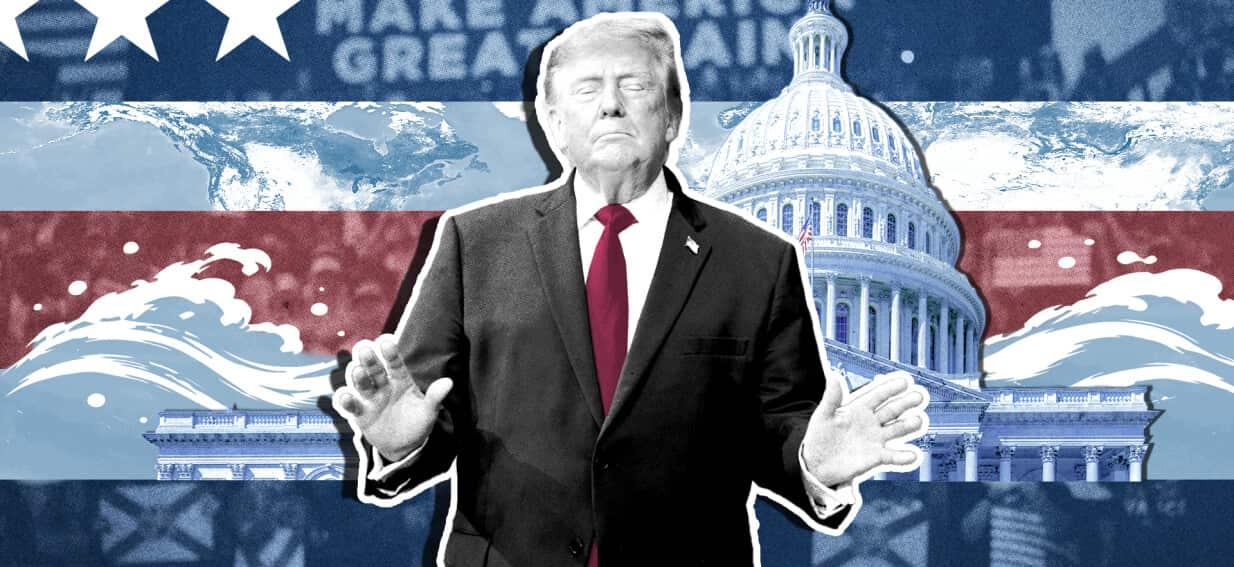
When the Democratic Party assumes control of the United States Congress against a Republican executive branch, the immediate global impact is not a sudden shift in ideology, but a structural hardening of the American legislative apparatus. Foreign governments, sovereign wealth funds, and multinational corporations frequently misread mid-cycle power transfers by treating congressional majorities as alternative presidencies. In reality, Article I of the U.S. Constitution grants the legislature specific, asymmetric levers—appropriations, oversight, treaty ratification, and tariff delegation—while leaving day-to-day diplomatic execution and regulatory enforcement within Article II. Understanding what changes for the rest of the world requires mapping the friction between an executive branch trying to govern through unilateral authority and a legislature newly equipped with subpoena power and the power of the purse.
The Structural Constraints of Divided Government
A Democratic takeover of the House of Representatives, the Senate, or both chambers immediately alters the institutional equilibrium in Washington. If control is split—for example, a Democratic House and a Republican Senate—legislative output drops sharply, shifting Democratic influence toward appropriations riders and investigative oversight. If Democrats capture both chambers, they gain control over the legislative calendar, committee gavels, and, critically, Senate confirmation of executive branch officials and federal judges. For a more detailed analysis into similar topics, we suggest: this related article.
Foreign observers must separate domestic campaign rhetoric from the institutional realities of the American system. Under divided government, sweeping statutory overhauls rarely reach the president's desk because the executive retains the veto power, which requires a two-thirds supermajority in both chambers to override. The true operational shift occurs through three mechanisms:
- The Appropriations Bottleneck: All federal spending originates in Congress. By controlling the House and Senate Appropriations Committees, Democratic leadership dictates the funding levels, conditionality, and reporting requirements attached to defense aid, foreign assistance, and international financial institution contributions.
- Oversight and Subpoena Velocity: Committee chairs determine what gets investigated. A Democratic majority redirects investigative bandwidth toward executive branch foreign policy execution, potential conflicts of interest in international business dealings, and compliance with human rights or environmental statutes.
- The Confirmation Gatekeeper: Should Democrats hold the Senate majority, every ambassadorial nominee, senior Department of State official, Department of Defense undersecretary, and United States Trade Representative (USTR) nominee must clear Democratic-led committees. This forces the executive branch to either nominate consensus technocrats or rely on acting officials whose authority is legally time-limited under the Federal Vacancies Reform Act.
This dynamic produces what political scientists call gridlock-induced executive unilateralism. When the president cannot pass legislation through Congress, the White House relies more heavily on executive orders, emergency declarations, and existing statutory delegations. For foreign capitals, this means U.S. policy becomes simultaneously more rigid on spending and more volatile on regulatory and trade actions. For further details on the matter, comprehensive analysis can be read at Associated Press.
Trade Policy and the Asymmetric Tariff Regime
Global trade architecture experiences the sharpest immediate divergence between executive intent and legislative preference. Over the past several decades, Congress delegated substantial tariff-setting authority to the president through statutes such as Section 232 of the Trade Expansion Act of 1962 (national security) and Section 301 of the Trade Act of 1974 (unfair trade practices), alongside the International Emergency Economic Powers Act (IEEPA).
A Democratic Congress cannot easily claw back these delegated powers because any bill restricting presidential tariff authority faces an inevitable presidential veto. What changes is the political and procedural environment surrounding trade agreements and industrial policy:
- Bilateral and Multilateral Trade Agreements: Under the Constitution's Foreign Commerce Clause, Congress holds ultimate authority over trade deals. Without Trade Promotion Authority (TPA)—which requires affirmative congressional renewal—the executive branch cannot guarantee foreign partners that a negotiated trade deal will receive an up-or-down vote without amendments. A Democratic Congress will demand stringent, enforceable labor standards, climate compliance mechanisms, and supply-chain rules of origin as non-negotiable conditions for advancing any commercial agreement.
- Industrial Subsidies and Domestic Content Rules: Democratic economic doctrine favors targeted industrial policy over pure market liberalization. Consequently, legislative proposals emerging from a Democratic Congress will continue to emphasize domestic manufacturing subsidies, clean energy tax credits, and strict "Buy American" procurement mandates. European and Asian allies, who previously viewed domestic content rules as temporary anomalies, must treat them as permanent features of American fiscal policy.
- Strategic Competition with China: Unlike European trade disputes, confrontational economic policy toward the People's Republic of China commands bipartisan consensus in Washington. A Democratic takeover does not soften American scrutiny of Chinese state subsidies, intellectual property practices, or technology transfers. Instead, it shifts the emphasis from blunt, across-the-board tariffs toward targeted outbound investment screening, export controls on dual-use technologies (such as advanced semiconductors and artificial intelligence infrastructure), and coordinated supply-chain decoupling with allies.
The second limitation for foreign exporters is legislative unpredictability in tax policy. Expiring corporate tax provisions give a Democratic Congress substantial leverage to push for higher taxes on foreign-derived intangible income or stricter enforcement of global minimum tax frameworks aligned with the OECD Pillar Two standards, directly impacting the capital allocation strategies of multinational enterprises operating in the United States.
Defense Commitments, Security Assistance, and Alliance Management
In security policy, the division of labor between the White House and Congress creates distinct friction points across major theaters. While the president serves as Commander-in-Chief, Congress exercises the constitutional power to raise and support armies, declare war, and authorize defense appropriations through the annual National Defense Authorization Act (NDAA).
European Security and NATO
A Democratic congressional majority serves as an institutional stabilizer for the North Atlantic Treaty Organization. Following statutory guardrails previously enacted to prevent a president from unilaterally withdrawing from NATO without Senate consent or an Act of Congress, Democratic committee chairs in the Armed Services and Foreign Relations committees will use the NDAA to mandate minimum troop posture levels in Europe and fund the European Deterrence Initiative.
For Ukraine and Eastern European front-line states, the primary variable is the timing and structure of supplemental appropriations. While Democratic leadership generally favors sustained military and financial aid to Kyiv, passing standalone supplemental bills requires navigating procedural hurdles and executive-branch negotiations. Expect a Democratic Congress to attach strict end-use monitoring requirements and push for mechanisms to liquidate frozen Russian sovereign assets to offset reconstruction costs, reducing the net burden on U.S. taxpayers.
The Indo-Pacific and Deterrence Architecture
In the Indo-Pacific, a Democratic Congress reinforces existing security frameworks—such as AUKUS (Australia, the United Kingdom, and the United States) and bilateral defense treaties with Japan, South Korea, and the Philippines—while accelerating oversight of the defense industrial base. Lawmakers will scrutinize delivery backlogs for Foreign Military Sales (FMS), particularly regarding asymmetric defense capabilities destined for Taiwan. The operational bottleneck here is not legislative will, which remains firmly hawkish regarding Beijing, but physical manufacturing capacity in American shipyards and munitions plants.
The Middle East and Arms Sales Oversight
Middle Eastern partners face heightened scrutiny over arms transfers and human rights compliance. Under the Arms Export Control Act (AECA), Congress must be notified of major foreign military sales and retains the statutory mechanism to block them via a joint resolution of disapproval. Although a president can veto such a resolution, Democratic chairs of the House Foreign Affairs Committee and Senate Foreign Relations Committee exercise an informal "hold" power during the pre-notification phase. State Department officials rarely bypass committee holds because doing so triggers legislative retaliation across unrelated departmental budgets and nominations. Gulf states and other regional actors must therefore anticipate slower processing times for advanced weaponry and increased legislative pressure tied to humanitarian access and regional de-escalation benchmarks.
Climate Finance, Energy Transition, and Sovereign Debt
International climate diplomacy and energy markets undergo an immediate structural recalibration when Democrats control the legislative branch. Even if the executive branch withdraws from international accords such as the Paris Agreement or deprioritizes climate diplomacy in bilateral summits, a Democratic Congress controls federal energy subsidies and appropriations for multilateral development banks.
First, Democratic lawmakers will aggressively defend existing domestic clean energy tax incentives—such as production and investment tax credits for solar, wind, hydrogen, and battery manufacturing—against executive or Republican attempts at repeal. Because these subsidies operate through the Internal Revenue Code rather than discretionary annual appropriations, they provide a durable floor for global green capital flows into North America, continuing to draw investment away from Europe and emerging markets unless those jurisdictions match the fiscal incentives.
Second, funding for international climate finance—specifically contributions to the Green Climate Fund, the World Bank, and regional development banks—becomes a central bargaining chip in annual appropriations bills. A Democratic Congress will seek to lock in statutory funding lines for climate adaptation in the Global South, often pairing these allocations with demands for governance reforms at the International Monetary Fund (IMF) and World Bank to expand concessional lending for debt-distressed nations.
Third, regarding traditional hydrocarbons, a Democratic Congress will resist legislative mandates aimed at artificially accelerating federal oil and gas leasing or dismantling methane emissions fees. However, because the U.S. energy sector is overwhelmingly driven by private capital, geological realities, and global commodity prices rather than federal land policies, domestic oil and liquefied natural gas (LNG) production will remain high, continuing to serve as a critical energy buffer for European and Asian importers.
Immigration, Border Enforcement, and Western Hemisphere Relations
Nowhere is the collision between executive unilateralism and congressional oversight sharper than in immigration and hemispheric policy. Under the Immigration and Nationality Act (INA), the president possesses broad statutory authority—notably under Section 212(f)—to suspend the entry of noncitizens deemed detrimental to U.S. interests, alongside regulatory control over asylum processing and border enforcement operations.
A Democratic Congress cannot unilaterally rewrite asylum law or dismantle executive border restrictions over a presidential veto. Instead, the legislative majority alters the operational reality through three avenues:
- Appropriations Conditionality: Democratic appropriators will scrutinize funding requests for the Department of Homeland Security (DHS), Immigration and Customs Enforcement (ICE), and Customs and Border Protection (CBP). Rather than blank checks for detention beds or physical border barriers, funding bills will prioritize processing personnel, humanitarian shelter grants, and border surveillance technology, while attaching strict reporting requirements on detention conditions.
- Subpoena and Oversight Pressure: Oversight committees will investigate family separation policies, third-country transit agreements, and the operational conduct of federal border agencies, creating legal and political friction for executive branch administrators.
- Hemispheric Aid Reallocation: For Mexico, Central America, and South America, a Democratic Congress shifts the policy emphasis from purely punitive deterrence toward root-cause economic development, anti-corruption programs, and climate resilience funding in the Northern Triangle. Bilateral relations with Mexico City will remain tense, as Democratic lawmakers balance security cooperation on fentanyl precursor interdiction against scrutiny of Mexican judicial reforms, energy nationalization policies, and labor rights enforcement under the United States-Mexico-Canada Agreement (USMCA).
Sovereign Risk and the Debt Ceiling Variable
For global financial markets, the single highest-consequence risk of divided government is fiscal brinkmanship surrounding the federal debt ceiling and annual government shutdowns. U.S. Treasury securities serve as the foundational risk-free asset of the global financial system; any disruption to Treasury operations or threat of technical default cascades immediately into global sovereign bond yields, currency valuations, and equity risk premiums.
When a Democratic Congress confronts a Republican White House, budget negotiations transform into high-stakes exercises in game theory. The executive branch seeks defense spending increases and corporate tax extensions, while Democratic leadership demands parity for non-defense discretionary spending, social safety net protections, and revenue-raising measures.
Because neither side possesses the votes to impose its fiscal blueprint unilaterally, negotiations routinely compress into last-minute continuing resolutions (CRs) and debt limit standoffs. International reserve managers and institutional investors must price in recurring episodes of elevated volatility in short-term U.S. Treasury bills maturing around statutory fiscal deadlines. While the probability of an actual, sustained default remains exceptionally low due to mutual economic self-destruction, the probability of sovereign credit rating downgrades or negative outlook revisions increases proportionally with the duration of legislative impasses.
Strategic Positioning for Foreign Governments and Multinational Enterprises
Operating effectively during a period of divided American governance requires abandoning the assumption that the White House speaks with singular authority over U.S. policy. Foreign ministries, trade negotiators, and corporate government-affairs teams must adopt a dual-track operational model that accounts for the institutional separation of powers.
To mitigate policy volatility and capture regulatory advantages, international actors should execute four specific adjustments:
- Decouple Executive Diplomacy from Legislative Appropriations: Never rely solely on assurances from the State Department, National Security Council, or White House trade representatives regarding multi-year funding commitments, security assistance, or tariff exemptions. Establish direct, continuous engagement with the professional staff directors of the relevant House and Senate authorizing and appropriations committees, as these staffers draft the binding statutory language that governs actual disbursements.
- Audit Supply Chains Against Bipartisan Industrial Policy: Treat American domestic content requirements, clean energy subsidy rules, and China-focused export controls as permanent structural shifts rather than transient political postures. Multinational manufacturers must map their tier-two and tier-three suppliers to ensure compliance with U.S. rules of origin, establishing North American assembly or processing footprints where necessary to qualify for federal procurement and tax incentives.
- Prepare for Compliance and Oversight Exposure: Multinational corporations with significant U.S. operations—particularly in technology, finance, energy, defense, and pharmaceuticals—must audit their environmental, labor, and foreign lobbying disclosures. A Democratic Congress will utilize committee subpoenas to examine corporate pricing practices, supply-chain labor standards, and interactions with foreign sovereign entities, turning regulatory compliance failures into high-profile reputational liabilities.
- Hedge Against Fiscal Deadline Volatility: Sovereign debt managers and corporate treasurers holding significant dollar-denominated liquidity should structure maturity profiles to avoid heavy concentration in Treasury instruments expiring during predictable congressional fiscal cliff windows (typically September 30 and statutory debt ceiling X-dates), utilizing staggered maturities and diversified liquidity facilities to insulate operations from temporary legislative gridlock.