The shift in American foreign policy rhetoric regarding Iranian infrastructure signals a fundamental transition from a strategy of containment to one of targeted degradation. When a political executive publicly integrates civilian supply chains and nuclear research facilities into a matrix of potential military targets, it alters the adversarial calculus. This transformation is not arbitrary; it is governed by predictable escalation dynamics, economic vulnerabilities, and the cold logic of deterrence failure. Understanding this shift requires decoupling the political theater from the underlying strategic mechanics that govern state-level coercion.
The Triad of Target Selection in Asymmetric Conflicts
Military planners categorize high-value targets within an adversary's borders based on their systemic utility. By expanding potential targets to include both civilian energy infrastructure and hardened nuclear facilities, the strategic objective shifts from tactical deterrence to systemic destabilization. This matrix relies on three distinct operational pillars. If you liked this article, you should check out: this related article.
                  [ Targeting Strategy Matrix ]
                                |
        +-----------------------+-----------------------+
        |                       |                       |
[ Nuclear Infrastructure ]  [ Hydrocarbon Grid ]   [ Dual-Use Logistics ]
        |                       |                       |
  Hardened/Buried        Economic/Revenue        Civilian Supply Chains
  Denial of Capability    Asymmetric Leverage     Maximized Domestic Cost
1. Hardened Nuclear Infrastructure
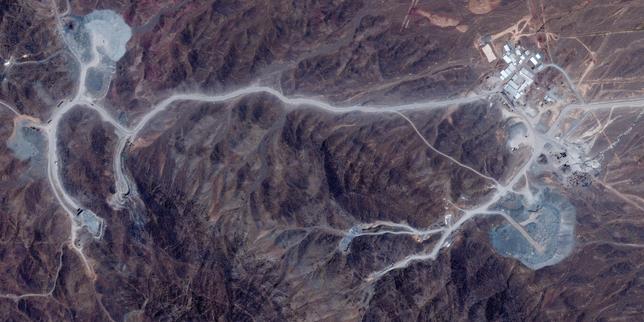
The targeting of assets like Natanz or Fordow represents a strategy of denial. The objective is the physical destruction of centrifuge cascades, research laboratories, and enrichment stockpiles to reset the adversary's breakout timeline. Because these facilities are deeply buried or subterranean, striking them requires specialized kinetic capabilities—such as massive ordnance penetrators—and implies a prolonged campaign rather than a singular punitive strike.
2. The Hydrocarbon Extraction and Export Grid
Targeting oil terminals, refineries, and distribution networks, such as the installations on Kharg Island, shifts the focus toward economic coercion. Iran’s domestic stability and geopolitical leverage depend heavily on its ability to export crude oil, primarily to East Asian markets. Disrupting this grid functions as a direct attack on the state’s primary revenue engine, creating immediate fiscal insolvency. For another angle on this event, see the recent coverage from NPR.
3. Dual-Use Logistics and Civil Infrastructure
The inclusion of broader economic infrastructure—ports, electrical grids, and transportation hubs—aims to increase the internal cost of state actions. By signaling that civilian systems are no longer insulated from kinetic operations, the strategy seeks to create domestic friction, forcing the adversary to divert scarce resources from external proxy networks to internal stabilization efforts.
The Strategic Cost Function of Kinetic Intervention
A critical flaw in standard geopolitical commentary is the failure to quantify the reciprocal costs of escalation. Military actions do not occur in a vacuum; they trigger a sequence of retaliatory maneuvers governed by asymmetric capabilities. A U.S. strike on Iranian infrastructure activates a complex cost function for the global economy and regional security architectures.
The Strait of Hormuz Bottleneck
The most immediate counter-escalation mechanism available to Tehran is the disruption of maritime commerce through the Strait of Hormuz. Approximately one-fifth of the world’s petroleum liquids pass through this transit point daily. A asymmetric denial strategy—utilizing anti-ship missiles, fast attack craft, and naval mines—could effectively close or severely restrict passage.
The economic consequence is mathematically predictable: a sharp reduction in global oil supply triggers an immediate price spike, impacting Western consumer markets and inducing inflationary pressure. The strategic paradox is clear: an attack designed to cripple Iran’s energy sector simultaneously penalizes the global energy consumer.
Proxy Network Activation
The second variable in the cost function involves regional proxies. The Axis of Resistance—spanning militias in Iraq, Syria, the Houthis in Yemen, and Hezbollah in Lebanon—allows for a decentralized, multi-front response.
Instead of engaging in direct conventional warfare against U.S. forces, the adversary can launch sustained drone and missile salvos against regional partners, logistical nodes, and American military installations across the Middle East. This redistributes the kinetic pressure away from the Iranian mainland and forces the U.S. and its allies to exhaust expensive air defense interceptors against low-cost manufacturing drones.
The Failure Modes of Extended Deterrence
The expansion of rhetoric to encompass infrastructure destruction reveals a structural breakdown in classical deterrence theory. Deterrence operates on the principle that the cost of an action will outweigh its benefits. However, when the threats escalated by a dominant power become existential, the target state's incentive structure flips.
[ Deterrence Paradigm ] ---> Threatens Proportional Costs ---> Preserves Status Quo
[ Existential Escalation ] -> Threatens Total Infrastructure -> Forces Asymmetric Preemption
If the leadership in Tehran perceives that a U.S. strike on its nuclear or economic core is inevitable regardless of its compliance, the utility of restraint drops to zero. This creates a dangerous preemptive incentive.
To prevent the destruction of its assets while they are static, the state may choose to accelerate its enrichment activities to achieve a rapid, fait accompli breakout capability, or initiate a low-level asymmetric first strike to deter the impending Western operation. The rhetoric intended to force a retreat instead accelerates the timeline toward open conflict.
Furthermore, this strategy introduces severe friction among Western allies. While a unilateral American executive may possess the kinetic means to execute these strikes, European partners rely heavily on regional stability to prevent mass migration waves and energy supply disruptions. A strategy focused on total infrastructure degradation risks isolating the United States from its traditional coalition framework, reducing the long-term diplomatic viability of any post-conflict settlement.
Economic Containment Versus Kinetic Attrition
A comparative analysis of the operational pathways reveals the stark divergence between sustained economic warfare and direct kinetic intervention.
| Operational Dimension | Maximum Pressure (Economic Sanctions) | Infrastructure Degradation (Kinetic Strikes) |
|---|---|---|
| Primary Mechanism | Capital market exclusion, secondary sanctions, asset freezes. | Precision guided munitions, cyber operations, special forces. |
| Execution Timeline | Months to years for systemic effect. | Hours to days for immediate physical destruction. |
| Reversible Potential | High; sanctions can be lifted or modified via executive order. | Low; physical destruction of infrastructure is permanent. |
| Global Market Friction | Moderate; predictable supply reallocations. | Severe; immediate volatility spikes and supply chain halts. |
| Adversarial Response | Sanctions evasion, illicit trade networks, diplomatic alignment with peer rivals. | Kinetic retaliation, proxy activation, asymmetric maritime denial. |
The structural data demonstrates that while economic containment is slow, it preserves escalation dominance by leaving the adversary room to negotiate before reaching total insolvency. Kinetic strikes, conversely, collapse the escalatory ladder, forcing both actors into high-frequency, high-stakes military exchanges where miscalculation is highly probable.
Operational Reality of Hardened Target Defeat
Executing a strike against deep, tunnel-based facilities like Fordow requires an understanding of structural geology and military engineering. These sites are intentionally built under hundreds of feet of rock and reinforced concrete, specifically designed to withstand standard Western bunker-busters.
A successful interdiction cannot rely on a single payload. It demands a highly synchronized, sequential bombing campaign where multiple precision-guided penetrators strike the exact same entry vector to gradually erode the overhead protection.
This requires total air superiority, continuous loitering capability, and the neutralization of sophisticated air defense systems, such as the S-300 and domestic variants. The operational footprint is not a swift, surgical strike; it is a full-scale air campaign requiring immense logistical deployment, aerial refueling assets, and electronic warfare supremacy.
The Strategic Path Forward
To achieve long-term stabilization without triggering systemic global economic failure, the operational focus must shift away from public infrastructure threats and toward a dual-track architecture of targeted disruption and structural containment.
- Deploy Layered Asymmetric Interdiction: Shift resources from broad infrastructure targeting to the aggressive interdiction of illicit supply chains transferring dual-use technologies. This slows nuclear development without providing the adversary a casus belli for regional war.
- Fortify Regional Energy Redundancy: Prioritize the expansion of oil and gas pipelines bypass channels that avoid the Strait of Hormuz entirely, such as Saudi Arabia’s East-West Pipeline and the Habshan–Fujairah line in the UAE. Neutralizing the maritime choke point severely diminishes the adversary's primary counter-escalation lever.
- Establish Explicit Operational Redlines: Replace ambiguous rhetorical threats with highly specific, quietly communicated redlines regarding enrichment percentages and weaponization steps. Deterrence is most effective when the boundaries are mathematically clear and the consequences are delivered via private, credible diplomatic-military channels rather than public declarations.
By decoupling strategic intent from domestic political theater, the focus returns to real coercion: degrading the adversary’s specific operational capabilities while maintaining global economic stability and preserving the flexibility to de-escalate when structural conditions allow.