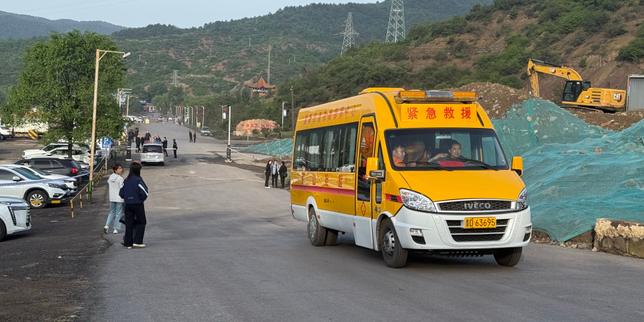
The fatal extraction incident in China resulting in at least 82 casualties is not an isolated systemic anomaly; it is the predictable output of a misaligned operational cost function. When state-mandated production targets intersect with rigid regulatory oversight, local management structures routinely optimize for short-term volume over long-term structural integrity. This analysis deconstructs the underlying failure mechanics of deep-earth extraction under command-and-control economic frameworks, isolating the specific structural bottlenecks, informational asymmetries, and regulatory feedback loops that transform a known operational risk into a mass-casualty event.
To understand why executive directives to "learn lessons" from industrial disasters consistently fail to alter the baseline incident rate, one must analyze the physical and economic variables governing state-managed coal extraction. The standard narrative attributes these events to individual negligence or localized corruption. A structural analysis reveals a deeper conflict: the irreconcilable tension between geology, macro-energy mandates, and localized risk-reward asymmetry. Meanwhile, you can find other developments here: The Trillion Dollar Fantasy of the Space Age Shield.
The Triple Constraint Framework of Deep Extraction
Every mining operation functions within a strict tri-variable constraint system: volume velocity, geological stability, and risk-mitigation capitalization. In a market-driven economy, capital expenditure on safety acts as insurance against catastrophic liability and asset destruction. In a state-managed framework where production quotas dictate political advancement, the incentive structure skews heavily toward volume velocity.
Geological Risk Multiplication at Depth
As extraction faces decreasing returns from shallow reserves, operations move deeper into the crust. Increased depth alters the physical variables of the extraction environment exponentially: To see the full picture, check out the recent report by NBC News.
- Lithostatic Pressure: The vertical stress exerted on the mine roof and pillars increases linearly with depth, demanding sophisticated rock-burst mitigation protocols.
- Gas Desorption Rates: High-pressure environments trap greater concentrations of methane ($CH_4$) within the coal matrix. Accelerated extraction rates release this gas faster than standard ventilation systems can dilute it below the lower explosive limit of 5%.
- Thermal Gradients: Higher ambient rock temperatures reduce the operational efficiency of human labor and mechanical cooling systems, increasing the probability of equipment friction fires.
When a macro-economic mandate demands an immediate surge in coal production to stabilize the national energy grid, local mine managers adjust the only variable fully within their control: the rate of advancement. This compresses the time allocated for exploratory drilling, gas drainage, and structural curing of rock bolts.
The Informational Asymmetry Bottleneck
A critical vulnerability in centralized industrial management is the distortion of data as it moves up the administrative hierarchy. A local mine manager faces an immediate, deterministic penalty for missing production quotas. Conversely, the penalty for safety non-compliance is probabilistic, realized only in the event of an inspection or an accident.
This asymmetry creates a strong incentive to suppress data indicating structural instability or elevated gas levels. Sensor telemetry is frequently manipulated, ventilation bypasses are implemented to avoid automated shutdowns, and geological anomalies are logged as standard operations. By the time a central authority issues a directive to optimize safety protocols, the physical integrity of the mine asset has already degraded past the point of structural return.
The Anatomy of the Failure Cascade
An industrial accident of this scale is rarely triggered by a single component failure. It is the result of a linear progression of unmitigated risks, known as a failure cascade. In deep-shaft coal extraction, this cascade follows a specific, predictable pathway.
[Geological Stress / Accelerated Advancement]
                     │
                     ▼
       [Localized Structural Breach]
                     │
                     ▼
   [Methane Liberation & Dust Suspension]
                     │
                     ▼
         [Ignition Source Event]
                     │
                     ▼
      [Secondary Propagation (Explosion)]
Phase One: The Structural Breach
The sequence begins when the rate of coal face advancement outpaces the stabilization of the goaf—the void left behind after coal removal. If the roof is allowed to collapse prematurely or without controlled management, it forces a massive volume of air and trapped gases into the active working areas. This phenomenon, known as an air blast, can instantly destroy ventilation partitions and reverse airflow directions.
Phase Two: Methane Liberation and Dust Suspension
The physical shock of a structural breach pulverizes the surrounding coal, suspending highly flammable coal dust ($C$) into the atmosphere. Simultaneously, unmitigated gas pockets are liberated. The ventilation system, compromised by the initial structural failure, fails to clear the mixture. This creates a highly volatile, stoichiometric fuel-to-air ratio throughout the extraction shaft.
Phase Three: The Ignition Source and Secondary Propagation
With fuel and oxygen optimized for combustion, any high-energy event serves as the catalyst. This can range from frictional sparking caused by continuous miner cutting heads hitting hard rock strata, to non-explosion-proof electrical switchgear, or illicit blasting practices designed to clear blockages quickly.
The initial methane ignition generates a localized shockwave. This shockwave lifts accumulated coal dust from the floor and ribs of the mine shafts ahead of the flame front. The newly suspended dust feeds the flame, transforming a localized gas ignition into a self-propagating secondary coal dust explosion that travels through kilometres of underground workings, destroying survival infrastructure and self-rescue chambers.
The Failure of Post-Event Regulatory Intervention
The political response to mass-casualty industrial events follows a well-documented sequence: public condemnation, localized administrative purges, rapid inspections, and sweeping directives to reform operational cultures. While politically expedient, this feedback loop fails to address the structural root causes due to two distinct institutional blind spots.
The Inspection Delusion
Following an accident, central authorities typically order immediate safety audits across all regional extraction facilities. These audits are inherently reactive. They measure compliance at a static point in time, whereas mine safety is a dynamic, shifting variable.
Static Inspection Framework:
[Audit Conducted] ──> [Temporary Compliance achieved via Operational Halts] ──> [Resumption of Baseline Quota Pressures]
A mine that passes an inspection on a Tuesday can become a catastrophic risk environment by Thursday if the extraction face hits an unmapped geological fault line while running at maximum output. Furthermore, because the inspectors belong to the same overarching bureaucratic apparatus that demands energy production targets, there is an implicit understanding that enforcement must not cause prolonged regional blackouts or industrial slowdowns.
The Limits of Automation as a Panacea
A common policy recommendation is the total automation of the extraction face to remove human capital from the high-risk zone. While technically viable in uniform, thick coal seams, automation introduces a new set of system vulnerabilities:
- Sensor Saturation: Automated systems rely on arrays of methane and seismic sensors. In high-dust environments, these sensors degrade rapidly, leading to false positives that halt production or false negatives that allow operations to continue during a critical hazard.
- Capital Allocation Strain: Deploying advanced automated equipment requires massive capital investment. In marginal or older mines, forcing this capitalization without subsidizing the acquisition costs drives operators to cut expenditures on basic structural components like timbering, rock dusting, and ventilation maintenance to balance the books.
- Maintenance Skills Gap: Deploying high-tier technology into remote extraction zones often outpaces the regional workforce's capacity to maintain the equipment to explosive-proof standards, introducing unexpected electrical ignition risks.
Operational Reality and Strategic Hard Choices
Any credible strategy to reduce the frequency of mass-casualty events in state-managed extraction must acknowledge the hard engineering and economic trade-offs involved. There are no low-cost, friction-free solutions.
To permanently shift the safety baseline, the underlying economic incentives governing the entire value chain must be restructured. This requires transitioning from a volume-based KPI metric to a risk-adjusted volumetric yield metric. Under this approach, production output is mathematically penalized relative to the geological volatility index of the extraction site. If a mine is operating at extreme depths with high gas desorption rates, its target volume must be systematically scaled down to allow for mandatory, unalterable gas drainage cycles.
Furthermore, operational management must be decoupled from political administrative structures. As long as a mine manager’s promotion depends on hitting energy quotas for a regional governor, safety data will remain compromised. Establishing an independent, technically proficient regulatory body with the absolute, unreviewable authority to halt production at state-owned enterprises is the only institutional mechanism capable of breaking the failure cascade before it starts. Until these structural reallocations of capital and authority occur, executive calls to "learn the lessons" of past disasters will remain a rhetorical exercise, while the physical realities of deep-earth extraction continue to enforce their predictable, lethal toll.