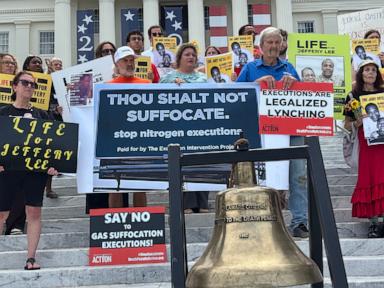
The operational viability of state-sanctioned nitrogen hypoxia faces a critical structural bottleneck. The U.S. Court of Appeals for the Eleventh Circuit reversed a federal district court’s finding that Alabama’s nitrogen gas execution protocol complies with the Eighth Amendment. By remanding the case of death row inmate Jeffery Lee, the appellate panel effectively halted the uncritical expansion of an execution mechanism that has now been deployed eight times across the United States—seven in Alabama and once in Louisiana.
This decision changes the legal trajectory by exposing a core friction point between state execution timelines and the rigorous empirical standards required under federal law. To understand the legal vulnerabilities of this execution methodology, one must analyze the precise constitutional tests applied, the physiological mechanics of nitrogen suffocation, and the specific alternative mechanisms introduced by the defense.
The Two-Pronged Constitutional Test for Execution Methods
The Eleventh Circuit’s intervention relies on a strict application of the two-pronged test established by the U.S. Supreme Court in Baze v. Rees and refined in Glossip v. Gross. Under this framework, a capital defendant challenging an execution method must satisfy two independent burdens of proof to establish an Eighth Amendment violation:
- Prong One: Substantial Risk of Superadded Pain. The plaintiff must demonstrate that the state's chosen method creates a substantial risk of severe pain, serious harm, or prolonged suffering that goes well beyond what is strictly necessary to extinguish human life.
- Prong Two: Availability of a Feasible Alternative. The plaintiff must identify an alternative method of execution that is feasible, readily implemented, and significantly reduces the substantial risk of pain identified in the first prong.
The district court had initially dismissed Lee’s challenge by ruling that any suffering experienced under Alabama's current mask-based protocol was merely an inescapable consequence of death, rather than constitutionally impermissible "superadded" pain. The Eleventh Circuit rejected this baseline assumption, holding that the empirical evidence regarding the duration of conscious air hunger met the threshold for the first prong. The appellate panel noted that the lower court's own factual findings described an interval of conscious suffering lasting between 60 and 180 seconds. In the text of the ruling, the panel characterized counting to 180 seconds under conditions of acute asphyxiation as an intolerable timeframe that presents a substantial risk of serious harm over and above death itself.
The Physiological Friction Point: Mask Efficiency and Conscious Asphyxiation
The state's execution protocol relies on a closed-circuit delivery system: a respirator mask is strapped to the inmate's face, replacing ambient air containing roughly 78% nitrogen and 21% oxygen with 100% pure pressurized nitrogen gas. In theory, this induces rapid cellular hypoxia, leading to loss of consciousness followed by cardiac arrest.
The underlying cost function of this system, however, is heavily dependent on seal integrity. The physiological reality of nitrogen inhalation differs fundamentally from inert gas asphyxiation in a sealed chamber. When an individual is forced to breathe through a face mask, any physiological resistance—such as thrashing, bucking, or natural panic reflexes—breaks the mask’s seal against the skin.
When the seal is compromised, ambient oxygen leaks into the system. This converts an intended rapid loss of consciousness into a prolonged state of partial hypoxia. The human brain detects carbon dioxide buildup via central chemoreceptors, which triggers a violent, involuntary panic response known as the hypercapnic alarm.
If the mask allows even trace amounts of oxygen to enter, the inmate remains conscious longer, extending the period of air hunger. This mechanism explains the variance in execution durations observed in Alabama. While some executions saw a loss of awareness within two minutes, others lasted upwards of 30 to 38 minutes, marked by violent thrashing and deep, agonized breathing. The state has routinely categorized these movements as involuntary post-mortem convulsions, but the appellate court's ruling recognizes them as evidence of sustained conscious suffering.
The Firing Squad as a Feasible Legal Alternative
Because the Eleventh Circuit determined that Lee successfully demonstrated a substantial risk of superadded pain under prong one, the legal analysis shifts entirely to prong two. The appellate panel remanded the case to the district court specifically to evaluate the feasibility of Lee's proposed alternative: execution by a firing squad.
To satisfy the court that a firing squad is a valid alternative, the defense must meet three technical criteria:
- Statutory Authorization or Feasibility: The method must either be authorized by state law or be practically capable of being established by the state’s Department of Corrections without extraordinary administrative upheaval.
- Logistical Readiness: The state must possess, or easily acquire, the necessary equipment, trained personnel, and physical infrastructure to execute the method.
- Comparative Risk Reduction: The alternative must clear the biological hurdle where it causes significantly less pain or offers a more certain, instantaneous death than the state's current nitrogen mask protocol.
The firing squad meets the comparative risk reduction metric through basic trauma kinetics. By directing high-velocity projectiles directly at the chest cavity, the method causes instantaneous rupture of the heart and thoracic aorta. This results in an immediate drop in blood pressure to zero, causing cerebral ischemia and a total loss of consciousness within seconds.
Unlike the nitrogen mask protocol, a firing squad does not rely on a perfect pneumatic seal or the compliance of the inmate's respiratory tract, thereby eliminating the variable of prolonged air hunger. The district court must now hold evidentiary hearings to determine whether Alabama can logistically execute this alternative or if the administrative hurdles constitute an insurmountable barrier.
Institutional Failures in the Sentencing Pipeline
The systemic vulnerability of Lee’s case is intensified by procedural anomalies that occurred during his original trial. Lee was convicted of two counts of capital murder for a 1998 robbery that resulted in the deaths of Jimmy Ellis and Elaine Thompson. The sentencing phase did not yield a unanimous or even a majority consensus for execution; the jury voted 7 to 5 to recommend a sentence of life imprisonment without the possibility of parole.
The death penalty was ultimately imposed because the trial judge exercised a statutory mechanism known as judicial override, flatly rejecting the jury’s recommendation. This mechanism allowed a single political official to escalate a life sentence to a capital sentence based on an independent assessment of aggravating factors.
The institutional instability of this sentence is highlighted by subsequent legislative shifts. In 2017, Alabama explicitly abolished the practice of judicial override, recognizing that it undermined the constitutional role of the jury and created a high risk of arbitrary sentencing.
The state did not make this legislative change retroactive. Consequently, individuals like Lee remain on death row under a sentencing mechanism that the state itself has since deemed unjust and legally obsolete. This creates an asymmetric legal framework where an individual faces an experimental execution method via a judicial pathway that has been outlawed for nearly a decade.
Systemic Risks of the Impending Legal Deadlock
The immediate operational consequence of the Eleventh Circuit's remand is a direct challenge to the execution schedule. The appellate panel stopped short of issuing a formal, indefinite stay of execution for the scheduled date, choosing instead to force the district court to rapidly adjudicate the feasibility of the firing squad alternative.
This creates an acute logistical crisis for the Alabama Department of Corrections. If the federal district court finds that a firing squad is a feasible alternative under the Glossip standard, the state cannot proceed with the nitrogen execution protocol without violating the Eighth Amendment.
The state does not currently possess the active infrastructure, trained marksmen protocols, or specialized chambers required to conduct a firing squad execution on short notice. If the state attempts to rush a hearing or bypass the thorough evaluation of the alternative method, it risks a comprehensive shutdown of its nitrogen infrastructure by the federal courts.
The state's legal strategy has rested entirely on asserting that nitrogen hypoxia is a verified, humane alternative to lethal injection, which has suffered from its own supply chain crises and botched venous access protocols. By forcing an empirical review of the physical suffering that occurs between seconds 60 and 180 of the protocol, the Eleventh Circuit has effectively stripped the state of its presumption of procedural safety.
The case now transitions into a data-driven battle over physiological metrics, equipment reliability, and institutional readiness. The state must either provide indisputable proof that its mask system guarantees an immediate, painless loss of consciousness—a claim severely damaged by previous execution records—or it must pause its capital operations to build an entirely new execution framework from the ground up.