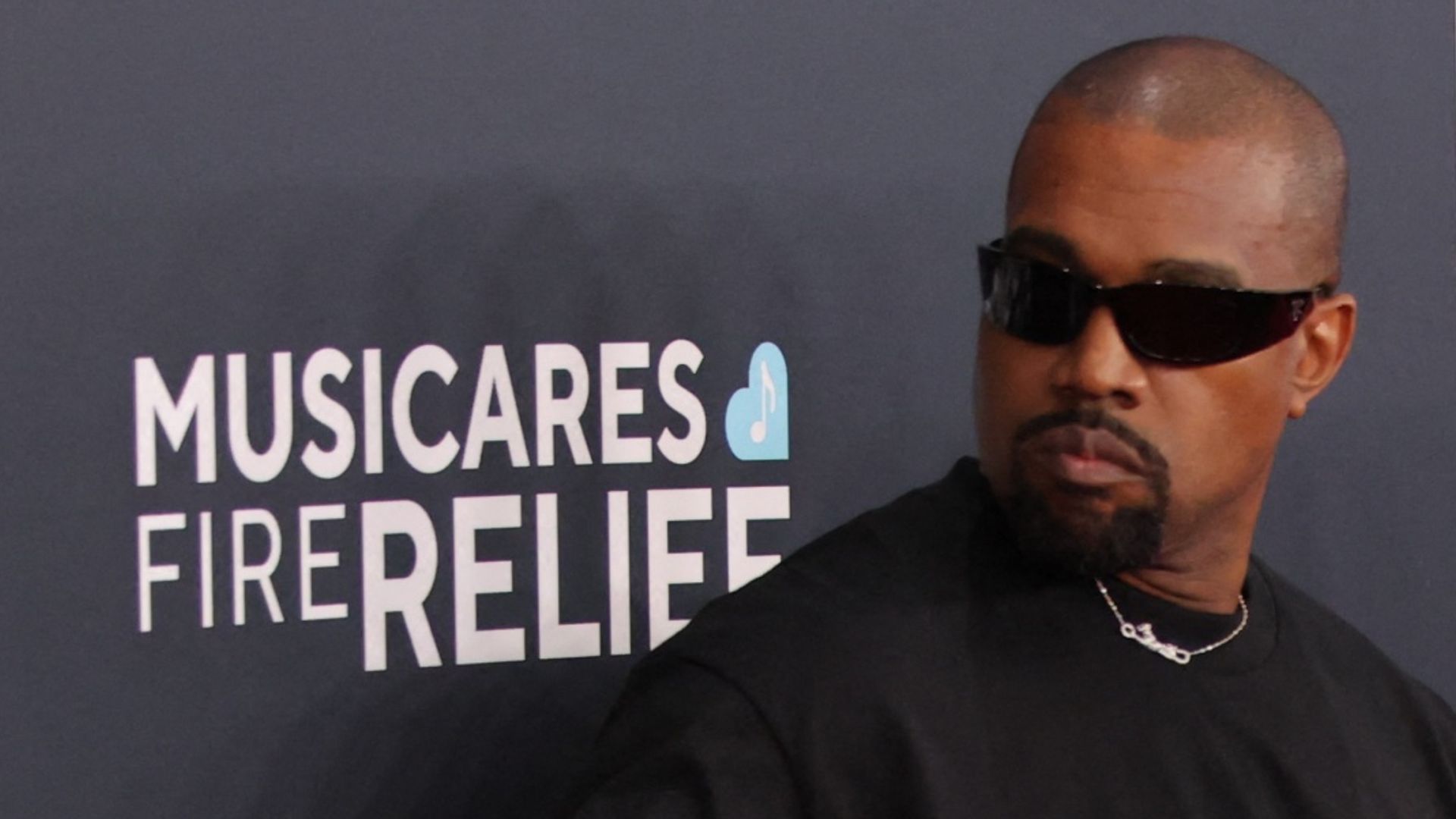
A Dutch court’s decision to permit a high-profile, controversial artist like Ye (formerly Kanye West) to proceed with performances in the Netherlands exposes the friction between freedom of expression, municipal policing powers, and contractual obligations within the European live entertainment sector. While public discourse focuses heavily on the reputational and political dimensions of such events, the operational reality is governed by a strict legal and economic calculus. Municipalities and venue operators attempting to cancel scheduled arena-scale performances face severe financial liabilities if their interventions lack a codified statutory basis.
When a public administration or a venue management firm seeks to block a concert, they must navigate a tripartite framework of risk: constitutional speech protections, the high threshold for preemptive public safety interventions, and the strict enforcement of venue-use contracts. Understanding this mechanism requires breaking down the legal hurdles of prior restraint, the economic realities of indemnification, and the operational criteria that determine whether a public gathering poses a genuine threat to civil order.
The Tripartite Framework of Event Cancellation Risk
The execution or termination of a major live entertainment contract rests upon three distinct pillars of liability and authority. Each pillar operates independently, yet a failure in any single domain invalidates an attempt to halt a performance.
[Constitutional Protections] ---> [High Threshold for Prior Restraint]
[Administrative Authority]  ---> [Strict Definition of Public Disruption]
[Contractual Obligations]   ---> [Quantifiable Indemnification Risks]
1. The Constitutional Threshold of Prior Restraint
Under European human rights jurisprudence, specifically Article 10 of the European Convention on Human Rights (ECHR), freedom of expression extends to ideas that may offend, shock, or disturb. This standard is heavily mirrored in Dutch domestic law. A municipal government cannot deploy its administrative powers to enact what amounts to prior restraint—the prohibition of speech or performance before it occurs—based solely on the anticipated content of the performance or the past statements of the artist.
To survive a legal challenge from promoters, an administrative ban must satisfy a three-part test:
- Legality: The restriction must be explicitly base-coded in existing statutory law.
- Legitimacy: It must pursue a recognized aim, such as protecting public order or national security.
- Proportionality: The restriction must be the least intrusive means available to achieve that aim.
Because a total ban is the most intrusive mechanism available, courts routinely strike down municipal prohibitions that fail to demonstrate that lesser measures, such as increased security presence or age restrictions, would mitigate the perceived risks.
2. The Strict Limits of Administrative Policing Powers
Mayors in the Netherlands hold significant statutory authority under the Municipality Act (Gemeentewet), specifically Articles 172 and 175, to maintain public order. However, these powers are reactive and situational rather than preventive and ideological.
A mayor can only restrict an assembly if there is a concrete, demonstrable threat of immediate and serious civil unrest, violence, or criminal activity at the specific time and location of the event. Speculative pushback, peaceful counter-protests, or widespread public distaste do not meet the statutory definition of a breach of peace. In the absence of intelligence showing coordinated plans for violence or structural sabotage, a court will find that the municipality has failed to meet its evidentiary burden, rendering any cancellation order an abuse of administrative discretion.
3. Contractual Indemnification and Economic Exposure
Venues operate as commercial entities under private law, even when owned by municipal holding companies. When a venue enters into a lease or hosting agreement with an event promoter, it binds itself to specific performance clauses. Canceling an event without a legally bulletproof justification triggers a breach of contract.
The cost function of an unforced venue cancellation is catastrophic for the operator. The promoter’s claims for damages are not limited to refunded ticket sales; they encompass the entire loss of projected revenue and sunk operational costs:
- Direct Box Office Guarantees: The immediate return of gross ticket receipts.
- Sunk Production Costs: Non-refundable deposits for audio-visual logistics, local labor, staging, and freight.
- Ancillary Revenue Streams: Loss of venue-retained margins from food, beverage, merchandise splits, and parking.
- Consequential Damages: Potential liability for the artist's broader tour disruption, including scheduling cascades and sponsor penalties.
Faced with these quantified liabilities, venue operators rarely cancel events unilaterally unless compelled by a binding judicial order or a clear, unappealable directive from civil authorities that invokes a force majeure state.
The Asymmetry of Public Outcry vs. Legal Substance
A recurrent flaw in corporate and municipal risk assessment is the conflation of reputational friction with legal vulnerability. Activist campaigns, negative press coverage, and statements of condemnation from civic organizations often create an illusion of momentum that does not translate into a viable courtroom strategy.
This creates a distinct operational bottleneck for municipalities. If a city council yields to public pressure and orders a venue to cancel a show without a verified threat matrix, the court will prioritize the rule of law and contractual certainty over political expediency. The judiciary functions on objective evidentiary standards; it views external political pressure as a non-legal variable that cannot override statutory speech protections or valid commercial agreements.
Furthermore, the legal threshold for inciting hatred or violence—which could theoretically justify a ban—is exceptionally high in Western Europe when applied to artistic performances. A court distinguishes between an individual making inflammatory statements in a political context and an artist delivering a choreographed musical performance. Unless the specific setlist, script, or staging of the tour explicitly violates local criminal statutes (such as direct incitement to imminent lawless action), the performance remains protected.
Operational Risk Mitigation for Venues and Promoters
To navigate this highly volatile environment, live entertainment stakeholders must shift from reactive crisis management to structured, contract-driven risk allocation. The following operational protocols isolate financial and legal exposure.
Codifying Specific Termination Triggers
Standard force majeure clauses are insufficient to handle the complexities of modern political and reputational volatility. Contracts must explicitly define what constitutes an unperformable event. Venues seeking flexibility must negotiate specific, narrow clauses that allow for cancellation without penalty only under precise conditions, such as:
- The revocation of the artist’s visa or entry permit by federal immigration authorities.
- An official, unappealable red-alert assessment issued by national counter-terrorism or intelligence agencies.
- The enactment of a binding municipal decree that explicitly indemnifies the venue operator against all third-party promoter claims.
Conversely, promoters must ensure that any venue-initiated cancellation falling outside these precise parameters triggers immediate, liquidated damages covering 100% of gross projected tour earnings for that market stop.
Separating Public Safety Inspections from Political Directives
When public authorities wish to halt an event, they frequently attempt to use secondary regulatory levers, such as fire safety codes, crowd-capacity permits, or noise ordinances. This tactical approach involves deploying bureaucratic inspections to find technical violations that can justify an administrative shutdown.
To counter this, promoters must execute rigorous, early-stage compliance reviews. Every dimension of the production—from stage weight distribution to emergency egress calculations—must be documented, stamped by certified local engineers, and submitted well ahead of statutory deadlines. When a promoter eliminates technical and safety non-compliance variables, any subsequent municipal intervention is exposed as a pretextual, politically motivated action, significantly strengthening the promoter’s position in an expedited injunction hearing.
The Evolution of Entertainment Risk Metrics
The Dutch ruling establishes a clear precedent that reinforces the primacy of contract law and constitutional protections over municipal risk aversion. Moving forward, the live entertainment industry must anticipate a shift in how insurance markets underwrite large-scale touring acts associated with high levels of public controversy.
Traditional event cancellation insurance policies are designed to cover weather anomalies, structural failure, or artist illness. They systematically exclude coverage for cancellations arising from civil authorities due to anticipated public outrage or political controversy. Because the legal avenues for municipal intervention are so narrow, the financial risk of a politically motivated cancellation sits squarely on the entity that blinks first—typically the venue or the local municipality.
As a result, we will see a divergence in the venue market. Risk-tolerant private venues will leverage these legal protections to capture highly lucrative, controversial bookings, knowing the courts will defend their contractual right to operate. Conversely, publicly owned or subsidized venues will face intensifying structural pressure, forcing them to implement stricter, pre-vetting mechanisms at the initial booking inquiry stage rather than attempting to claw back agreements after a contract has been signed and public opposition has materialized.
The long-term strategic play requires decoupling emotional and ethical considerations from operational execution. For a venue or a city, the law remains cold: unless you can prove a riot is imminent, the show must go on, or the treasury must pay.