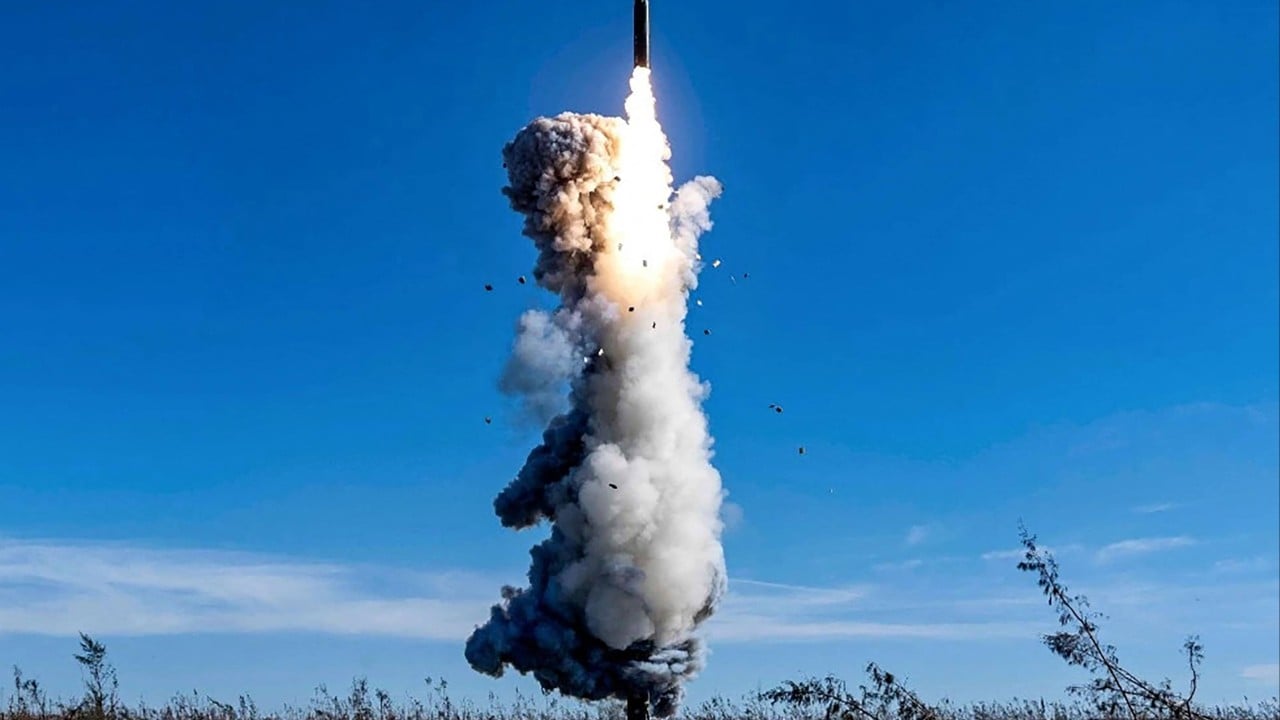
The geographic insulation that historically anchored Australian defense planning has collapsed. While legacy strategic doctrine assumed a ten-year warning window for any major conventional assault, advancements in theater ballistic technology and forward deployment infrastructure have compressed this timeline to zero. Data from the Lowy Institute establishes that China’s People's Liberation Army (PLA) possesses the functional capacity to execute direct precision strikes against the Australian mainland. This reality shifts the defense equation from an assessment of hostile intent to a rigorous calculus of kinetic capability.
The strategic vulnerability of the continent is governed by three specific vectors: land-based intermediate-range ballistic missiles (IRBMs), forward-deployed naval assets, and deep-theater strike aviation. Evaluating this threat requires isolating the technological mechanisms, structural bottlenecks, and escalation risks that define the PLA Rocket Force (PLARF) and Navy (PLAN) operational architecture.
The Three Vectors of Kinetic Reach
To quantify how the mainland falls within the weapon engagement zones of the PLA, the threat must be disaggregated into its delivery mechanisms. Each vector carries distinct payload capacities, flight profiles, and operational signatures.
+--------------------------------------------------------------------------+
|                       PLA KINETIC REACH VECTORS                          |
+--------------------------------------------------------------------------+
|  Vector 1: Land-Based Ballistic (DF-26 / DF-27)                           |
|  -> Range: 4,000 km to 8,000 km                                          |
|  -> Flight Profile: Endo/Exo-atmospheric, Hypersonic Glide Vehicles     |
|                                                                          |
|  Vector 2: Subsurface & Surface Maritime (Type 094, Type 093B, Type 055)   |
|  -> Range: Variable (Global mobility + 1,500 km to 2,500 km cruise)      |
|  -> Flight Profile: Low-altitude Sea-skimming / High-supersonic Cruise   |
|                                                                          |
|  Vector 3: Deep-Theater Strategic Aviation (H-6N / Next-Gen Bomber)      |
|  -> Range: 3,500 km combat radius + ALCM standoff range                 |
|  -> Flight Profile: High-subsonic air-launched cruise missile delivery   |
+--------------------------------------------------------------------------+
Land-Based Ballistic Infrastructure
The primary structural shift involves the maturation of the PLARF's intermediate and long-range conventional inventories. The Dong Feng-26 (DF-26), featuring a range of approximately 4,000 kilometers, can encompass northern Australian military facilities if launched from forward outposts. By converting artificial features in the South China Sea into heavily fortified military bastions, the PLA has effectively advanced its launch baselines thousands of kilometers south of the Chinese mainland.
This envelope expands further with the deployment of the DF-27. Classified as a long-range or intermediate-range ballistic missile utilizing a hypersonic glide vehicle (HGV) payload, the DF-27 possesses an estimated range of 5,000 to 8,000 kilometers. This range brings the entire Australian continent within a single-stage ballistic flight envelope directly from sovereign Chinese territory. Unlike standard ballistic trajectories, HGVs operate at lower altitudes within the upper atmosphere, neutralizing standard early-warning radars and rendering legacy mid-course interceptors obsolete.
Maritime Standoff Capacity
The second vector detaches kinetic delivery from fixed geographical locations. The PLAN's rapid naval expansion alters the maritime threat perimeter through two platforms:
- Surface Combatants: Type 055 guided-missile destroyers equipped with large-diameter vertical launching system (VLS) cells capable of firing YJ-21 anti-ship ballistic missiles and CJ-10 land-attack cruise missiles.
- Subsurface Assets: The expansion of the PLA's nuclear-powered attack submarine (SSN) fleet, projected to reach 25 hulls by 2035, enables persistent patrols in the waters of the Indian Ocean and the Coral Sea.
Deploying cruise-missile-carrying submarines (SSG/SSNs) directly south of the Indonesian archipelago bypasses northern-facing early warning networks. This creates a highly complex 360-degree defense requirement for critical infrastructure hubs in Western Australia, South Australia, and New South Wales.
Airborne Standoff Penetration
Air-launched strike capabilities introduce a third layer of risk. Modernized H-6N bombers, equipped with aerial refueling probes, can transport air-launched ballistic missiles (ALBMs) or land-attack cruise missiles deep into the maritime approaches of Oceania. The introduction of stealth-configured strategic bombers or long-range unmanned combat aerial vehicles (UCAVs) would compound this issue. Such platforms would minimize the radar cross-section signature available to Australia’s Jindalee Operational Radar Network (JORN), thereby restricting the defensive reaction window.
The Target Function: Critical Assets and Chokepoints
A kinetic strike would not be executed at random; it would target high-value assets to degrade allied operational continuity. The target set on the Australian mainland is divided into three critical functional categories:
1. Alliance Command, Control, and Intelligence Nodes
The highest-priority targets during a regional contingency are joint facilities that support United States military operations. The Joint Defence Facility Pine Gap near Alice Springs serves as a critical link for real-time geosynchronous satellite telemetry, missile warning data, and signals intelligence collection. Striking Pine Gap would be intended to degrade Washington’s ability to manage escalation or coordinate operations across the Indo-Pacific theater. Similarly, the Harold E. Holt Naval Communication Station at Exmouth presents an essential target due to its role in transmitting very-low-frequency (VLF) commands to allied submarine forces.
2. Force Projection Infrastructure
Northern bases, specifically RAAF Base Tindal, RAAF Base Darwin, and the associated bare bases across northern Australia, are currently being upgraded to support US strategic assets, including B-52 and B-22 bombers. The PLA's targeting logic dictates that disabling these runways, fuel storage farms, and munitions depots via conventional precision missile salvos is more cost-effective than engaging allied assets in flight.
3. Future Submarine Sustainment Facilities
Fleet Base West in Western Australia serves as the primary maritime hub for the Submarine Rotational Force-West (SRF-W), which hosts US and British nuclear-powered attack submarines. By the next decade, this facility will support Australia's own conventionally armed, nuclear-powered submarines (SSNs). A localized kinetic strike on this facility would severely disrupt allied subsurface operations across East Asian sea lines of communication.
Tactical Friction Points and Defensive Deficits
Australia's current defensive architecture features structural vulnerabilities that cannot be easily remedied through short-term policy adjustments.
The Sensor-to-Effector Bottleneck
Australia relies heavily on JORN, an over-the-horizon radar system that bounces high-frequency signals off the ionosphere to detect air and sea targets. While JORN provides long-range tracking of conventional aircraft and surface vessels, its physics-based constraints limit its performance against low-altitude, high-speed cruise missiles and maneuvering HGVs. This leaves a critical gap in detection capabilities.
Furthermore, detecting a threat does not equate to neutralizing it. Australia's Integrated Air and Missile Defence (IAMD) ecosystem faces significant resource constraints:
+--------------------------------------------------------------------------+
|               TACTICAL EFFICIENCY AND COST-CURVE ASYMMETRY              |
+--------------------------------------------------------------------------+
|  PLA Offensive Volley:                         ADF Defensive Intercept:  |
|  DF-27 / DF-26 / YJ-21 Missiles                SM-3 Block IIA / Patriot  |
|  Cost: Relatively low per unit                 Cost: ~A$40M per SM-3     |
|  Flight Profile: Hypersonic / Maneuvering      Profile: Direct Kinetic   |
|                                                                          |
|  --> Result: Radical cost asymmetry favoring the offensive volley.      |
|  --> Threat: Interceptor inventory exhaustion via saturation attacks.    |
+--------------------------------------------------------------------------+
Deploying area-defense systems like the US Navy’s Aegis combat system equipped with SM-3 Block IIA interceptors incurs exceptional capital expenditure—approximately A$40 million per interceptor missile. Because interceptors must maintain high mathematical exchange ratios to defeat incoming hypersonic weapons, a saturation salvo from the PLARF would quickly exhaust Australia’s limited defensive inventory.
The Nuclear-Conventional Ambiguity Problem
The most severe tactical risk stems from warhead ambiguity. The DF-26 platform is dual-capable, meaning it can carry either a conventional precision warhead or a strategic nuclear payload. Early warning sensors cannot determine a missile's warhead type while it is in its mid-course flight phase.
If the PLARF launches a conventional salvo targeting Pine Gap or Darwin, allied command structures are forced to operate under worst-case assumptions. This ambiguity significantly increases the likelihood of accidental nuclear escalation, as Washington might interpret a conventional strike on critical command nodes as a preemptive nuclear decapitation attempt.
Structural Rebalancing Strategy
Mitigating the direct strike threat requires moving away from traditional defensive strategies and adopting a structured approach focused on resilience, distributed architecture, and asymmetric deterrence.
- Geographic Decentralization: Concentrating assets at high-profile hubs like Fleet Base West or RAAF Base Tindal creates high-value targets for adversaries. Defense infrastructure must be redistributed across smaller, highly redundant secondary and tertiary facilities along the western and southern coasts.
- Kinetic and Active Denial Stockpiles: Relying purely on expensive missile interceptors is financially unsustainable. Australia must prioritize localized active-denial systems, distributed drone-based tracking networks, and cheaper point-defense systems to protect critical infrastructure.
- Asymmetric Long-Range Strike Delivery: Australia cannot match China's missile inventory volume. Instead, investment should focus on stealth-configured, long-range maritime and land-attack cruise missiles deployed via highly mobile, survivable platforms like submarines or dispersed autonomous systems. This ensures the country maintains a credible retaliatory capability without requiring large, vulnerable permanent bases.
The optimal strategic approach requires acknowledging that the continent is no longer protected by distance. Defense policy must shift from managing hypothetical scenarios to actively hardening domestic infrastructure against long-range precision strikes. This reality demands a rapid, sustained reconfiguration of the nation's sovereign defense posture.