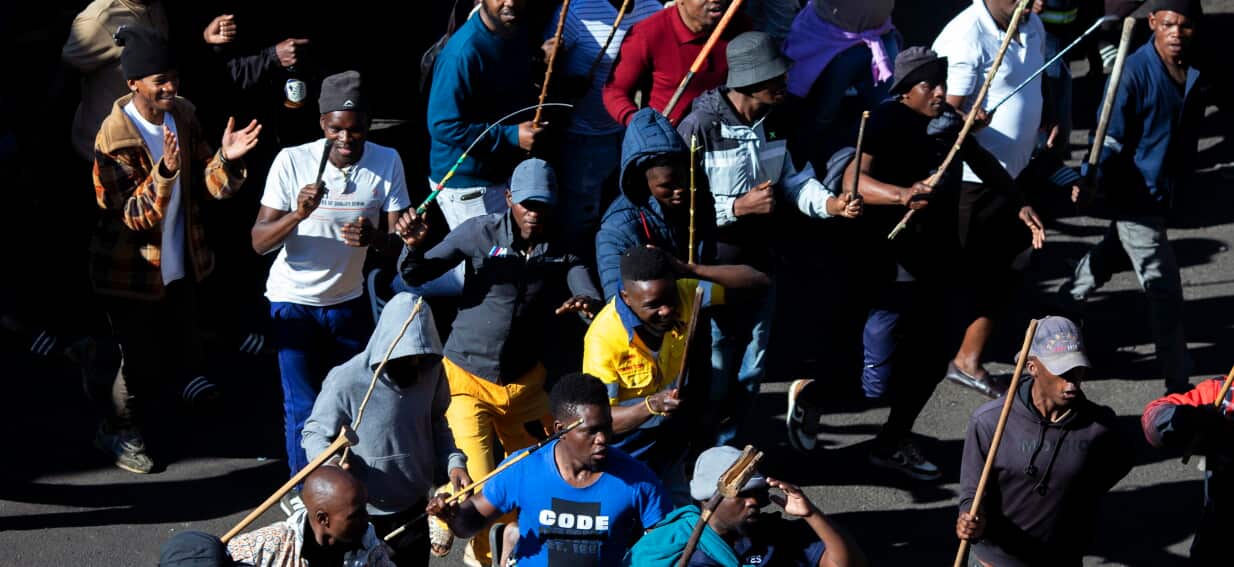
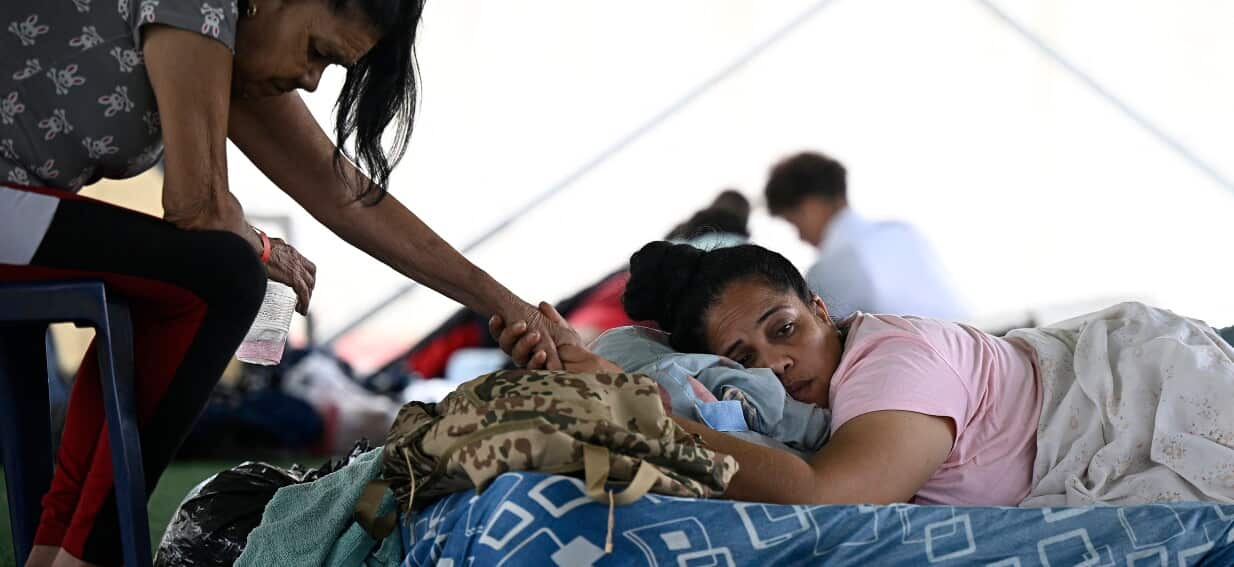
International disaster response operations consistently fail due to communication latency, resource misallocation, and bureaucratic friction. When seismic events surpass local response thresholds, the arrival of specialized foreign assets can mitigate the compounding mortality curve, provided the deployment follows a strict logistical framework. The mobilization of Mexico’s "Topos" (Los Topos de Tlatelolco) to Venezuela following an earthquake exceeding 2,200 fatalities serves as a case study for analyzing the operational variables of rapid-response urban search and rescue (USAR) frameworks.
Understanding the strategic deployment of these units requires breaking down the lifecycle of an international rescue mission into three distinct phases: mobilization physics, structural triage, and the integration bottleneck.
The Mobilization Physics of Volunteer USAR Units
The primary constraint of any disaster response model is time-to-incident. In seismic catastrophes, the probability of extracting live victims from collapsed reinforced concrete structures decays exponentially after the initial 72 hours. This time window is governed by the survival curve of trapped individuals, which is a function of injury severity, dehydration rates, and ambient environmental conditions.
Standard state-sponsored deployment models are inherently slowed by administrative protocols, political clearances, and military transport staging. In contrast, the Topos organizational model utilizes a decentralized, civilian-volunteer framework that optimizes for speed through parallel processing:
- Pre-authorization protocols: By maintaining standing agreements and non-governmental channels, volunteer corps bypass traditional diplomatic signaling phases.
- Agile equipment scaling: Instead of moving heavy machinery, which requires strategic airlift capabilities, these teams deploy with specialized, highly portable search tools—acoustic sensors, thermal cameras, and localized pneumatic lifting bags.
- Modular team structures: Teams are organized into self-sustaining squads of 10 to 12 personnel, minimizing the logistical footprint required for deployment via commercial or immediate military-assisted air transport.
The velocity of this deployment can be modeled as a function of bureaucratic friction reduction. Where state apparatuses require linear sign-offs (Local Agency → National Ministry → Foreign Affairs → Host Nation Acceptance), decentralized units operate on a parallel notification system, cutting the pre-departure phase by up to 60%.
Structural Triage and the Mechanics of Void Spaces
Upon arrival at the impact zone, the deployment shifts from a logistical challenge to an engineering and forensic operation. The 2,200+ fatality benchmark indicates widespread structural failure, likely characterized by pancake collapses, soft-story failures, and unreinforced masonry destruction.
The technical objective of a specialized search team is not mass excavation, but rather the identification and exploitation of structural void spaces. This process relies on structural forensics to determine where survivors are mathematically most likely to exist.
Collapse Type Categorization
The team must instantly classify the debris field to select the appropriate breaching strategy:
- Pancake Collapses: Occur when vertical support elements fail completely, causing upper floors to settle directly onto lower floors. Survival voids are highly restricted and typically limited to areas adjacent to reinforced internal walls or heavy structural furniture.
- Lean-To Collapses: Occur when one or more vertical walls fail while the roof or upper floor remains supported on one side. This creates a highly predictable, triangular void space with a statistically higher survival rate.
- Cantilever Collapses: The most hazardous environment for rescue personnel. Unsupported floor slabs hang from remaining structural walls, requiring extensive shoring operations before search teams can enter the perimeter.
The search methodology alternates between acoustic reconnaissance and canine deployment. Acoustic sensors detect micro-vibrations and low-frequency sounds generated by survivors scratching or tapping against structural elements. This data is cross-referenced with canine scent indications to establish a high-probability search vector.
Once a target void is identified, the engineering phase dictates the use of structural shoring—installing temporary wooden or mechanical supports—to prevent secondary collapses during breaching operations. Breaching involves cutting precise structural portals through reinforced concrete slabs, avoiding load-bearing rebar configurations to maintain the precarious equilibrium of the debris pile.
The Integration Bottleneck in Host Nations
The introduction of foreign rescue assets into a domestic disaster zone introduces systemic friction if the host nation lacks a unified command structure. This friction manifests in three specific operational areas.
Information Asymmetry
Arriving teams lack granular data on local utility grids (gas, water, electricity), which present immediate lethal hazards during excavation. If the host nation cannot provide up-to-date GIS mapping or utility isolation status, the search velocity slows significantly to protect rescue personnel.
Command Structure Incompatibility
Most international deployments operate under the UN-sanctioned International Search and Rescue Advisory Group (INSARAG) guidelines. If the host nation's emergency management agency operates on an ad-hoc or heavily militarized top-down command structure, foreign teams face delays in assignment allocation, sector division, and airspace management for medical evacuations.
Resource Competition
Foreign units require baseline lifelines, including fuel for cutting tools, potable water, and secure staging areas. In a severe disaster scenario where local supply chains are obliterated, the incoming team risks becoming a net consumer of scarce resources rather than a net provider of relief utility, unless they maintain strict logistical self-sufficiency for at least 72 to 96 hours.
Tactical Optimization and Strategic Playbook
To maximize the efficiency of transnational USAR deployments in high-fatality seismic events, emergency management networks must shift away from ad-hoc bilateral agreements toward pre-certified, regional coordination hubs.
The immediate operational priority for sovereign states vulnerable to seismic risk is the standardization of the Incident Command System (ICS) across civilian, military, and international volunteer boundaries. Host nations must establish pre-vetted customs clearance protocols specifically for search equipment, eliminating the 12-to-24-hour border delays that frequently invalidate the 72-hour survival window.
Furthermore, data interoperability must be achieved prior to the event. Staging areas should utilize unified offline mapping applications capable of syncing via localized satellite networks (such as Starlink arrays) to ensure that structural assessment data collected by arriving teams is instantly visible to the central command center, preventing the duplication of search efforts on previously cleared structures and accelerating the reallocation of highly specialized personnel to unverified collapse zones.