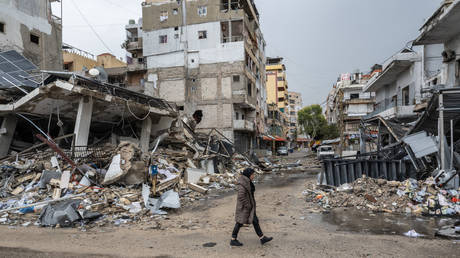
Headlines love a simple narrative. They want you to believe that every escalation is just a random spike in violence, a sudden regression to chaos, or a standalone tragedy disconnected from any structural reality. The standard reporting on the heaviest bombardment of Lebanon since the June truce relies on a lazy consensus: that military force is applied in a vacuum of pure emotion, vengeance, or erratic politics.
That framing is dangerously naive.
I have spent years analyzing conflict dynamics and strategic flashpoints where diplomacy meets deterrence. When air strikes scale up exponentially after a fragile ceasefire, observers scream about broken promises and failed leadership. They miss the brutal mechanics of asymmetric attrition. What the mainstream media writes off as chaotic retaliation is actually a meticulously calculated calibration of pressure.
The Myth of the Accidental Spark
The prevailing narrative treats truces as permanent ceilings on conflict. If a ceasefire holds for a few months, the public assumes a baseline of stability has taken root. When that baseline shatters, shock ensues.
This is an illusion born from a fundamental misunderstanding of what a truce actually represents in modern asymmetric warfare. A truce is never a peace treaty. It is a tactical pause. Both sides use it to restock, remap, and recalibrate.
When strikes resume at a massive scale, it does not mean diplomacy failed overnight. It means one actor calculated that the cost of maintaining the status quo had finally eclipsed the cost of escalation.
Let us look at the mechanics. In protracted border conflicts, deterrence decays over time. If minor provocations go unanswered to preserve a shaky peace, the threshold for what constitutes an acceptable violation shifts upward. The actor pushing the boundary assumes the other side has lost its appetite for a major confrontation.
Then comes the sudden, massive bombardment.
To the untrained eye, it looks like a disproportionate overreaction. To the strategist, it is a forced reset of the deterrence baseline. The goal is not to win hearts and minds, nor is it merely to destroy physical infrastructure. The objective is to shock the adversary's calculus, forcing them to re-evaluate the utility of ongoing low-intensity friction.
Dismantling the Proportionality Trap
People always ask: Why respond to low-level rocket fire or border skirmishes with overwhelming aerial campaigns? Isn't that escalation dominance gone wrong?
The question itself is flawed. It assumes that conflicts operate on a ledger of tit-for-tat equality.
In asymmetric conflicts, proportionality is a strategic trap. If State A responds to a small attack with an equally small counter-attack, it validates the adversary's strategy of attrition. It signals endurance. It tells the non-state actor or opposing force that they can bleed their opponent by a thousand cuts without ever facing existential risk.
Overwhelming bombardment is the exact opposite response. It shatters the attrition model. By shifting from a defensive crouch to an offensive surge, the stronger military attempts to compress a prolonged war of attrition into a sharp, decisive shock.
Does it work? Rarely in the clean way politicians promise. But it changes the variables on the board.
The Downside of Shock Doctrine
Any honest analysis must confront the failures of this approach. Escalation dominance carries a catastrophic blind spot: miscalculation.
When you ramp up kinetic pressure to reset deterrence, you risk crossing an invisible tripwire that drags regional or global players into a wider war neither side actually wants. It is a high-stakes game of chicken played with live ordinance.
Furthermore, massive bombardments yield diminishing returns over time. Civilian displacement spikes, humanitarian crises deepen, and international legitimacy erodes. The strategic gain achieved in the first forty-eight hours of a heavy campaign often gets swallowed by weeks of diplomatic isolation and entrenched civilian resistance.
The military objective might be achieved, but the political endgame slips further out of reach.
Reading Between the Bulletins
Next time you see breaking news about a broken truce or a record-breaking barrage, ignore the breathless commentary about sudden fury. Look at the structural stalemate beneath it.
Wars do not restart because someone lost their temper. They escalate when the quiet status quo becomes more dangerous to maintain than the loud, ugly alternative.
Stop looking for villains in a morality play and start looking at the cold, unforgiving math of deterrence.


