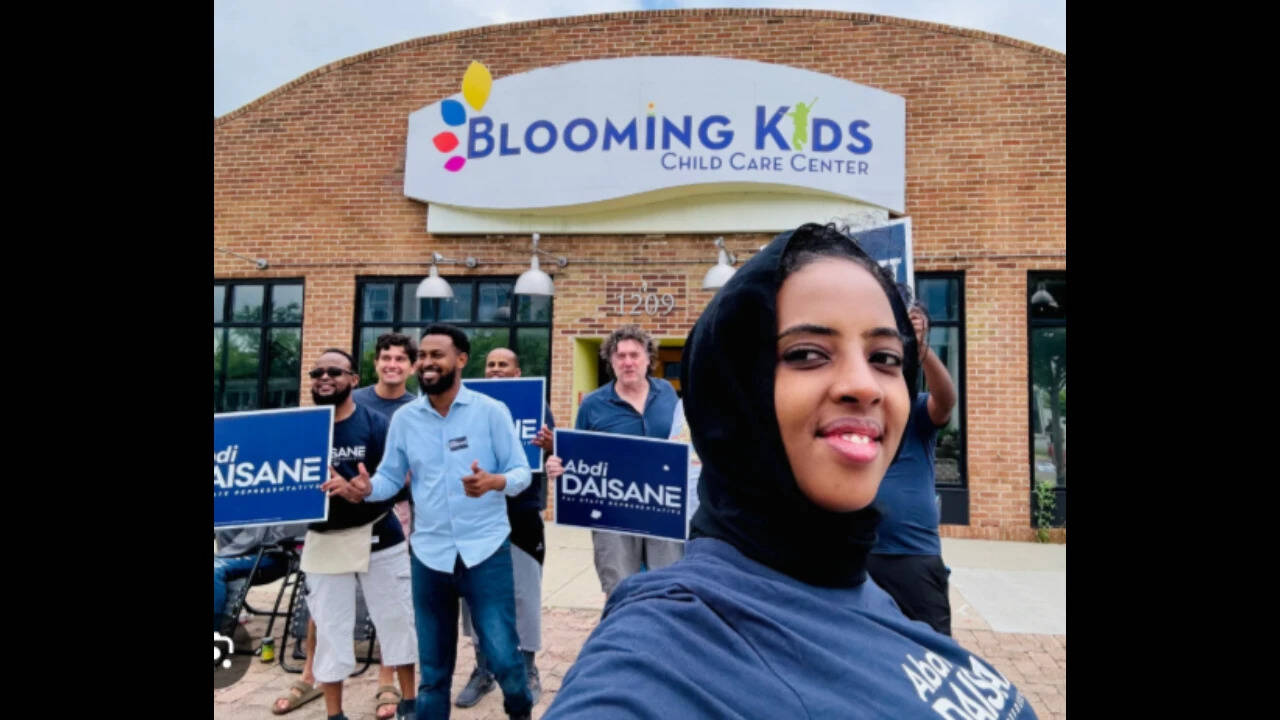
Media coverage surrounding newly elected Minnesota lawmaker Abdi Daisane and the Department of Homeland Security's statements regarding his wife's 2023 entry into the United States has quickly split into two predictable, partisan camps. On one side, critics treat a spouse's immigration history as an automatic disqualifier for public office. On the other, defenders dismiss legitimate questions about federal border enforcement and legal status as purely politically motivated attacks. Both reactions overlook how U.S. immigration law, spousal sponsorship, and legislative ethics actually function.
To understand the intersection of personal immigration histories and public office, it is necessary to separate viral headlines from statutory reality. The story involving Daisane—a Somali-American legislator—and the reported quote regarding his wife jumping a border wall touches on sensitive national debates. However, analyzing this situation through a purely emotional or partisan lens obscures the legal mechanisms that govern unlawful entry, adjustment of status, and the boundaries of elected officials' accountability.
The Conflation of Personal Status and Public Office
In American political discourse, a common assumption is that the legal or immigration background of a candidate's family member directly dictates the candidate's fitness to serve. State constitutions and the U.S. Constitution establish clear, specific qualifications for holding legislative office—typically centered on age, citizenship, and residency within the represented district. Neither federal law nor Minnesota state law disqualifies a citizen from running for or holding office based on the immigration history of their spouse.
When media outlets frame a lawmaker's election primarily around a relative's border crossing, they shift focus away from legislative qualifications and policy platforms. Supporters of Daisane argue that his election reflects the democratic will of his constituents and his own standing as a U.S. citizen and community leader. Conversely, critics argue that public officials who make laws should be held to a higher standard regarding how their immediate family members interact with federal laws, particularly when immigration enforcement is a central issue in national politics. Both perspectives highlight a genuine tension in public life: the line between an individual's constitutional right to serve and the public's expectation of symbolic consistency from its leaders.
The Legal Mechanics of Entry Without Inspection
A major point of confusion in public commentary is the assumption that marrying a U.S. citizen automatically erases a prior unlawful entry or instantly grants legal status. Under the Immigration and Nationality Act (INA), the manner in which a noncitizen enters the United States carries significant legal consequences that marriage alone does not immediately resolve.
When an individual crosses the border outside an official port of entry—referred to legally as Entry Without Inspection (EWI)—they are generally barred from adjusting their status to that of a lawful permanent resident while remaining inside the United States, even if they marry a U.S. citizen.
- Adjustment of Status vs. Consular Processing: Individuals who enter the U.S. lawfully with a visa and overstay can typically apply for a green card from within the country through a process known as adjustment of status. Those who enter without inspection generally must leave the United States and apply for an immigrant visa through consular processing in their home country.
- Unlawful Presence Bars: Leaving the United States after accruing more than 180 days of unlawful presence triggers a three-year bar from re-entry; accruing more than one year triggers a ten-year bar.
- Provisional Waivers: To overcome these bars without being separated from their families for years, applicants often must file Form I-601A (Application for Provisional Unlawful Presence Waiver), demonstrating that their U.S. citizen spouse would suffer "extreme hardship" if the applicant were denied admission.
Furthermore, individuals who cross the border and are apprehended by Department of Homeland Security (DHS) personnel frequently enter the asylum system. Seeking asylum is a legal right under U.S. and international law, regardless of how a person entered the country, though the applicant must still meet strict statutory criteria—demonstrating a well-founded fear of persecution based on race, religion, nationality, political opinion, or membership in a particular social group—before an immigration judge or asylum officer.
Why Viral Quotes Obscure Complex Realities
Sensational headlines often rely on brief, emotionally charged quotes—such as a romantic explanation for crossing a border—to drive engagement. While such statements capture public attention, they rarely reflect the entirety of an immigration case file.
In immigration court and U.S. Citizenship and Immigration Services (USCIS) adjudications, personal motivations like family reunification or romantic commitment are not standalone legal categories for admission. Adjudicators evaluate specific statutory claims, credible fear interviews, sponsorship petitions, and background checks. At the same time, DHS statements confirming an individual's date and manner of entry provide factual baseline data, yet they do not tell the whole story of where a case currently stands in the backlog of the Executive Office for Immigration Review (EOIR) or USCIS.
The Broader Policy Debate
The controversy surrounding Daisane and his wife serves as a microcosm of a broader debate over how the U.S. immigration system operates in practice.
Critics of current border policies point to cases like this as evidence that irregular border crossings have become normalized and that the system lacks sufficient deterrence. From their viewpoint, when individuals who enter unlawfully are able to remain in the country for years while awaiting court dates or pursuing family-based petitions, it undermines the rule of law and is unfair to those waiting in consular queues abroad.
Advocates for immigration reform, on the other hand, argue that cases involving U.S. citizens and their spouses demonstrate the rigidity of current statutes. They contend that the lack of accessible legal pathways for immediate relatives forces families into prolonged legal limbo, and that penalizing U.S. citizens—including elected officials—for the complexities of the immigration system does little to address the root causes of migration or administrative backlogs.
Evaluating Public Accountability
For voters and observers, assessing stories where personal immigration histories intersect with public office requires looking past partisan framing. Instead of treating a headline as a simple binary test of character, a more rigorous evaluation asks specific, grounded questions:
- Was any public office or taxpayer resource misused? Ethics rules strictly prohibit lawmakers from using their official positions to improperly influence federal agencies or secure special treatment for relatives. Absent evidence of improper intervention, a family member's pending immigration matter remains a private legal process.
- Are the relevant facts transparent? Voters generally expect candor from public figures when personal matters intersect with public policy debates, particularly when official DHS records become public.
- How does the case reflect existing law? Understanding whether an individual is in active removal proceedings, has a pending asylum claim, or is navigating family-based waivers provides far more clarity than reacting to isolated quotes.
Ultimately, the intersection of Abdi Daisane's election and his wife's 2023 border crossing highlights the gap between how immigration is debated in media headlines and how it is adjudicated in federal agencies. Treating complex statutory processes as simple political talking points prevents a clear-eyed understanding of both the legal realities facing mixed-status families and the actual standards governing public office.