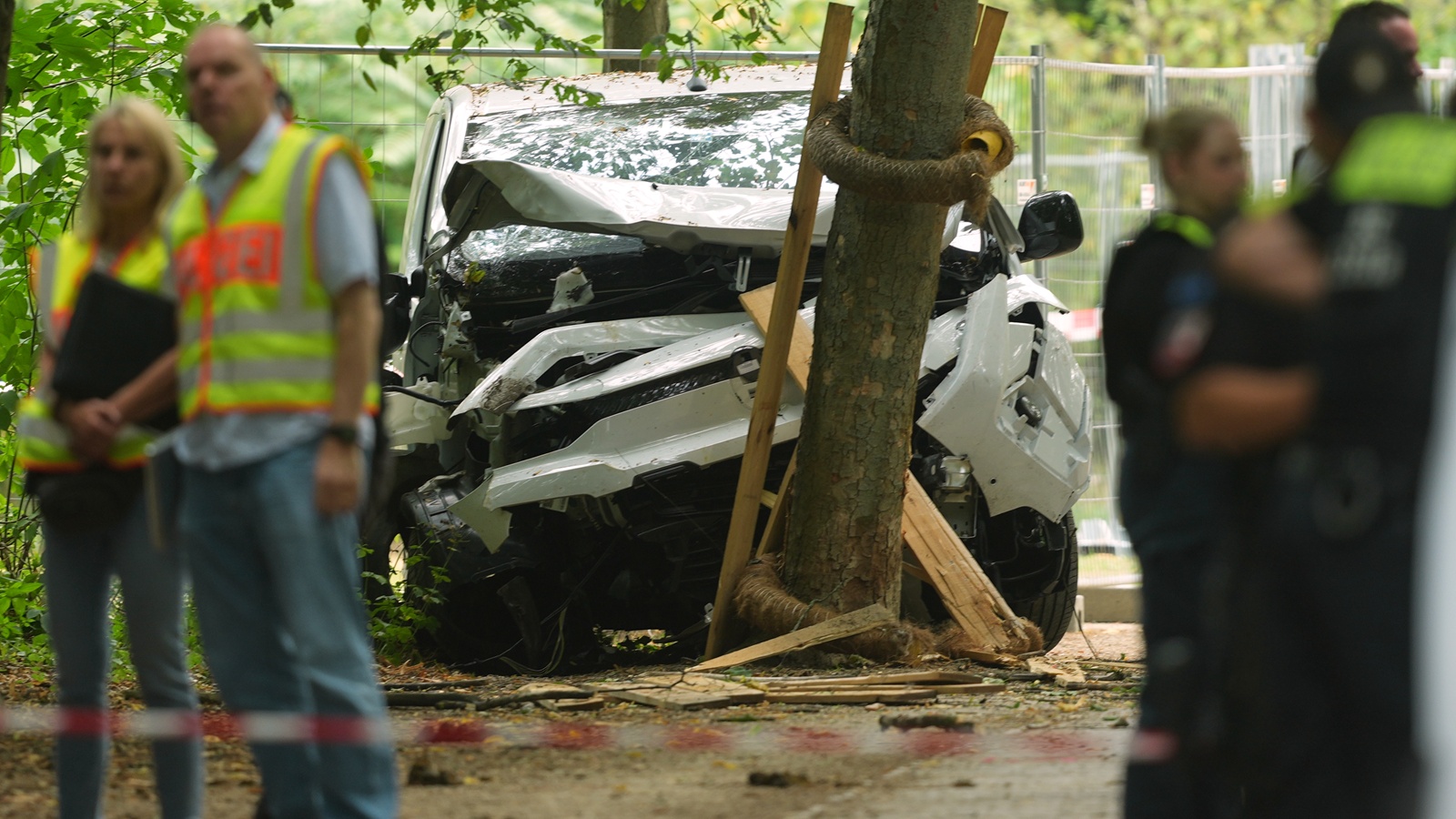
Every single major news outlet ran the exact same template last year when the Berlin Pride attack suspect was cornered and shot dead after a twenty-four-hour manhunt.
The headlines screamed about swift justice. The pundits praised the efficiency of the manhunt. The public breathed a collective sigh of relief because the monster was off the streets.
It is a comforting narrative. It is also entirely backwards.
When a society focuses its energy on celebrating a twenty-four-hour manhunt ending in a shootout, it is celebrating a total system failure. A manhunt is not a victory. A manhunt is the loud, messy cleanup after the alarm bells already failed to wake anyone up.
Let us strip away the high-octane drama of police sirens, perimeter lockouts, and tactical gear broadcasts. What actually happened during those twenty-four hours in Berlin? A failure of prediction gave way to a desperate exercise in reaction. Yet the media treats the conclusion of the chase as proof of competence.
This is the lazy consensus of modern public safety reporting. We judge institutional effectiveness by how fast authorities can sprint to catch someone after the damage is already done, rather than asking why the structural guardrails disintegrated in the first place.
I have spent years analyzing urban security protocols and emergency response architectures for municipal agencies, and I have watched millions of dollars burn on shiny high-tech tracking tools while foundational intelligence gathering rots from neglect.
The Trap Of The Fast Capture
When an incident like the Berlin Pride attack occurs, the knee-jerk demand from the public is immediate visibility. People want mugshots, task force updates, and breathless hourly bulletins.
The state obliges. High-profile manhunts become theatrical productions. They project power. They create a kinetic illusion that the apparatus of law enforcement is closing an iron fist around the threat.
But look closer at the mechanics. A twenty-four-hour manhunt means the perpetrator moved freely through a major European capital for a full day after committing a violent act. They slept somewhere, bought food, or relied on an implicit network of silence or sheer anonymity.
If a suspect can evade capture for twenty-four hours in a city blanketed by closed-circuit surveillance, digital tracking, and heavy police deployment, the surveillance state is far less omnipotent than politicians claim during budget hearings.
The celebration of the lethal endpoint—the suspect shot dead—acts as a psychic pacifier. It closes the loop. It provides narrative closure so the audience can stop thinking about systemic vulnerabilities.
Dead men do not stand trial. They also do not answer questions.
When a high-profile suspect is killed during apprehension, institutional accountability dies with them. We never have to audit the intelligence gaps that allowed radicalization to fester. We never have to examine why warning signs were missed by social service agencies, border controls, or local handlers. The bullet becomes an eraser, wiping clean the slate of bureaucratic incompetence.
The Myth Of Total Prevention
Politicians love to stand behind microphones after these events and promise that safety will be totalized. They throw around terms like heightened vigilance and enhanced security grids.
It is a lie. Anyone who understands risk management knows that absolute security is a mathematical impossibility in an open society. The moment you secure a parade route, you expose a transit station. The moment you screen a public square, you push the threat vector into an alleyway three blocks away.
Security theater thrives on this illusion. We accept invasive measures—bag checks at public festivals, militarized police presence at cultural celebrations—not because they stop determined bad actors, but because they make the unaffected majority feel like something is being done.
The Berlin Pride attack proved once again that a lone actor with intent can bypass high-visibility cordons if they are willing to accept the consequences. The presence of police officers in high-visibility vests does not deter a fanatic who views death as the objective. It merely changes their timeline.
Focusing resources on hardening individual events while ignoring the broader social and psychological incubation chambers of violent extremism is like mopping the floor while leaving the main water valve wide open.
Dismantling The Response Metrics
Why do agencies measure success by response time instead of prevention rate?
Because prevention is invisible. When a potential attack is successfully thwarted through quiet, tedious, unglamorous counter-radicalization work, nobody holds a press conference. No heroic body-cam footage gets released to the evening news. There is no ticker tape parade for a tragedy that never happened.
Conversely, a high-speed manhunt makes the evening news worldwide. It justifies bloated budgets. It gives chiefs of police a chance to look grave and resolute behind a bank of microphones.
Imagine a scenario where municipal budgets allocated ninety percent of their security funding toward community-level intervention, mental health triage, and rigorous informant networks within fringe extremist groups, rather than buying surplus military hardware for urban patrol units.
The critics will argue that this approach is too soft, too vague, too difficult to quantify. They prefer the clean binary of the manhunt: bad guy runs, cops chase, case closed.
That binary is destroying our ability to think long-term about public safety.
The Cost Of Lethal Resolution
There is a darker undercurrent to the applause that follows a suspect being shot dead during a manhunt. It satisfies a primitive bloodlust disguised as civic duty.
We want retribution packaged as public protection. When a suspect is neutralized on the spot, the community receives an immediate emotional payoff. The tension snaps. The collective adrenaline drains away.
Yet, every time law enforcement resorts to lethal force during an apprehension, we lose a critical data point. The suspect becomes a closed book. We rely on speculation, manifesto scraps, and digital footprints to reconstruct a mind that we could have interrogated, studied, and dissected in a court of law.
Intelligence agencies talk endlessly about threat modeling. How do you model a threat when you eliminate the primary source before they utter a single word of testimony?
You do not. You guess. And then you wait for the next twenty-four-hour manhunt to start the cycle all over again.
The Uncomfortable Truth About Urban Vulnerability
Major metropolitan areas are sprawling, anonymous ecosystems. You can walk through Berlin, London, New York, or Paris and remain entirely invisible to your neighbors.
That anonymity is the price we pay for personal freedom. You cannot have a free society without granting individuals the right to move through public spaces without constant state surveillance tracking every heartbeat.
The moment a violent attack shatters that anonymity, the state panics and overcorrects, demanding more cameras, more data retention, and more emergency powers.
And the public nods along, terrified, grateful for the twenty-four-hour manhunt that proved the system still works.
It does not work. It merely reacts.
Until we stop rewarding agencies for cleaning up messes they should have prevented, and until we stop treating a deadly shootout as a gold standard of justice, we will keep running the exact same race every time a tragedy strikes.
The next time a manhunt dominates your screen, do not look at how fast they caught him. Ask why it took a funeral to start looking.


